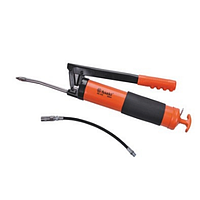
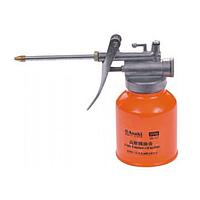
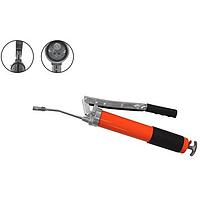
Pneumatic grease pump
Reliable lubrication is essential in workshops, maintenance bays, and industrial service environments where bearings, joints, gears, and moving assemblies need consistent grease delivery. When manual greasing becomes slow or physically demanding, a pneumatic grease pump or air-operated grease gun helps improve workflow, pressure control, and repeatability across routine maintenance tasks.
This category is suitable for users looking for air-powered greasing equipment as well as related grease delivery tools used in automotive service, factory maintenance, and general mechanical work. Alongside air-operated options, it can also be helpful to compare manual and battery-powered alternatives depending on duty cycle, mobility, and available compressed air infrastructure.
Where pneumatic grease equipment fits in maintenance work
Air-assisted lubrication tools are commonly chosen when technicians need to apply grease frequently, maintain steady pressure, or reduce operator fatigue during repetitive servicing. In many plants and vehicle workshops, compressed air is already available, making this type of solution practical for production support and maintenance teams.
A typical air-operated setup is useful for greasing chassis points, machinery bearings, couplings, and other lubrication points that require controlled grease flow. Models such as the TOPTUL JJCA1401 Air Operated Continuous Flow Grease Gun and TOPTUL JGAE0204 Air Operated Continuous Flow Grease Gun illustrate this type of use, especially where continuous application is preferred over repeated manual pumping.
Common product types in this category
Although the category centers on pneumatic grease pump applications, buyers often evaluate several related formats before selecting the right tool. These usually include air-operated, manual lever-action, pistol-grip, and cordless grease guns, each with different strengths for service accessibility and working speed.
For example, TOPTUL JGAE0202 Lever Type Grease Gun and Toptul JGAE0201 Grease Gun represent more traditional hand-operated options for straightforward workshop tasks. If mobility is more important than air supply access, cordless tools such as the Milwaukee (tool) M18 GG-0 Grease Gun or M12 GG-0 Grease Gun Skin may be considered for field maintenance or jobs performed away from fixed compressor lines.
Accessories also matter in real-world use. The TOPTUL JJAC1212 Flexible nylon grease gun hose, for instance, serves a support role by helping users reach confined or awkward lubrication points without repositioning the main tool repeatedly.
How to choose the right grease delivery tool
The best selection depends on how often the tool will be used, the type of grease points being serviced, and whether compressed air is available at the job site. For repetitive work in a workshop, an air-operated unit can save time and reduce strain. For occasional maintenance, a manual grease gun may be fully adequate and easier to deploy.
It is also important to consider operating pressure, grease capacity, hose configuration, and handling comfort. A flexible hose can help with access in tight spaces, while a rigid tube may suit open service areas better. Buyers comparing models should also think about cartridge compatibility, bulk fill use, and how easily the tool integrates into the broader set of repair kit items already used in maintenance work.
Illustrative options from leading brands
Within this category, several recognized names appear across manual, pneumatic, and cordless lubrication tools. TOPTUL is well represented with air-operated and manual grease guns, including the JJCA1401, JGAE0204, JJAA1402, JGAE0202, and JGAE0201. These products help show the range from simple hand tools to more workshop-oriented air-powered solutions.
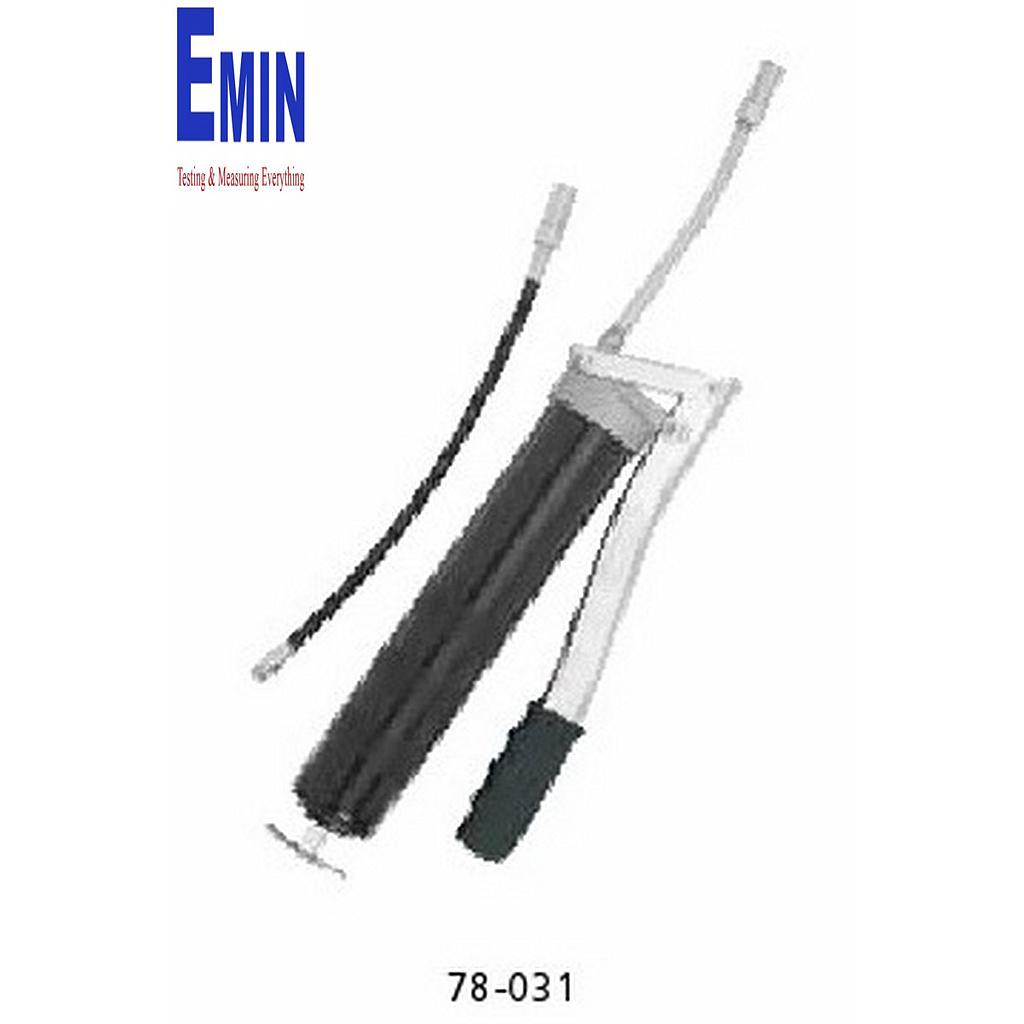
For users prioritizing cordless convenience, Milwaukee (tool) offers battery-driven grease guns in both M18 and M12 platforms. STANLEY also appears with lever-action and bracing grease gun options such as 78-031 and 95-385-2V, while SATA is present with the 51021 Professional Li-Ion Brushless Grease Gun Set. These examples are useful not as direct substitutes in every case, but as a reminder that lubrication workflow should guide selection more than tool format alone.
Applications in automotive and industrial environments
Pneumatic grease tools are commonly used in automotive workshops for suspension components, steering linkages, and fleet maintenance routines where multiple grease points must be serviced efficiently. In industrial settings, they are relevant for machine maintenance, plant equipment servicing, and preventive lubrication schedules where consistency matters.
Air-operated units can be especially useful when the task involves repeated greasing throughout the day. Manual tools remain practical for lower-volume maintenance, and pressure oil cans such as the TOPTUL NCAA0235 Metal Pressure Oil Can may complement grease tools in applications where oil, rather than grease, is the required lubricant.
In many service areas, lubrication tools work alongside broader mechanical hand tools. Depending on the task, technicians may also need items from related categories such as a socket wrench set when opening guards, removing covers, or accessing service points before lubrication begins.
Why hoses, couplers, and handling details matter
In practice, a grease delivery tool is only as effective as its ability to reach the lubrication point cleanly and securely. Hose length, coupler grip, and thread compatibility can affect ease of use just as much as pressure output. That is why support items such as flexible hoses are not minor accessories; they can directly improve servicing speed and reduce mess or grease loss during application.
Users working in confined machinery layouts or around vehicle underbodies often benefit from a flexible connection rather than a rigid extension. On the other hand, for stable access points in open workshop conditions, a fixed tube may provide simpler control. Paying attention to these handling factors helps ensure the selected equipment supports the actual maintenance environment rather than just the product specification sheet.
Practical buying considerations for B2B users
For MRO buyers, maintenance supervisors, and workshop operators, choosing a pneumatic grease pump category product is less about one headline feature and more about long-term suitability. Consider the expected service frequency, available air supply, grease type, compatibility with current tools, and whether technicians need portability or fixed-bay efficiency.
It is also sensible to standardize around a manageable tool ecosystem where possible. That may include selecting compatible hoses, cartridges, and complementary hand tools from the same workshop setup. If your team handles mixed maintenance tasks, related categories such as other assembly tools may also help round out the equipment needed for daily servicing and repair work.
Finding the right fit for your lubrication process
This category brings together grease application tools relevant to workshop and industrial lubrication, with a clear emphasis on air-assisted and related maintenance solutions. Whether you need continuous-flow air operation, a straightforward manual grease gun, or a cordless option for mobile work, the right choice depends on access conditions, service volume, and the way your maintenance team actually works.
By comparing operating style, handling, and accessory compatibility, buyers can select a solution that supports cleaner lubrication, more efficient servicing, and better day-to-day maintenance routines without overcomplicating the toolset.
Get exclusive volume discounts, bulk pricing updates, and new product alerts delivered directly to your inbox.
By subscribing, you agree to our Terms of Service and Privacy Policy.
Direct access to our certified experts