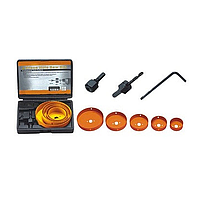
Hole saw
Clean, accurate circular cutouts are a routine requirement in electrical work, panel fabrication, furniture fitting, maintenance, and general installation tasks. Choosing the right hole saw helps reduce rework, improve edge quality, and match the cutting process to the material, diameter, and tool setup you already use.
On this page, you can explore hole saw options used for making round openings in wood, sheet material, and selected metalworking or installation applications. The range also includes hinge cutting drill bits and diameter-specific models, making it easier to select the right cutter for practical workshop and jobsite needs.
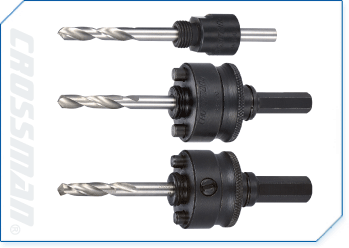
Where hole saws are commonly used
A hole saw is designed to remove a circular section of material rather than drilling out the full diameter as a standard twist bit would. This makes it a practical choice when larger openings are needed for cable routing, pipe pass-throughs, hardware mounting, door accessories, or fixture installation.
In day-to-day use, these cutters are often selected for electrical boxes, conduit work, cabinet hinges, access holes, and fabrication tasks that require consistent sizing. If you are also comparing supporting accessories or alternative cutting tools, it may be useful to review related drill bits for smaller-diameter drilling and pilot-hole preparation.
Typical product types in this category
This category includes several practical formats rather than a single universal cutter. Standard diameter-based hole saws are suitable when the main requirement is a clean round opening, while hinge cutting drill bits are more specialized for furniture and woodworking tasks where concealed hinge installation calls for controlled recess cutting.
Examples in the range include BOSCH LKL35mm Hole Saw, BOSCH LKL40mm Hole saw, BOSCH MUIKHOETPHI45 Hole saw, and Unika MCTR-22.0 Hole saw. For hinge-related work, models such as MAKITA D-71093 TCT Hinge Cutting Drill Bit (15x77mm), MAKITA D-71118 Hinge Cutting Drill Bit (20x77mm), MAKITA D-71124 Hinge Cutting Drill Bit (25x77mm), and MAKITA D-71152 Hinge Cutting Drill Bit (32x77mm) illustrate a more application-specific approach.
How to choose the right size and cutter style
The first selection factor is cutting diameter. The listed products cover a useful spread of sizes, including 22 mm, 30 mm, 35 mm, 40 mm, 45 mm, 50 mm, and 60 mm options. In practice, the right diameter depends on the finished hole requirement, clearance needs, and whether the opening is for hardware, fittings, or routing.
The second factor is the intended material and finish expectation. For example, a hinge cutting drill bit is better suited to recess-style woodworking tasks than a general-purpose hole saw. A model such as Unifast MCT-30, MCT-35, MCT-50, or MCT-60 may be appropriate when the main priority is matching the exact opening size required in the application.
The third factor is tool compatibility. Before ordering, confirm that the cutter matches the drilling system and operating method you plan to use. If you are selecting equipment for the full setup rather than only the cutter, it can also help to compare available drill machine options.
Highlighted brands and representative models
This selection features products from established tool manufacturers such as BOSCH, MAKITA, Unika, and Unifast. Each brand brings a slightly different focus, from common diameter hole saws for general trade work to more specific hinge-cutting tools for furniture and joinery applications.
BOSCH models in 35 mm, 40 mm, and 45 mm sizes are useful examples for standard circular cutting tasks. MAKITA hinge cutting drill bits in 15x77 mm through 32x77 mm sizes are more relevant where repeatable hinge recess work is needed. Unika MCTR-22.0 serves smaller hole requirements, while Unifast MCT models extend the range toward larger diameters such as Ø50 mm and Ø60 mm.
Practical selection tips for workshop and site use
When comparing products, start with the required hole diameter and the final assembly purpose. A small mismatch can lead to loose fittings, poor alignment, or unnecessary finishing work. It is also worth considering whether the job demands a through-hole, a shallow recess, or a cleaner edge suitable for visible installations.
For repetitive work, consistency matters as much as nominal size. Choosing a cutter designed for the task helps improve productivity and reduces the chance of uneven entry, overheating, or poor finish. In some fabrication environments, users may also compare cutting setups with electromagnetic drill equipment when metalworking requirements become more specialized, although the cutter and machine must always be matched to the actual application.
Why this category is useful for B2B sourcing
For purchasing teams, maintenance departments, contractors, and production workshops, grouping hole saws by size and application simplifies shortlist building. Instead of reviewing unrelated accessories, buyers can quickly compare diameter-specific models and identify whether the job calls for a standard hole saw or a hinge cutting drill bit.
This is especially useful when different departments need different cutting profiles. Electrical installers may prioritize round pass-through holes, while furniture assembly or cabinet production may focus on hinge preparation. Keeping both formats in one category supports faster procurement and more accurate tool selection.
FAQ
What is the difference between a hole saw and a hinge cutting drill bit?
A hole saw is generally used to cut circular openings through material, while a hinge cutting drill bit is typically intended for controlled recess cutting in woodworking, especially for hinge fitting applications.
How do I choose the correct diameter?
Match the cutter size to the finished hole requirement, taking into account fitting clearance, hardware dimensions, and the material being cut. If precision is critical, verify the target diameter before purchase.
Can this category support both general trade and furniture work?
Yes. The listed range includes general hole saw sizes as well as hinge cutting drill bits, which makes the category relevant to installation, maintenance, and woodworking tasks.
Find the right hole saw for your application
A good selection process starts with the real job requirement: material type, hole diameter, desired finish, and tool compatibility. With options from BOSCH, MAKITA, Unika, and Unifast, this category supports both general circular cutting and more specialized hinge-related work.
Use the product range on this page to compare sizes and cutter styles, then narrow down the most suitable option for your workshop, installation team, or maintenance workflow. When the cutter matches the task, you get cleaner results, more predictable performance, and a more efficient drilling process overall.
Get exclusive volume discounts, bulk pricing updates, and new product alerts delivered directly to your inbox.
By subscribing, you agree to our Terms of Service and Privacy Policy.
Direct access to our certified experts