
Soldering station, assembly, repair versatile
Electronics production and repair rarely rely on a single tool. On many benches, operators need to solder, desolder, remove components, handle temperature-sensitive assemblies, and keep rework quality consistent across different jobs. That is where a soldering station for assembly and versatile repair becomes especially relevant, giving technicians a more flexible platform than a basic iron alone.
This category brings together equipment suited to mixed soldering and rework tasks in maintenance labs, SMT lines, service centers, and electronics manufacturing environments. Instead of focusing on one narrow process, these systems are designed to support broader bench work, from everyday hand soldering to more advanced repair steps that may involve hot tools, vacuum-based desoldering, or multi-port operation.
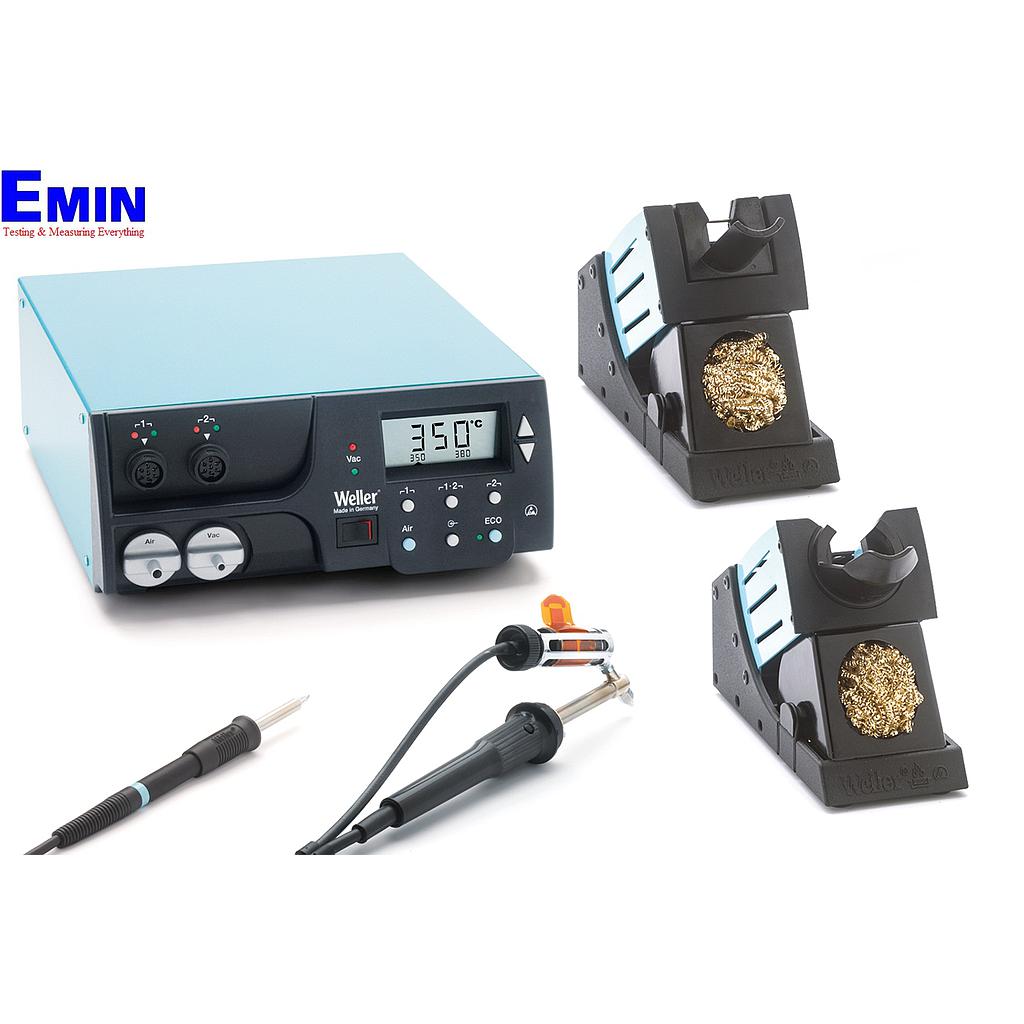
Built for mixed assembly and repair workflows
A versatile station is typically chosen when the workbench handles different board types, component sizes, and service scenarios. In practice, this can include through-hole soldering, selective desoldering, component replacement, touch-up after inspection, or maintenance work on industrial control boards and communication electronics.
Compared with a single-purpose unit, these systems help reduce workstation changes and simplify day-to-day operation. For teams that need a broader setup, this category also sits naturally alongside dedicated soldering stations and more specialized repair equipment depending on process depth.
What you can expect from this category
The products in this range generally support more than one bench task, whether through multiple ports, combined soldering and desoldering capability, or compatibility with different handpieces and accessories. The goal is not simply heat delivery, but process flexibility for repair, rework, and assembly in one workstation.
Examples in this category show that flexibility can take several forms. The HAKKO FX-973 3-port Rework Station is suited to benches that need several tools connected within one platform, while the XYTRONIC LF-988D+ combines soldering and desoldering functions in a compact format. For more advanced repair environments, systems from PACEWORLDWIDE illustrate how a rework bench can integrate multiple handpieces, vacuum functions, and component handling into one coordinated setup.
Typical applications in electronics manufacturing and service
Versatile soldering and repair stations are commonly used where product mix is high or repair requirements change frequently. This includes EMS production support, industrial electronics maintenance, telecom board repair, instrumentation servicing, prototype labs, and after-sales technical service.
They are also useful when one workstation must cover several operations without expanding bench space too much. A team may need to remove a failed component, clean pads, solder in a replacement part, and verify the result with stable temperature control and repeatable handling. In those cases, multi-function rework capability can improve workflow continuity and reduce unnecessary tool changes.
Examples of equipment found in this range
Some systems are centered on integrated rework performance. The PACEWORLDWIDE MBT 250-SDTP Digital SDTP Rework and Repair System is a good example of a platform aimed at soldering, desoldering, and component handling within one station. For broader bench-level repair, the PACEWORLDWIDE PRC 2000E Repair Center shows how a larger system can support multiple handpieces and more complex service tasks.
Other equipment in this ecosystem may play a more focused but still important role. JBC high-temperature wire stripper solutions such as the WSS-2B Station, WSB-2B Station, and WS-2UA Control Unit are not general soldering stations, but they are relevant in electronics assembly environments where precise conductor preparation is part of the overall repair or wiring workflow. In a similar way, accessories such as nozzle adapters and nozzles support specific rework operations rather than replacing the main station itself.
How to choose the right station for your bench
The best selection usually depends on the actual task mix rather than on power or temperature figures alone. A maintenance bench handling frequent through-hole removal may prioritize integrated vacuum desoldering, while an SMT repair bench may need compatibility with hot tools, tweezers, or specialized rework handpieces.
It is also worth considering how many tools need to be available at the same time. Multi-port systems can help when operators switch repeatedly between soldering and removal steps. If your process is more focused, dedicated categories such as desoldering stations or hot air rework systems may be a better fit for a specific workstation.
Another practical factor is ESD handling, thermal stability, and operator ergonomics. In production and service environments, these points can matter just as much as raw heating performance because they affect repeatability, component safety, and technician comfort over long working periods.
Brand ecosystems and process compatibility
This category includes products from widely recognized bench-equipment manufacturers such as HAKKO, JBC, PACEWORLDWIDE, WELLER, Malcom, and XYTRONIC. Each brand tends to approach the bench differently: some emphasize modular handpiece ecosystems, some focus on integrated repair centers, and others support inspection or process verification around the soldering workflow.
Malcom, for example, is represented here by the SWB-2 Dip Wetting Tester, which is not a general soldering station but is highly relevant in solderability and process evaluation. That makes it useful in quality-oriented environments where assembly and repair are closely linked to verification and materials performance, not just hand rework.
When a versatile station makes more sense than a single-purpose tool
If your operation regularly moves between assembly, touch-up, component replacement, and service repair, a broader station can be a more practical investment than buying separate low-capability tools. A well-matched system can help standardize the bench, simplify operator training, and support a wider range of tasks without constant equipment changes.
On the other hand, highly specialized processes may still benefit from dedicated platforms. For example, advanced package repair may require separate BGA rework equipment, while routine hand soldering alone may not require a multi-function station. The right choice depends on process complexity, board value, component sensitivity, and expected daily workload.
Choosing with long-term workflow in mind
For B2B buyers, the most useful approach is to evaluate the station as part of a complete repair and assembly workflow. Consider the types of boards you handle, whether desoldering is frequent, how often operators switch tools, and whether your process requires accessories, testing support, or specialized preparation steps such as wire stripping.
This versatile repair category is intended for teams that need more than a basic soldering setup but do not want to compromise bench efficiency. By comparing system structure, supported functions, and brand ecosystem fit, you can narrow down a station that aligns with your actual production or service requirements rather than choosing on specifications alone.
Get exclusive volume discounts, bulk pricing updates, and new product alerts delivered directly to your inbox.
By subscribing, you agree to our Terms of Service and Privacy Policy.
Direct access to our certified experts