Torque Wrenches: More Than Just Tightening
In mechanical engineering, a torque wrench is not simply a tool for tightening bolts. Every joint requires a specific torque to achieve optimal clamping force. Exceeding this limit can cause permanent material deformation; applying too little torque, on the other hand, allows the joint to gradually weaken under vibration and cyclic loading.
A commonly overlooked point is that most of the applied torque does not directly translate into clamping force it is lost to friction at the contact surfaces. As a result, the actual clamping force depends heavily on real-world conditions such as surface finish, the presence of lubrication, dirt, or corrosion. Even minor variations in these factors can lead to significant deviations from the intended clamping force.
Small Errors, Big Consequences in Practice
Typical torque wrench accuracy is around ±3%. On the surface, this may not seem significant. However, in engineering environments where parameters are tightly controlled, even this level of deviation can have consequences far beyond its nominal value.
When tightening force falls outside the optimal range, bolts no longer operate under their intended design conditions. Joint strength decreases, load-bearing capacity is compromised, and the risk of failure increases over time. Notably, these errors do not occur just once they repeat continuously across production lines and industrial operations, allowing small deviations to accumulate into substantial, often unnoticed costs.
In machinery systems, improper torque can manifest as abnormal vibrations. In the automotive industry, it directly affects structural safety. In electronics, excessive or insufficient torque can even damage components that are highly sensitive to mechanical stress.
Non-Uniform Accuracy Across the Torque Range
Another less-discussed reality is that torque wrenches do not maintain uniform accuracy across their entire measurement range. They typically perform most reliably within the mid-range, while error margins tend to increase at very low torque levels or near the upper limit.
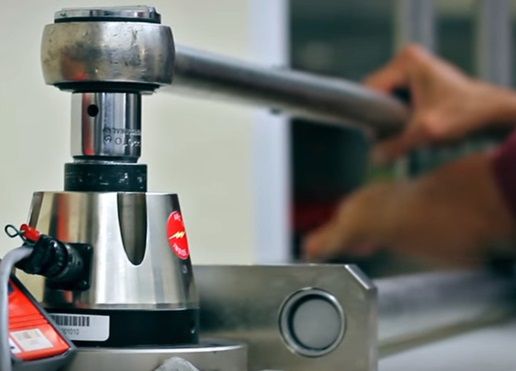
This characteristic explains why operators may believe they are following specifications correctly, yet joints still fail to perform as expected over time. The issue often lies not in technique, but in the inherent limitations of the tool when operating outside its optimal range.
Gaps in Torque Wrench Calibration Practices
Despite their importance, torque wrench calibration is often undervalued in practice. Many organizations only replace tools after complete failure, even though measurement errors may appear early and gradually worsen with use.
By contrast, industries that demand high precision treat periodic calibration as a mandatory part of operational procedures. This difference clearly reflects varying levels of awareness regarding the risks associated with torque inaccuracies.
A Shift Toward Data-Driven Control
Advances in measurement technology are reshaping how torque is managed. Rather than simply “tightening to spec,” modern tools particularly digital torque wrenchesenable real-time monitoring and data recording during operation.
As operating costs continue to rise, small but repeated deviations can have a far greater impact than initially expected. Torque error is therefore not just a technical issue it is a form of “hidden cost.” It may not appear directly on financial statements, but it is evident in system performance, equipment lifespan, and maintenance frequency.
When torque is treated as a controlled engineering parameter rather than an experience-based task, organizations can improve system reliability while minimizing unnecessary long-term costs.
See more: Standard torque chart by size