Electrical and magnetic testing equipment
Accurate observation of voltage, current, resistance, and magnetic field behavior is essential in physics education, lab training, and experimental research. Whether the goal is to demonstrate circuit fundamentals, verify electromagnetic effects, or capture weak signals for analysis, choosing the right electrical and magnetic testing equipment makes practical work more reliable and easier to interpret.
This category brings together instruments and experimental devices used to measure, amplify, compare, and analyze electrical and magnetic phenomena. It is especially relevant for teaching environments, technical training labs, and research setups where repeatable measurements and clear demonstrations are important.
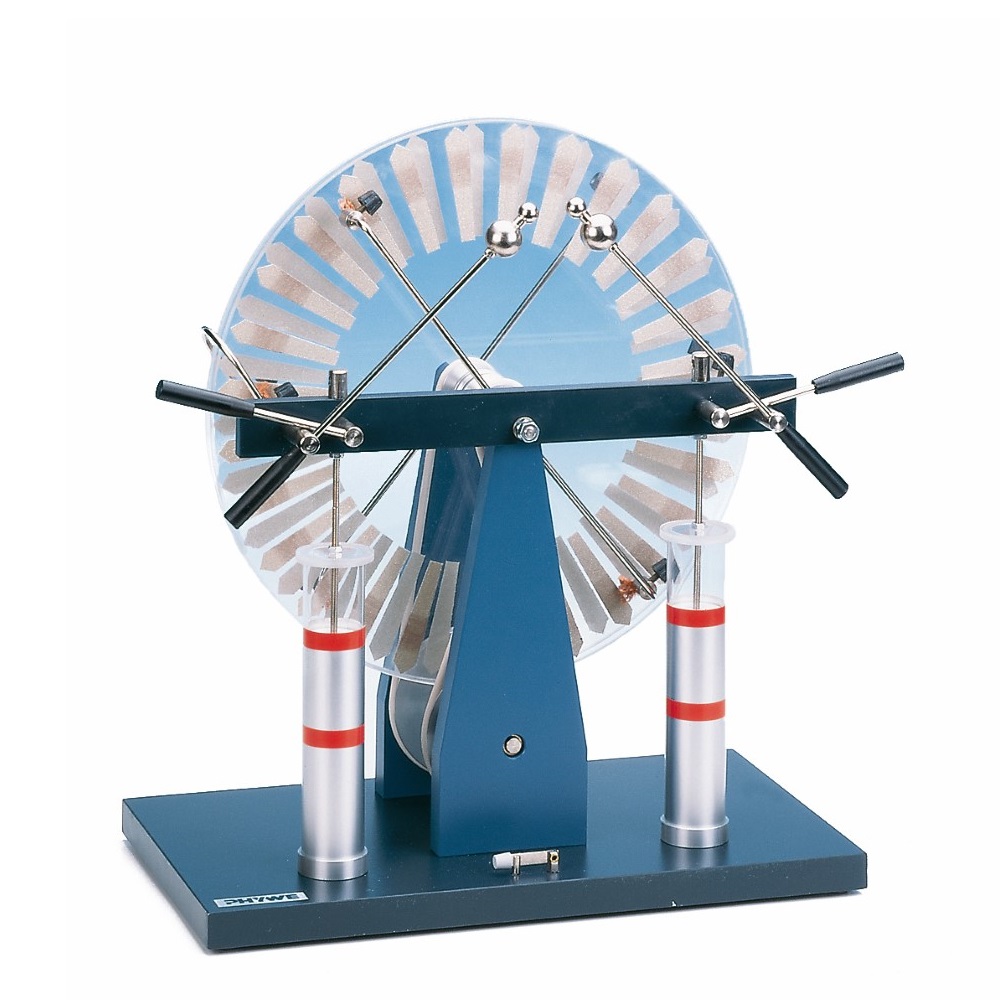
Built for electrical and magnetic measurement tasks
In laboratory and educational environments, measurement needs often go beyond a basic voltage or current reading. Users may need to compare potentials at different points in a circuit, study phase relationships, measure low currents, or evaluate magnetic flux density in coils and conductors. This is where a broader set of measurement and test instruments becomes necessary.
The range in this category covers both core instruments and supporting devices for experiments in electricity and magnetism. Examples include multimeters, amplifiers, Wheatstone bridge setups, Hall probes, teslameters, induction coils, and analyzers for more advanced signal evaluation. For a wider view of related lab setups, readers may also explore energy testing equipment where electrical measurement can connect to broader power and experimental studies.
Typical equipment found in this category
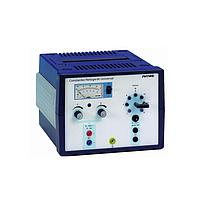
Some products are designed for direct measurement, while others support signal conditioning or field detection. A model such as the PHYWE P2410200 Wheatstone bridge is suitable for resistance experiments, including the determination of unknown resistance values and the study of series and parallel resistor networks. This type of setup remains highly relevant in teaching Kirchhoff's laws and practical circuit analysis.
For general-purpose measurement, the PHYWE 07021-11 Analog Multimeter and the PHYWE MULTIMETER-SET provide practical tools for voltage, current, and resistance exercises across different learning levels. When experiments require magnetic field measurement, the PHYWE 13610-93 Teslameter used together with the PHYWE 13610-01 Hall Probe supports the observation of DC and AC magnetic fields in coils or around conductors.
Signal amplification is another important part of electrical testing. Devices such as the PHYWE 13626-93 Universal Measuring Amplifier, PHYWE 11444-93 Difference Amplifier, and PHYWE 13625-93 Amplifier help users work with weak AC or DC signals, compare two voltages, or connect experiments to oscilloscopes and other display instruments.
Where this equipment is commonly used
This category is well suited to physics classrooms, technical colleges, engineering training centers, and research laboratories. In educational settings, the equipment helps translate theory into measurable results. Students can move from textbook laws to hands-on verification of resistance networks, induction effects, electromagnetic fields, and voltage behavior in real circuits.
In more advanced lab work, the same ecosystem supports signal analysis and specialized measurement tasks. The PHYWE 13621-00 Electrometer Amplifier is relevant for quasi-static voltage or charge measurements, while the PHYWE 13627-99 Ultra-Low-Noise Current Ampflifier is useful where extremely small current signals must be amplified with minimal noise influence. For users working across adjacent disciplines, thermodynamic equipment may also be relevant in mixed laboratory teaching environments.
How to choose the right instruments
A practical selection process starts with the measurement objective. If the task is basic electrical training, a multimeter or bridge-based resistance setup may be enough. If the experiment involves waveform comparison, phase shift observation, or weak sensor outputs, an amplifier or difference amplifier becomes more appropriate. For field-related experiments, a teslameter and Hall probe combination is the more logical choice.
It also helps to consider the signal type and the required sensitivity. AC and DC measurements do not always call for the same instrument behavior, especially when frequency range, input impedance, or low-current resolution matter. In instructional labs, ease of handling and protection against misuse are also important, which is why robust training-oriented devices remain widely used.
Another factor is how the instrument fits into the wider experiment. Some products are stand-alone measurement tools, while others are supporting components within a larger setup. The PHYWE 11007-88 Induction coils, for example, are not general meters, but they are essential for demonstrating magnetic induction and coil-related measurement tasks when used with compatible field and signal instruments.
Why signal conditioning matters in lab setups
Not every experiment produces a signal that can be read directly. Weak analog outputs, small current changes, and potential-free voltage comparisons often need conditioning before they can be displayed or analyzed properly. This is why amplifiers and analyzers are a central part of many electrical and magnetic test benches.
The PHYWE 13727-99 Multichannel Analyser illustrates this well in advanced applications where pulse signals proportional to energy must be sorted and evaluated. In a more general electrical lab context, universal and difference amplifiers help improve visibility and interpretation of signals when connected to oscilloscopes or data acquisition systems. If acoustic experiments overlap with electrical testing, related audio equipments can also complement signal-based teaching setups.
PHYWE as a key brand in this range
A large share of the featured instruments in this category comes from PHYWE, a manufacturer widely associated with educational and laboratory equipment. The product examples listed here show a broad portfolio, from classic electrical measurement tools to magnetic field instruments and specialized amplifiers for demanding experiments.
This brand focus is useful for institutions that want consistency in lab design, handling, and compatibility across experiments. It also simplifies sourcing when multiple devices need to work together in structured teaching or demonstration programs.
Supporting a broader experimental ecosystem
Electrical and magnetic measurement rarely exists in isolation. In practical training, these instruments are often part of a larger laboratory ecosystem that includes mechanical, thermal, acoustic, and energy-related demonstrations. A well-planned equipment range helps users build progressive lessons, from basic circuit measurement to more advanced electromagnetic and signal analysis tasks.
For that reason, this category is valuable not only for buyers looking for a single instrument, but also for institutions equipping complete lab benches. Matching the device to the experiment, the user level, and the required measurement precision will usually lead to a more efficient and durable setup.
Final considerations
When selecting equipment for electrical and magnetic experiments, the most important step is to align the instrument with the actual teaching or measurement objective. Simple resistance and voltage exercises, magnetic field observation, and low-noise signal amplification all require different tools, even though they belong to the same application area.
This category is intended to support that selection process with a focused range of electrical and magnetic testing equipment for education, training, and laboratory work. By combining core measuring instruments with field probes, bridges, analyzers, and amplifiers, users can build setups that are both practical for daily lab use and strong in technical relevance.
Get exclusive volume discounts, bulk pricing updates, and new product alerts delivered directly to your inbox.
By subscribing, you agree to our Terms of Service and Privacy Policy.
Direct access to our certified experts