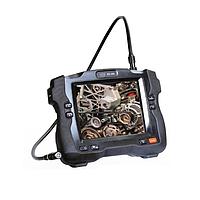
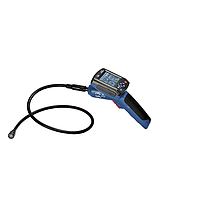
Video Borescope
When internal areas need to be checked without opening up a machine, pipe, engine, or enclosure, a Video Borescope is often the most practical inspection tool. It helps maintenance teams, technicians, and quality personnel see inside narrow or hidden spaces in real time, capture images, and record video for later review.
Compared with basic visual inspection methods, video borescopes provide a better view of wear, deposits, cracks, blockages, corrosion, or foreign objects while reducing unnecessary disassembly. This makes them useful across maintenance, troubleshooting, production inspection, and service work in many industrial environments.

Why video borescopes are widely used in technical inspection
A video borescope combines a camera probe, integrated lighting, and a display into a compact inspection system. The probe is inserted into confined areas, while the operator monitors the live image on screen. Depending on the model, the probe may be semi-rigid for straightforward access or articulated for steering around obstacles and changing viewing direction.
This approach is especially valuable when equipment downtime is costly. Instead of dismantling assemblies first and inspecting later, technicians can often identify the problem area quickly, confirm the condition of internal parts, and make a more informed maintenance decision. For broader visual inspection tasks outside confined spaces, users may also compare options in industrial camera systems where a fixed or external viewing setup is more suitable.
Typical applications across industries
Video borescopes are used wherever direct line-of-sight is limited. In automotive service, they help inspect cylinders, valves, combustion chambers, and hard-to-reach engine areas without major teardown. In manufacturing and mechanical maintenance, they are useful for checking gear housings, internal machine cavities, weld zones, and enclosed assemblies.
They are also relevant in pipeline and utility inspection, where long or protected camera cables can help verify internal obstructions, deposits, or moisture ingress. In precision maintenance environments such as aerospace support, rotating equipment service, and plant shutdown inspection, the ability to document findings with images and video is a major advantage for traceability and reporting.
What to look for when selecting a video borescope
The right model depends less on brand alone and more on the inspection task. Probe diameter is one of the first criteria, because access points can be very narrow. Smaller probes, such as 3.9 mm or 4.5 mm options, are helpful in tight passages, while larger camera heads may be acceptable when access is less restricted.
Probe length and flexibility are equally important. A 1 m probe may be enough for close machine inspection, but longer cables are better for deeper cavities or longer routes. Semi-rigid probes are often easier to push forward, while articulated probes improve control when the camera must turn after insertion.
Other key points include image resolution, field of view, focal distance, ingress protection, battery runtime, display size, and whether the unit supports image or video storage. For fast-moving processes, product motion analysis may require a different tool category such as a high speed camera, but for internal visual inspection a borescope is usually the better fit.
Examples from the current range
Several models in this category illustrate how different borescopes match different inspection needs. The PCE WVE 100 WiFi Videoscope offers a 4-way probe movement design and a 6.5 mm camera head, making it suitable when steering capability is important inside confined equipment. Wireless image transfer can also be useful where operators want more flexibility around the inspection point.
The PCE VE 180 Industrial Borescope uses a semi-flexible 3.9 mm probe and includes common retrieval accessories such as a hook, mirror, and magnet. That makes it practical for general maintenance tasks where visibility and simple object recovery are both helpful. For users who need a compact handheld inspection unit with onboard display, the PCE VE 200 Industrial Borescope is another relevant option.
In applications where forward and side viewing can save time, the EXTECH BR450W-D Dual HD Wireless Video Borescope provides a dual-camera approach. For users looking at general facility or service inspection, the BOSCH GIC 4-23 C Inspection Camera is also a useful example, with a larger display and a practical handheld format. If longer articulated inspection is required, the MOORE & WRIGHT MWT-7500 G5 Videscope and PCE articulated probe accessories show how the system can be adapted for more demanding internal access.
Accessories and system expansion
Not every inspection challenge is solved by the main unit alone. In many workflows, accessories such as articulated probes, replacement camera cables, front-and-side-view cables, or long waterproof camera cables help extend the usefulness of the borescope platform. This is especially relevant when inspection requirements vary from one machine type to another.
Examples in this category include the PCE PCE-VE-2W3-45-N Articulated Probe for more controlled navigation, the PCE PCE-VE 200-SCSV3 Camera Cable for combined front and side viewing, and the PCE PCE-VE 380N-SC30 Waterproof Camera Cable for long-distance inspection in more demanding environments. Choosing compatible accessories can be more cost-effective than replacing the full system when application needs change.
Protection, usability, and recording features
Many industrial inspection tasks involve moisture, dust, oil residue, or awkward working positions, so ingress protection and handheld usability matter. Several products in this category feature IP-rated probes, commonly IP67 or higher for the camera section, helping them withstand harsher inspection points. The handheld device itself may have a different protection level, which is worth checking if the work area is particularly challenging.
Image and video recording is another practical requirement. Stored inspection data supports maintenance reports, remote review, fault comparison over time, and communication between field technicians and engineering teams. Models with Micro SD storage, USB connectivity, HDMI or Type-C output, and wireless transfer can streamline documentation, especially in service environments where evidence-based diagnosis is important.
Choosing the right fit for your application
For routine maintenance, a standard handheld video borescope with a 1 m semi-rigid probe may be enough. If the inspection path includes bends, hidden side surfaces, or precise steering inside complex machinery, an articulated probe is often the better choice. For wet or submerged inspection points, probe protection and cable design become more important than display size alone.
It is also useful to think about how the device will be used day to day: quick field checks, workshop diagnostics, formal quality inspection, or recurring preventive maintenance. Matching the tool to the inspection depth, access size, environment, and reporting needs usually leads to a better long-term result than focusing on one specification in isolation.
Final considerations
Video borescopes help reduce guesswork in internal inspection by making hidden areas visible without unnecessary dismantling. Whether the task involves engines, enclosed mechanical parts, production equipment, or service access points, the right combination of probe size, flexibility, image quality, and recording capability can significantly improve inspection efficiency.
Within this category, you can compare handheld systems, wireless models, articulated options, and compatible accessories to find a setup that matches your maintenance or inspection process more closely. A well-chosen borescope is not just a viewing device; it is a practical tool for faster diagnosis, better documentation, and more informed technical decisions.
Get exclusive volume discounts, bulk pricing updates, and new product alerts delivered directly to your inbox.
By subscribing, you agree to our Terms of Service and Privacy Policy.
Direct access to our certified experts