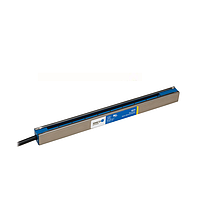
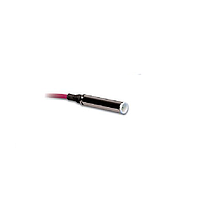
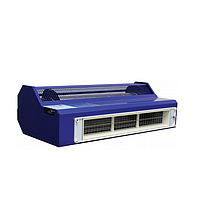
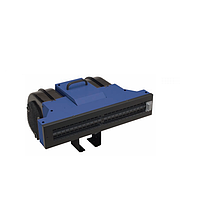
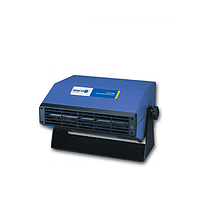
Static eliminator (Ionizer)
Electrostatic charge can quietly disrupt assembly, inspection, packaging, and clean manufacturing processes long before it causes a visible failure. In electronics production, plastic handling, optical work, and controlled environments, choosing the right Static eliminator (Ionizer) helps reduce particle attraction, prevent ESD-related damage, and stabilize sensitive operations.
This category brings together ionizers used to neutralize static electricity in localized work areas and wider process zones. Depending on the application, that may mean a compact blower for a bench workstation, a long ionizing bar for production lines, or a room-oriented solution designed for laminar airflow environments.
Where ionizers fit in static control
Grounding and conductive materials remain essential in ESD control, but they are not always enough. Many insulated objects, moving films, trays, plastic parts, and packaged products can still accumulate charge. A static eliminator works by generating positive and negative ions that neutralize charged surfaces without direct contact.
This makes ionizers especially useful in areas where operators handle sensitive devices, where dust is attracted by static, or where a process cannot be interrupted by manual discharge steps. In controlled environments, ionization is often part of a broader cleanliness strategy that may also involve a clean bench or other airflow-managed equipment.
Common ionizer formats in this category
The product range here mainly reflects two practical formats: ionizing bars and ionizing blowers. Each serves a different layout and neutralization pattern, so selection usually starts with the physical shape of the process area rather than with brand preference alone.
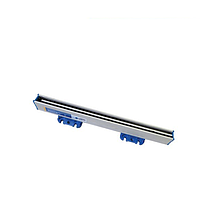
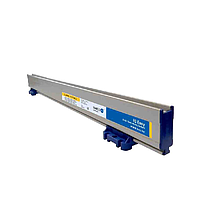
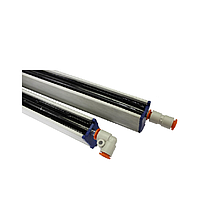
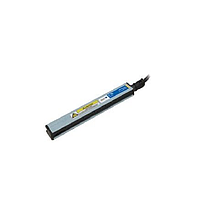
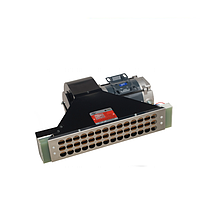
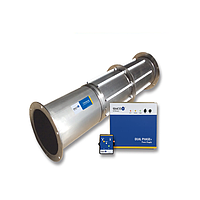
Bar ionizers are well suited to conveyors, web paths, machine inlets, packaging lines, and other linear targets. Blower ionizers are typically used at manual workstations or open process zones where wider, directed airflow helps carry ions across a larger area. Some applications also use room-oriented ion bars in laminar flow setups where stable airflow and low particle sensitivity matter.
Examples available from SIMCO and DONG IL (DIT)
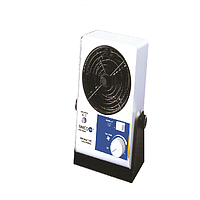
For workstation and area coverage, SIMCO offers blower-style solutions such as the Aerostat XC2 Extended Coverage Area Ionizing Blower and the Aerostat XC Ionizing Blower. These are relevant when users need active airflow, practical coverage in front of the unit, and stable ion balance for bench-level processes or open equipment zones.
For machine integration and line-side installation, DONG IL (DIT) is represented by several pulsed AC bar ionizers. Models such as the ASG-A060W Pulse AC Bar Ionizer and ASG-A110W Ionizing Bar illustrate typical bar-style deployment, while AMB-L series units such as AMB-L150QS and AMB-L100GS reflect longer-format options for laminar flow or room-oriented static control positions.
This category also includes accessories and evaluation tools relevant to ionization performance. For example, the SIMCO CPM-LPS Standard Plate is not an ionizer itself, but it plays a supporting role in checking and assessing static decay behavior in an ionization setup.
What to evaluate before choosing an ionizer
The first decision is the working distance and coverage area. A short-range target at a bench may be handled effectively by a blower, while wider machine spans or product paths often favor bar ionizers in lengths matched to the line width. In the listed products, bar lengths and effective distances vary, so mechanical fit should be reviewed together with the neutralization zone.
Next, consider the installation environment. Some models are designed for clean, dry air assistance, while others integrate their own fan-driven airflow. Power requirements also differ, with examples in this category including 24 VDC bar systems and AC-powered blowers. In practice, this affects panel design, available utilities, and long-term maintenance planning.
Ion balance, output frequency, emitter design, and communication features can also matter in production. Where process repeatability is critical, users may prefer units that support balance adjustment, cleaning-cycle settings, status indication, or network-style communication for monitoring.
Bar ionizer or blower: which is more suitable?
A bar ionizer is usually the better choice when static appears along a moving path or across a fixed width. This includes sheet handling, tray movement, part transfer, label application, and packaging lines. Products such as the DONG IL (DIT) ASG-A060W and ASG-A110W show how this format can provide targeted neutralization over defined distances with bracket mounting and compact profiles.
A blower is typically more practical for operators working at benches, rework stations, test positions, or open assemblies. SIMCO models in this category are examples of equipment intended to project ionized airflow into a user zone rather than mounting directly along a line. If the process depends on controlled cleanliness and directional air handling, ionizer selection should also be coordinated with surrounding equipment such as an air shower or adjacent clean-area infrastructure where relevant.
Maintenance and operating considerations
Ionizers perform best when emitter condition, airflow path, and installation geometry are kept under control. Over time, emitter points can collect contamination, which may reduce neutralization consistency or shift balance. That is why features such as emitter cleaning functions, replaceable emitters, and error indication are important in real production environments.
Ambient temperature, humidity, and available air quality should also be reviewed. Several products in this category are specified for standard industrial temperature ranges, and some require clean dry air when used as air-assisted bars. In cleaner applications, low ozone generation and compatibility with controlled workspaces can be part of the selection criteria, especially where particle behavior and operator comfort are closely managed.
How this category supports different industries
Ionizers are used across electronics assembly, semiconductor-related handling, plastics processing, precision packaging, optics, medical device production, and other operations where static charge creates process instability. The exact need may differ: one site wants to protect components from ESD events, another wants to reduce dust attraction, while another needs smoother separation or transfer of lightweight materials.
That is why this category includes both localized and wider-coverage solutions. A bench process may need a blower with stable balance and manageable noise, while an automated line may need a long pulsed AC bar with adjustable frequency and compact mounting. For facilities operating within broader contamination-control workflows, ionization is often one element among cleaning tools, airflow equipment, and procedural controls.
Choosing with process fit in mind
The most effective ionizer is not simply the highest-powered unit, but the one that fits the charge source, working distance, mechanical layout, and environmental constraints of the application. Looking at form factor, neutralization range, power input, airflow method, and maintenance access will usually lead to a better decision than comparing model names alone.
Within this category, users can review blower-type and bar-type options from established manufacturers including SIMCO and DONG IL (DIT), along with supporting tools used in ionization assessment. If you are building or upgrading an ESD-safe or clean production area, this range provides a practical starting point for selecting ionization equipment that matches the process rather than forcing the process to adapt to the device.
Get exclusive volume discounts, bulk pricing updates, and new product alerts delivered directly to your inbox.
By subscribing, you agree to our Terms of Service and Privacy Policy.
Direct access to our certified experts