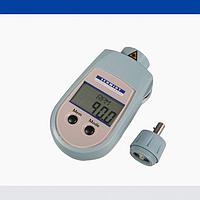
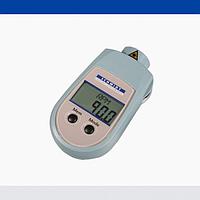
Tachometer Calibrator
When rotational speed has to be checked with confidence, a stable reference source becomes just as important as the tachometer itself. In maintenance labs, production lines, and calibration environments, a Tachometer Calibrator helps verify whether contact and non-contact tachometers are reading correctly across the required rpm range.
This category brings together equipment designed for tachometer testing, speed simulation, and instrument verification. It includes both compact calibration units for pulse or optical signal generation and more specialized systems that support contact and non-contact speed checking for a wide variety of measuring tasks.
Why tachometer calibration equipment matters
Rotating machinery is used in motors, rollers, conveyors, textile equipment, packaging systems, and many other industrial processes. If a tachometer drifts or gives unstable readings, the result can be poor process control, inconsistent quality, or uncertainty during maintenance and inspection work.
A tachometer calibrator provides a controlled speed reference or output signal so users can compare instrument readings against a known source. This is particularly useful when validating handheld tachometers, checking optical sensing performance, or confirming that contact measurement accessories are functioning as expected.
Common calibration approaches in this category
Not all calibration setups work in the same way. Some units generate optical or TTL pulse signals for testing digital tachometers and stroboscopic devices, while others provide a physical rotating reference that supports both contact and non-contact measurement. The right choice depends on how the tachometer under test operates and how the calibration procedure is performed in your facility.
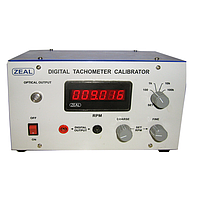
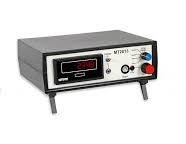
For example, the Compact MT2013 and MT2013/120 calibration units are suited to applications where signal-based verification is needed, offering input and output functions for optical and digital instruments. By contrast, models such as the Sansel RPMC series or ZEAL ZMC-NTC are more relevant where a rotating reference is required for direct speed comparison under contact or reflective optical measurement conditions.
Typical product types available
Within this category, buyers will generally find two practical equipment groups. The first is bench or portable calibration units that simulate speed signals for tachometers and related devices. These are often selected for calibration benches, service departments, and test environments where repeatability and straightforward setup are priorities.
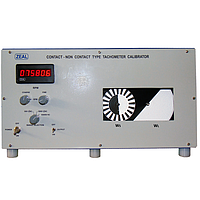
The second group includes tachometer calibrators with actual rotating elements, allowing users to check contact tips, wheels, and non-contact optical readings against a controlled rpm source. Examples in this range include the Sansel RPMC 1700-2A, RPMC 1700-3A, RPMC 1700-4A, and ZEAL ZMDTC or ZEAL ZMC-NTC models, each serving slightly different speed ranges and verification scenarios.
How to choose the right Tachometer Calibrator
Selection should start with the measuring principle of the instrument you need to verify. If your tachometer is primarily laser or reflective optical type, a calibrator with suitable non-contact reference capability or optical pulse output will usually make more sense. If you also need to test wheel-based or shaft-contact measurement, then contact support becomes equally important.
Speed range is another key factor. Some applications only require low to mid-range rpm checks, while others need verification up to very high rotational speeds. In the products listed here, there are solutions covering modest contact ranges as well as non-contact ranges extending to 90,000 rpm, 100,000 rpm, 120,000 rpm, or even 150,000 rpm depending on the model.
Users should also review resolution, accuracy, stability, and the type of signal interfaces available. In a maintenance workshop, ease of use and quick setup may be the top priority. In a calibration or quality environment, finer resolution, stable output, and repeatable test conditions may be more valuable than broad portability.
Examples from leading manufacturers
Sansel is represented here by the RPMC series, including the RPMC 1700-2A, 1700-2A L, 1700-3A, and RPMC 1700-4A. These models are suitable for buyers looking for dedicated tachometer calibration equipment with both contact and non-contact capability across different rpm ranges.
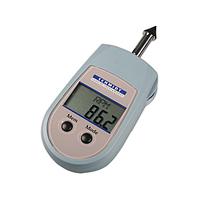
SCHMIDT appears in this category with handheld tachometers such as the PH-200L, PH-200LC, and PH-100A. While these are measuring instruments rather than calibrators, they are useful references within the same workflow because tachometer calibration is often linked directly to routine speed measurement, verification, and cross-checking tasks.
Compact offers MT2013 series calibration units that support optical and digital test arrangements, making them relevant for users who need a signal-based calibration setup. ZEAL also contributes dedicated tachometer calibration solutions such as the ZMDTC and ZMC-NTC for non-contact and combined contact/non-contact verification requirements.
Applications across maintenance, testing, and quality control
Tachometer calibration equipment is used wherever rotational speed readings influence machine condition, process consistency, or acceptance testing. Maintenance teams may use it to verify handheld tachometers before field inspection. Calibration laboratories may use it to establish a reliable reference for documented instrument checks. Production and quality teams may use it to confirm speed-related measurements in routine inspection procedures.
In many facilities, tachometer verification is not an isolated task. It often sits alongside broader calibration work involving pressure, temperature, or multifunction instruments. If your workflow includes several instrument types, you may also want to review multifunction calibrators or temperature calibrators as part of a more complete calibration setup.
What to compare before ordering
A practical comparison should focus on operating method, supported rpm range, and intended use environment. Benchtop users may prefer a calibrator with display-based control and a wider adjustable range, while mobile service users may value simpler handling and compatibility with common optical tachometer test methods.
It is also worth checking whether the model is better suited for verification of handheld tachometers, stroboscope-related testing, or mixed contact/non-contact use. Looking at output type, input compatibility, display format, and control style can help narrow down the best fit without overcomplicating the purchasing decision.
Find a suitable solution for your speed verification workflow
This category is intended for buyers who need a dependable way to verify rotational speed instruments rather than relying on unconfirmed field readings alone. Whether the requirement is a signal-based calibration unit, a rotating reference for direct comparison, or equipment that supports both methods, the available range covers different testing styles and rpm requirements.
If you are selecting a Tachometer Calibrator for maintenance, laboratory verification, or production support, the most effective choice will usually be the one that matches your tachometer type, target speed range, and preferred calibration method. Reviewing the listed models by application and measurement principle is the best way to identify the right equipment for your process.
Get exclusive volume discounts, bulk pricing updates, and new product alerts delivered directly to your inbox.
By subscribing, you agree to our Terms of Service and Privacy Policy.
Direct access to our certified experts