Vibration Calibrators
Reliable vibration data starts with a measurement chain that can be checked quickly and consistently. In maintenance, condition monitoring, laboratory verification, and field diagnostics, Vibration Calibrators help confirm whether sensors and instruments are responding correctly before important decisions are made.
On this page, you can explore vibration calibration equipment used for acceleration, velocity, and displacement checks across different working conditions. The range includes compact portable units for routine verification, models designed for wider frequency selection, and solutions suitable for standards-based low-frequency applications.
Why vibration calibration matters in practice
Even a high-quality vibration meter or transducer can produce misleading results if its response drifts over time, if the sensor is damaged, or if the measurement chain has an issue with conditioning, mounting, or signal handling. A calibrator provides a known vibration reference so users can compare instrument readings against a controlled input.
This matters in predictive maintenance, acceptance testing, and troubleshooting. When technicians verify a sensor before use, they reduce the risk of false alarms, missed faults, or maintenance actions based on incorrect vibration values. In quality systems and laboratory workflows, calibration checks also support traceability and repeatability.
Typical applications across industry and laboratories
Vibration calibrators are commonly used in industrial plants, service teams, calibration labs, and manufacturing environments. They are especially useful when checking accelerometers, velocity sensors, displacement measurement chains, and portable vibration meters before field measurements or periodic inspections.
Some models also support low-frequency verification related to whole-body vibration and building vibration work. For example, the MMF VC21 and MMF VC21D are oriented toward applications where selectable frequency and vibration magnitude are important, while the Svantek SV 110 and SV 111 are presented with ISO 8041-1 related context for portable verification tasks.
For teams that handle more than one measurement discipline, it can also be useful to review related calibration equipment such as temperature calibrators or pressure calibration tools as part of a broader instrument management program.
How vibration calibrators are commonly selected
The right choice usually depends on the sensor type, the required test frequency, the desired vibration level, and the weight of the device under test. In many routine checks, users look for a stable reference point at a common frequency and amplitude. In other cases, they need a wider frequency range to evaluate sensor response at several operating points.
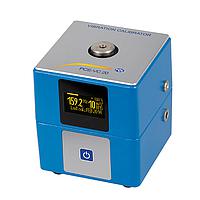
Frequency range is one of the first selection criteria. A model such as MMF VC20 focuses on a fixed reference point, which can be practical for fast daily checks. By contrast, MMF VC21, MMF VC21D, and Svantek SV 111 offer selectable frequencies across broader ranges, which is more useful when the measurement task requires verification beyond a single point.
Load capacity is equally important. The weight of the mounted sensor or test object affects whether the calibrator can maintain the intended vibration level accurately. Portable devices intended for field work are often optimized for sensor and instrument verification, while heavier or more application-specific systems may be better suited to bench use.
Representative product types in this category
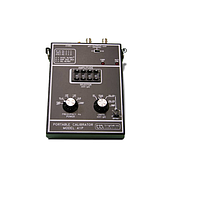
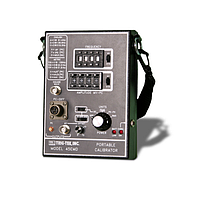
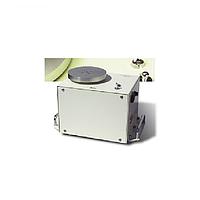
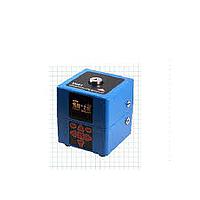
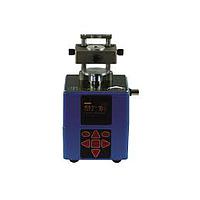
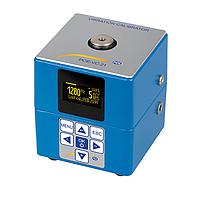
This category includes several practical equipment profiles rather than one single device format. Compact field units such as the MMF VC20 are useful when technicians want quick confirmation of accelerometer or meter performance with minimal setup. MMF VC21 and VC21D add more flexibility with selectable frequency and amplitude steps, making them more adaptable to different transducers and measuring systems.
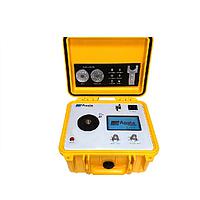
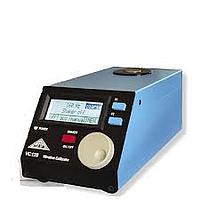
For users who need broader test capability, MMF VC120 stands out as a self-contained calibration system intended for checking sensors and instruments over a much wider frequency range. Its context also indicates compatibility with charge, IEPE, and voltage-based measurement chains, which is relevant in environments using different sensor output types.
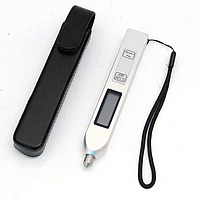
Svantek models such as SV 110 and SV 111 are positioned around portable calibration needs with ISO 8041-1 related use cases. Showa Sokki 8100 is another example of a portable vibration calibrator with switchable excitation frequencies and external signal input capability, while the IET LABS 1557-A represents a compact battery-operated option for routine reference checks.
Key factors that affect measurement confidence
A good calibration result is not only about the calibrator itself. Mounting quality, sensor mass, thread compatibility, environmental conditions, and signal path integrity all influence the outcome. If the sensor is not mounted securely or if the test mass exceeds the calibrator’s intended range, the reading may no longer reflect the true reference condition.
Amplitude accuracy, frequency accuracy, transverse vibration behavior, and harmonic distortion are often reviewed when selecting a model. These factors help indicate whether the generated vibration is suitable for meaningful comparison. In practical terms, users should match the calibrator to the type of sensor and the level of verification required, rather than relying only on a single headline specification.
Battery operation can also be important for field use, especially in plants or remote measurement locations. Several models in this category are designed for portable work, allowing technicians to perform rapid checks without depending on a fixed laboratory setup.
Good practice when using a vibration calibrator
For day-to-day verification, the process is usually straightforward: place the calibrator on a stable surface, mount the sensor correctly, select the appropriate test condition, and compare the instrument reading with the calibrator reference. The objective is not only to confirm numerical accuracy, but also to detect faults such as cable issues, unstable sensor output, or incorrect measurement settings.
It is good practice to let the device stabilize, use the correct adapter or fastening method, and confirm the selected units before evaluating the result. If a model supports multiple output levels or frequencies, choose the point that best reflects the real application rather than checking only a convenient default setting.
Traceability is another consideration, especially in laboratories and audited industrial environments. Products in this category include examples supplied with factory calibration certificates traceable to PTB standards, which can support documentation requirements where formal calibration records are needed.
Standards and application context
Different calibration tasks may relate to different standards depending on the measurement objective. In vibration work, users often consider standards connected to transducer calibration methods, laboratory competence, and the specific application area of the instrument being checked.
Within the products shown here, ISO 8041-1 appears in the context of selected Svantek models for human vibration related checks. For broader instrument management, organizations may also combine vibration verification with other calibration workflows, including multifunction calibrators where several process signals are managed in the same maintenance or metrology program.
Choosing the right category fit for your workflow
If your priority is fast pre-use verification in the field, a portable fixed-point or limited-step calibrator may be the most efficient choice. If you need to assess sensor behavior over several frequencies, or verify different output types in a more controlled setup, a wider-range system will generally be more suitable.
This category brings together practical options from manufacturers such as MMF, Svantek, Showa Sokki, and IET LABS, covering routine checks, standards-related verification, and more flexible calibration tasks. Reviewing the measurement type, expected test mass, required frequency points, and documentation needs will usually narrow the selection quickly.
When chosen with the application in mind, a vibration calibrator becomes more than a reference source—it becomes a simple way to improve confidence in every vibration reading that follows.
Get exclusive volume discounts, bulk pricing updates, and new product alerts delivered directly to your inbox.
By subscribing, you agree to our Terms of Service and Privacy Policy.
Direct access to our certified experts