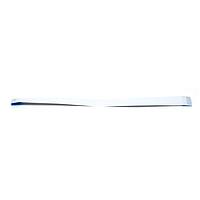
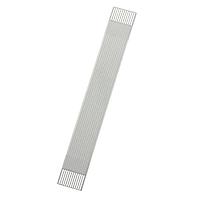
FFC & FPC Jumper Cables
When compact electronics need a reliable way to bridge boards, displays, sensors, or compact control modules, cable geometry matters as much as the connector itself. FFC & FPC jumper cables are widely used where space is limited, routing paths are tight, and consistent signal transfer is important across repeated assembly cycles.
In practical design and maintenance work, these flat cable solutions support clean internal wiring in devices that cannot accommodate bulky round cable assemblies. They are commonly considered alongside matching termination hardware and related interconnect options to build a stable, low-profile connection system.
Where FFC and FPC jumper cables fit in electronic assemblies
These jumper cables are typically selected for applications that require a thin, flexible interconnect between two mating points. Their flat construction helps reduce stack height, simplify cable routing, and improve packaging efficiency in assemblies such as display interfaces, compact control boards, embedded devices, and other space-constrained electronics.
Although they are often grouped together, the choice between FFC and FPC depends on the broader design approach. In both cases, the cable is only one part of the interconnect path, which is why engineers often evaluate the cable together with compatible FFC & FPC connectors rather than as an isolated component.
Why flat jumper cables are used in compact designs
The main advantage of this category is space-efficient interconnection. Flat jumper cables can follow narrow routing channels, support low-profile assemblies, and help reduce cable clutter inside products where internal layout is tightly controlled. This is particularly useful in electronics that include moving covers, display sections, or multiple stacked PCBs.
Another benefit is predictable cable organization. Because conductors are arranged in a flat format, designers can manage bend direction and installation paths more consistently than with conventional discrete wiring. That can support cleaner assembly processes and reduce the chance of wiring errors during integration or service.
Typical selection points for buyers and engineers
Choosing the right jumper cable usually starts with the mechanical interface. Cable pitch, contact orientation, exposed conductor style, overall length, and bend requirements all need to match the intended connector and installation path. Even when two cables look similar, small differences in these details can affect fit, retention, and long-term usability.
It is also important to consider the operating environment. Repeated flexing, routing around hinges, installation constraints, and available insertion space can all influence whether a given cable style is appropriate. For projects that also involve direct board-level terminations or replacement interconnect parts, buyers may compare this category with flat jumper cable options and matching connector families as part of the same sourcing process.
Relationship between jumper cables and the connector ecosystem
An FFC or FPC jumper cable performs best when treated as part of a complete interconnect system. The cable, mating connector, insertion method, and retention design all influence real-world performance. In production environments, this means compatibility checking should include not only nominal fit but also assembly tolerance, handling practices, and replacement needs.
For that reason, many buyers look at supplier ecosystems from established manufacturers such as 3M, AMP Connectors - TE Connectivity, Amphenol, Amphenol FCI, HARTING, and JST Commercial when evaluating cable and connector combinations. Brand selection alone does not guarantee compatibility, but trusted connector portfolios can make cross-referencing and sourcing more manageable in ongoing programs.
Common application scenarios
FFC and FPC jumper cables are often found in display-linked assemblies, compact embedded electronics, control interfaces, instrumentation housings, and other products where board-to-board spacing must be managed carefully. Their form factor makes them especially useful when the cable must pass through a narrow internal channel or maintain a low profile near a panel or enclosure wall.
They can also be relevant in prototyping and light integration work, where compact modules are connected temporarily or semi-permanently during development. In these cases, the cable choice should still reflect the final routing path, mating interface, and handling conditions to avoid redesign later in the project.
How to evaluate compatibility before ordering
A careful review of the mating connector is usually the most important first step. Buyers should confirm the required pitch, contact arrangement, insertion type, and cable-end style before selecting a jumper cable. Checking these points early helps reduce mismatches that can delay assembly or create avoidable returns.
It is also useful to review whether the application calls for a flexible cable intended mainly for static installation or one that may be exposed to repeated movement. If the design involves a broader family of flat cable interconnects, comparing available options from manufacturers such as Amphenol or other approved brands may help standardize sourcing across multiple builds.
Procurement considerations for B2B sourcing
For purchasing teams, this category is not just about finding a cable with the right dimensions. It is also about supporting assembly repeatability, replacement planning, and compatibility across product revisions. Standardizing on suitable jumper cable formats can simplify maintenance, reduce qualification effort, and improve consistency between prototype and production stages.
Where projects involve multiple flat-cable interconnect needs, it can be helpful to source both cables and related connector components within the same procurement workflow. This approach makes documentation, cross-checking, and replenishment easier, especially for OEM, panel, embedded, and electronics manufacturing environments.
Final thoughts
FFC & FPC jumper cables play an important role in compact electronic assemblies where low profile, organized routing, and connector compatibility are all critical. The right selection depends less on broad descriptions and more on matching the cable to the connector interface, installation geometry, and expected handling conditions.
For buyers, engineers, and sourcing teams, the most effective approach is to evaluate these cables as part of the full flat-flex interconnect path. That leads to better fit, smoother assembly, and fewer issues later in deployment or service.
Get exclusive volume discounts, bulk pricing updates, and new product alerts delivered directly to your inbox.
By subscribing, you agree to our Terms of Service and Privacy Policy.
Direct access to our certified experts