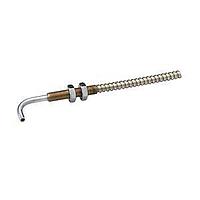
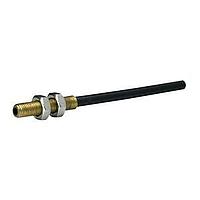
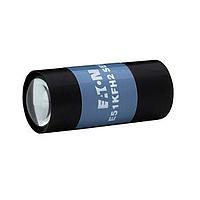
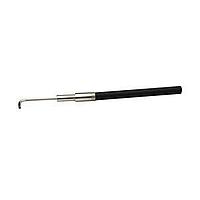
Sensor Hardware & Accessories
Reliable sensing does not depend on the sensor alone. In real industrial environments, the way a sensor is mounted, protected, adjusted, and integrated into the machine often has a direct impact on stability, repeatability, and service life. That is why Sensor Hardware & Accessories plays an important role in automation panels, production equipment, test setups, and field installations.
This category focuses on the practical components that help sensors fit correctly into the application around them. From mechanical support and installation parts to accessory items used during assembly and maintenance, the right hardware helps reduce vibration-related issues, simplify alignment, and support cleaner system integration across OEM and maintenance projects.
Why sensor hardware matters in industrial applications
Even when the sensing element is correctly specified, installation details can still determine whether the final system performs as expected. Poor mounting can lead to signal inconsistency, unwanted movement, premature wear, or difficult maintenance access. In production environments, these small issues can quickly become downtime, false triggering, or reduced process confidence.
Well-matched hardware and accessories support mechanical stability, repeatable positioning, and safer cable or device handling during operation. This is especially relevant where sensors are exposed to shock, washdown procedures, frequent setup changes, or limited mounting space inside machines and enclosures.
Typical roles of sensor hardware and accessories
Products in this category are usually selected to solve practical integration tasks rather than to add new sensing functions. In many projects, they are used to secure a sensor in place, adapt mounting to the available machine geometry, or make replacement easier during service. For machine builders, this can improve assembly consistency across multiple builds. For maintenance teams, it can shorten troubleshooting and installation time.
Depending on the application, sensor accessories may also help with positioning, protection, spacing, fastening, or compatibility with surrounding hardware. In a broader electromechanical build, these parts are often chosen alongside mounting hardware and enclosure-related components to create a clean and durable installation.
Common environments where these accessories are used
Sensor support hardware is widely used in factory automation, process systems, packaging lines, material handling equipment, and inspection stations. It is also relevant in laboratories, machine retrofits, and custom fixture design, where the sensing point must be held in a repeatable position over time. In these cases, the accessory is not secondary; it is part of the functional reliability of the complete setup.
Applications often involve proximity sensing, photoelectric sensing, position detection, or condition monitoring, where mechanical alignment is essential. Integrators working with brands such as Banner Engineering, Honeywell, and Endress+Hauser often need compatible installation and support components that fit the mechanical and operational demands of the job without overcomplicating the design.
How to choose the right sensor hardware
Selection should begin with the installation conditions, not just the sensor body. Consider the available mounting surface, required adjustment range, vibration level, service access, and whether the setup must be frequently repositioned. In compact machines, even a small difference in bracket style or fastening method can affect line-of-sight, target distance, and cable routing.
It is also useful to evaluate environmental exposure. Temperature variation, moisture, dust, washdown requirements, and chemical contact can all influence accessory choice. For moving equipment or serviceable assemblies, ease of replacement matters as much as initial fit. A simple, well-supported mounting approach often performs better over time than a more complex configuration that is difficult to maintain.
Fit within a broader hardware ecosystem
Sensor installation rarely happens in isolation. In many builds, accessory selection overlaps with panel hardware, machine framework components, and PCB or enclosure support parts. For example, some projects may require related items such as PCB circuit board hardware for controller assemblies or signal interface sections located near the sensing point.
Likewise, system ergonomics and mechanical finishing can influence the surrounding design. In operator-facing equipment or test fixtures, related hardware such as knobs and dials may appear in the same build, especially where sensor-guided adjustment and manual setup are combined within a single assembly.
Manufacturer context and sourcing considerations
This category may be relevant for teams sourcing parts around sensing systems from established industrial suppliers such as Advantech, AMP Connectors - TE Connectivity, Amphenol, ams OSRAM, Broadcom, Eaton, Honeywell Test & Measurement, and others listed on the site. The exact accessory requirement will depend on the mechanical interface and the broader application, so it is important to confirm compatibility at the project level.
For B2B buyers, it is often more efficient to source sensor-related hardware together with the rest of the electromechanical bill of materials. This helps reduce mismatch between installation components and the operating environment, while also simplifying procurement for machine builds, maintenance spares, and standardization across multiple lines or facilities.
What to look for when comparing options
When reviewing available items in this category, focus on how each part supports the intended installation rather than comparing products only by name. Useful evaluation points include mounting method, adjustment flexibility, physical robustness, material suitability, and how easily the component can be integrated into an existing machine or panel layout.
It is also worth considering long-term serviceability. Hardware that allows straightforward access, clean replacement, and consistent reinstallation can reduce maintenance effort over the life of the equipment. In industrial settings, this practical advantage is often just as important as the original sensor specification.
Support better sensor integration from the start
A well-planned sensing system depends on both the sensor and the hardware around it. Choosing appropriate accessories helps create a more stable installation, supports repeatable performance, and makes future maintenance easier. For engineering, production, and MRO teams, that means fewer avoidable mechanical issues and a more dependable sensing setup overall.
Explore this category to find sensor hardware and accessory options that align with your installation method, environmental conditions, and system design requirements. A careful match at the hardware level can make the entire sensing application easier to build, operate, and maintain.
Get exclusive volume discounts, bulk pricing updates, and new product alerts delivered directly to your inbox.
By subscribing, you agree to our Terms of Service and Privacy Policy.
Direct access to our certified experts