Wireless & RF Modules
Reliable wireless connectivity is now a core requirement in many embedded designs, from industrial gateways and edge controllers to portable devices and remote monitoring nodes. Choosing the right module affects not only communication range and data throughput, but also power strategy, integration effort, protocol compatibility, and long-term maintainability. This is where Wireless & RF Modules play an important role across modern embedded systems.
Within this category, engineers and sourcing teams can evaluate solutions for Wi-Fi, Bluetooth, 802.15.4-based networking, and broader RF communication needs. The range is relevant for product development, machine connectivity, industrial IoT, and system upgrades where a compact, prebuilt radio interface helps reduce design complexity and speed deployment.
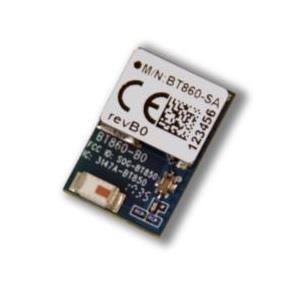
Where wireless and RF modules fit in embedded systems
In embedded hardware, a wireless module provides the communication layer that allows a device to exchange data without a wired network connection. Depending on the use case, this may support local configuration, point-to-point links, wireless sensor communication, machine-to-machine data transfer, or integration into a wider plant or building network.
Compared with designing an RF section from discrete components, a module-based approach can simplify development and help teams focus on the application itself. In many projects, wireless modules are selected alongside related embedded building blocks such as Ethernet and communication modules when systems need both wired and wireless connectivity options.
Common protocol families in this category
This category covers several communication approaches, each suited to different operating conditions. Wi-Fi modules are typically chosen when higher data rates or direct network access are needed, while Bluetooth modules are often used for short-range connectivity, commissioning, mobile interaction, or cable replacement in compact devices.
Modules based on 802.15.4 are commonly considered for low-data-rate mesh or sensor-oriented applications, especially where predictable wireless behavior and low power operation matter. Broader RF solutions may also support specialized industrial or embedded communication architectures, depending on the surrounding system design and network topology.
Representative products and solution examples
Several products in this category illustrate the range of implementation styles available. For Wi-Fi integration, examples include the Advantech WIFI-113E, a full-size Mini-PCIe wireless LAN module, and the Advantech ARK-WLAN-USBE, a USB-based 802.11 wireless LAN option that can suit embedded platforms requiring straightforward interface integration. For infrastructure-oriented use, the Advantech EKI-6311GN-AE and EKI-6340-1A-AE show how wireless connectivity can extend into industrial networking and outdoor access scenarios.
On the low-power networking side, Analog Devices offers several 802.15.4/WirelessHART SOC options such as the LTP5903IPC-WHRC4B1#PBF and LTP5903CEN-WHRB4B1#PBF. These examples are relevant when evaluating sensor networks or industrial wireless architectures that require compact radio-enabled processing at the node level. For Bluetooth-related applications, the Advantech WISE-1020-0S01E provides an example of an 802.15.1 module, while the Advantech PPC-WLAN-D2 combines Wi-Fi 6 and Bluetooth 5.2 in a multiprotocol form factor for more feature-dense embedded platforms.
Key selection factors before ordering
The most effective way to compare embedded wireless modules is to start with the application rather than the radio standard alone. Consider whether the device needs high throughput, low power consumption, long operating time, roaming capability, mesh networking, or simple local wireless access. Mechanical format, host interface, antenna arrangement, and power input range can also affect how easily a module fits into the target hardware.
It is also useful to look at the software and integration environment around the hardware. Driver support, firmware handling, and compatibility with the host platform can be just as important as RF performance. In projects where deployment depends on middleware, configuration tools, or protocol stacks, related embedded software resources may also be part of the broader selection process.
Manufacturers commonly considered in this range
Among the available brands, Advantech stands out in this category through examples that span Bluetooth, Wi-Fi, industrial wireless LAN, and multiprotocol connectivity. This makes it relevant for buyers seeking options that align with embedded PCs, industrial computers, gateways, and machine-level communication requirements.
Analog Devices is especially notable where 802.15.4 and WirelessHART-based designs are under consideration, while Adafruit appears in lighter-weight integration examples such as the Mini USB WiFi Module - 802.11b/g/n. Arduino is also represented through the Portenta Proto Kit ME, which is useful as an ecosystem example for prototyping and development workflows that bring together compute, interfaces, and wireless connectivity in early-stage design validation.
Typical application scenarios
Wireless and RF modules are used across a wide variety of embedded environments. In industrial settings, they may support remote I/O access, equipment monitoring, service connectivity, temporary network extension, or data collection from assets where cabling is difficult or costly. In portable or compact electronic products, they can enable user interface access, mobile app communication, local diagnostics, or cloud-linked networking through a host processor.
They are also relevant in development and proof-of-concept work, where teams need to validate communication architecture before committing to a custom RF design. In more advanced systems, wireless modules may be combined with processing, conversion, or interface expansion hardware, including categories such as data conversion modules, to build complete sensing and communication platforms.
How to narrow down the right module family
If the priority is network access and higher bandwidth, Wi-Fi options are usually the first area to evaluate. If the application focuses on short-range device pairing, commissioning, or low-overhead cable replacement, Bluetooth may be a better fit. For distributed sensor nodes and lower-rate industrial wireless networking, 802.15.4-based options deserve closer attention.
Teams should also think beyond the radio link itself. A suitable module choice depends on enclosure constraints, host interfaces such as USB or Mini-PCIe, antenna planning, environmental conditions, and the practical level of integration needed for the end product. Reviewing a few representative products from Advantech, Analog Devices, Adafruit, or Arduino can help clarify which combination of form factor, protocol, and deployment model makes sense for the project.
Final considerations
A strong wireless design starts with matching the communication method to the real operating environment, not simply picking the newest standard. This category brings together module options that support industrial connectivity, embedded development, and wireless integration across different performance levels and system architectures.
Whether the requirement is Wi-Fi for networked equipment, Bluetooth for short-range communication, or 802.15.4 for sensor-oriented networking, the right selection process should balance protocol needs, hardware integration, and long-term support. Exploring the available RF connectivity solutions here can help engineering and procurement teams move from concept to deployment with a more practical, system-level view.
Get exclusive volume discounts, bulk pricing updates, and new product alerts delivered directly to your inbox.
By subscribing, you agree to our Terms of Service and Privacy Policy.
Direct access to our certified experts