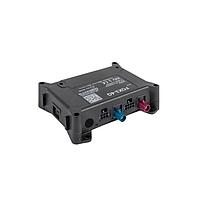
Cellular Modules
Reliable wireless connectivity is a core requirement in modern embedded systems, remote monitoring, industrial automation, and connected field devices. When a design needs wide-area communication beyond local networks, Cellular Modules provide a practical way to add LTE, NB-IoT, LTE-M, GSM, or legacy cellular capability to gateways, controllers, sensors, and edge devices.
This category brings together module options for different deployment priorities, from low-power IoT nodes to industrial communication equipment and application-specific remote terminal units. Whether you are designing a compact PCB-based product or integrating communications into a larger control platform, the right module choice depends on network technology, power profile, interfaces, antenna strategy, and environmental requirements.
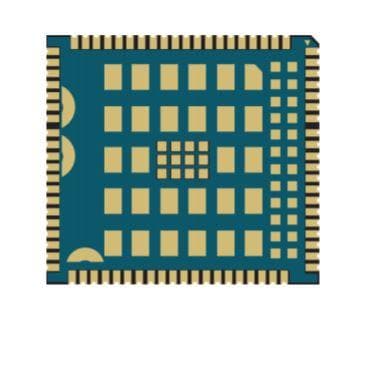
Where cellular modules fit in embedded and industrial systems
Cellular modules are used when equipment must communicate over public mobile networks instead of relying only on Ethernet, Wi-Fi, or short-range wireless links. This makes them especially relevant for remote assets, utility monitoring, smart metering, environmental sensing, transportation systems, and distributed industrial infrastructure.
In many designs, the module acts as the communication layer between the device and a cloud platform, SCADA environment, or central application. Some products in this category focus on compact embedded integration, while others are better suited to gateway-style or RTU-based architectures. For projects that also require positioning, it can be useful to compare options with dedicated GNSS/GPS modules when location performance is a key design factor.
Common cellular technologies in this category
The selection of radio technology has a direct impact on power consumption, bandwidth, coverage behavior, and service life of the deployed product. LTE-M and NB-IoT are common choices for low-power IoT applications, especially where sensors or compact battery-powered devices send small amounts of data over long periods.
Examples such as the Murata LBAD0ZZ1SE-743 and Nordic Semiconductor NRF9131-LACA-R7 illustrate this low-power cellular approach, supporting LTE Cat M1 and NB-IoT for space-constrained embedded designs. For developers looking for tighter integration between processing and communication, the Nordic Semiconductor NRF9160 family shows how a system-in-package can combine an LTE modem with an MCU-oriented architecture.
There are also more application-specific industrial products in this category, including GSM and 3G CDMA oriented modules and communication units. While these can still be relevant for maintenance, retrofit, or network-specific deployments, it is important to match them carefully to the target operator environment and long-term service availability.
How to choose the right module for your design
A good selection process starts with the deployment environment rather than the module part number. Consider which network is available in the destination region, how often the device transmits data, whether the device runs from battery or fixed power, and how much onboard processing is required. These factors usually narrow the field faster than comparing mechanical details first.
From there, review the electrical and integration requirements. In this category, you will find modules with interfaces such as UART, SPI, I2C, and related serial options, which are important when connecting to host processors, sensors, or industrial controllers. Supply voltage range, package type, antenna connection style, and operating temperature should also align with the rest of the design, especially in space-limited or harsh-environment applications.
If antenna implementation is still undecided, it may help to review available antenna options alongside the module selection. Antenna type, placement, and connector approach can strongly influence field performance, certification planning, and enclosure design.
Examples of product approaches in this range
Several products in this category highlight different integration strategies. The STMicroelectronics ST87M01-1100 is positioned as a low-power NB-IoT and GNSS industrial module, which can be relevant where narrowband communication and location-related capability need to coexist in a compact format. In similar low-power IoT use cases, Murata Electronics LBAD0XX1SC-005 adds another perspective with LTE support and features aimed at connected embedded products.
For industrial communication infrastructure, some offerings are less about a tiny solder-down module and more about enabling connected systems at the edge. The PHOENIX CONTACT 2403943 EAGLEI CELLULAR RTU and PHOENIX CONTACT 2701344 NLC-COM GSM point toward control and remote communication use cases where integration happens at the system level rather than only at the PCB level.
Advantech products in this category also show the broader ecosystem around cellular connectivity, including gateway-oriented and Mini-PCIe based communication solutions. If your application sits closer to edge computing, panel PCs, or industrial networking, browsing the wider Advantech portfolio can help identify products that fit beyond the radio module alone.
Embedded integration considerations
For compact device designers, module selection is not only about protocol support. PCB footprint, power rail design, peak transmit current, firmware architecture, and external component requirements all affect implementation effort. Small package options from suppliers such as Nordic Semiconductor can be particularly relevant when low-power embedded communication must be combined with a streamlined hardware design.
Another important consideration is how the module fits into the overall wireless architecture. Some projects need only cellular backhaul, while others combine cellular with additional local radios for sensor communication or device commissioning. In those cases, teams may also compare cellular solutions with multiprotocol modules to define a balanced system architecture.
What matters in industrial and remote deployments
In real-world field installations, long-term reliability often matters more than headline data rates. Industrial users typically evaluate modules based on network stability, environmental tolerance, power behavior, ease of integration, and maintainability over the life of the equipment. That is why operating temperature range, antenna connection method, and interface compatibility remain central criteria during specification.
Deployment context also shapes the right form factor. A compact LTE-M or NB-IoT module may be ideal for a sensor node, while a larger communication unit or RTU-based product may be more suitable for remote cabinets, utility equipment, or industrial stations. The best choice usually comes from matching the module to the device role, not from choosing the most feature-dense option.
Finding the right fit for your application
This category covers a broad spectrum of cellular connectivity needs, from low-power embedded IoT designs to industrial communication hardware for remote assets and infrastructure. Products from Murata, Nordic Semiconductor, STMicroelectronics, Advantech, and PHOENIX CONTACT illustrate how different module families serve different integration levels, network technologies, and system objectives.
When narrowing down options, focus on the communication standard you need, the expected installation environment, available power, interface requirements, and whether positioning or broader system integration is part of the project. A clear view of those constraints will make it much easier to identify a cellular module that supports both current deployment needs and long-term product viability.
Get exclusive volume discounts, bulk pricing updates, and new product alerts delivered directly to your inbox.
By subscribing, you agree to our Terms of Service and Privacy Policy.
Direct access to our certified experts