Communication Development Tools
Designing or evaluating a connected system often starts long before final hardware is selected. Development platforms, evaluation kits, and reference tools make it easier to validate interfaces, compare communication methods, and shorten the path from concept to deployment. For engineering teams working on industrial electronics, embedded devices, and connected control systems, Communication Development Tools provide a practical foundation for early-stage testing and system integration.
What this category supports in real engineering work
This category is centered on hardware and evaluation platforms used to explore communication technologies in embedded and industrial applications. Depending on the project, that can include power line communication, wireless connectivity, industrial networking, HART modem evaluation, or system-level network testing. These tools help engineers confirm signal paths, interface behavior, and software interaction before moving into custom board design.
Compared with general prototyping boards, communication-focused development tools are typically chosen to assess a specific protocol, network architecture, or interface strategy. They are useful for lab validation, proof-of-concept work, firmware development, and interoperability checks across gateways, sensor nodes, and control hardware.
Common tool types found in this range
Communication projects rarely follow a single path, so the category includes several types of platforms. Some are compact evaluation boards for a single IC or modem, while others are broader system kits intended to demonstrate network behavior, application-layer communication, or industrial data transfer under realistic conditions.
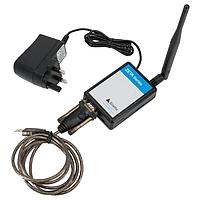
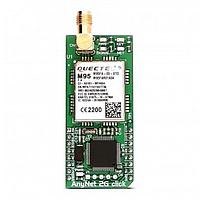
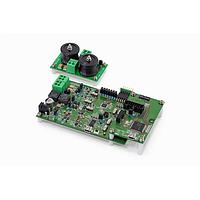
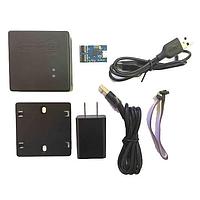
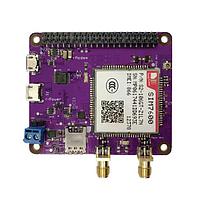
Typical examples from this range include power line communication evaluation kits, Arduino shield-style development boards, HART modem evaluation hardware, and networking development systems. If your work extends beyond communication-specific platforms, related memory IC development tools may also be useful for broader embedded platform validation.
Representative platforms and where they fit
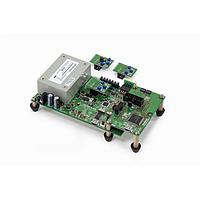
Several products in this category illustrate how different communication approaches are supported. The Dialog Semiconductor SM2400-EVK2M5-A is positioned for power line communication evaluation, while the Analog Devices MAX2982EVSYS targets industrial broadband powerline development. These kinds of tools are relevant when communication needs to use existing wiring infrastructure rather than a separate physical network.
For industrial field communication, the onsemi A5191HRTNGEVB HART modem evaluation board is a practical example of a platform used to assess modem behavior and serial integration. The onsemi NCN5110ASGEVB and NCN5130ASGEVB Arduino-shield evaluation boards support faster hands-on work when teams want to explore device communication in a familiar development environment.
At the system level, products such as the Microchip 090-15200-605 and 090-15200-651 system servers show that communication development is not limited to small boards alone. In some workflows, engineers also need infrastructure for network management, edge testing, or multi-node validation. For teams comparing supplier ecosystems, pages from manufacturers such as Analog Devices and Microchip can help narrow down suitable development platforms.
How to choose the right communication development tool
The best starting point is the communication method your product must support. If the design is focused on power line communication, it makes sense to prioritize evaluation kits built for PLC transceivers and associated network behavior. If the application is process automation or field instrumentation, a HART-focused board may be more relevant than a general networking kit.
It is also important to look at the available host interfaces and development workflow. Tools in this category may expose UART, SPI, USB, or Ethernet, which can influence how quickly they fit into an existing lab environment. In many cases, the right choice is not the most feature-rich platform, but the one that best matches the intended integration path, firmware effort, and test objectives.
Another practical consideration is whether you need IC evaluation, protocol learning, or system-level demonstration. A single-chip evaluation board is often suitable for electrical and firmware testing, while a larger kit may be better when you need to observe network formation, traffic handling, or multi-device communication. If your scope includes adjacent prototyping needs, you can also explore related communication development platforms across the broader range.
Applications across industrial and embedded projects
These tools are relevant in many settings where reliable data exchange matters. Engineers may use them to develop smart metering devices, industrial control nodes, remote sensing equipment, building automation hardware, or connected embedded products that require deterministic or standards-based communication.
They are equally useful during feasibility studies, especially when a team is comparing wired and wireless options or determining whether an existing infrastructure can support a new communication layer. For this reason, communication development often overlaps with networking, edge control, and low-level interface testing rather than standing alone as an isolated design task.
Working with manufacturer ecosystems
Supplier ecosystem can matter as much as the hardware itself. Some teams prefer development tools from vendors already used in production, while others choose evaluation hardware based on software support, documentation quality, or compatibility with an existing engineering toolchain. Within this category, names such as onsemi, Dialog Semiconductor, PHOENIX CONTACT, Adafruit, and Microchip Technology appear in different parts of the communication workflow.
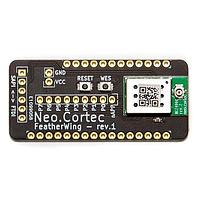
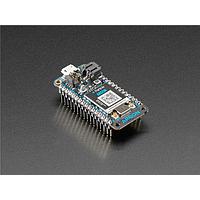
For example, Adafruit 3993 is more aligned with BLE and WiFi experimentation in a maker-friendly or rapid-prototyping context, while PHOENIX CONTACT 2700881 and SmartMesh-related tools from Analog Devices fit better into industrial or network-oriented evaluation scenarios. The key is to choose a platform that supports the communication concept you need to prove, rather than selecting by brand alone.
When a communication tool becomes a better investment
A dedicated evaluation platform is especially valuable when the communication layer is technically uncertain or carries project risk. That may include unfamiliar physical media, protocol timing concerns, host interface constraints, or questions about coexistence with other system functions. In those cases, early testing with the right development hardware can reduce redesign effort later.
These tools also help teams move faster during collaboration between hardware, firmware, and system engineers. Instead of waiting for a custom prototype, each group can work from a known reference platform and validate assumptions in parallel. For organizations building connected products at scale, that can make development more predictable and improve handoff into qualification and production planning.
Final considerations
Choosing from this category is really about matching the tool to the communication problem you are trying to solve. Whether the priority is power line communication, HART, embedded wireless connectivity, or broader networking evaluation, the right platform should support realistic testing, straightforward integration, and efficient learning in the lab.
As you compare options, focus on the intended protocol, available interfaces, and the level of validation required. A well-chosen development kit or evaluation board can do more than demonstrate basic connectivity—it can clarify design decisions, reduce integration risk, and help move a communication concept toward a deployable system.
Get exclusive volume discounts, bulk pricing updates, and new product alerts delivered directly to your inbox.
By subscribing, you agree to our Terms of Service and Privacy Policy.
Direct access to our certified experts