Audio IC Development Tools
Evaluating an audio design early can save significant time later in the development cycle, especially when signal quality, power behavior, noise performance, and board-level integration all matter at once. Audio IC Development Tools help engineers move from datasheet review to practical testing, making it easier to validate amplifier stages, audio signal paths, and related analog performance before committing to a final hardware design.
For design teams working on embedded audio, consumer electronics, industrial interfaces, or mixed-signal systems, these tools provide a faster way to compare device behavior in real conditions. They are especially useful when you need to assess gain structure, differential signaling, low-noise operation, or audio output stages around a specific IC family.
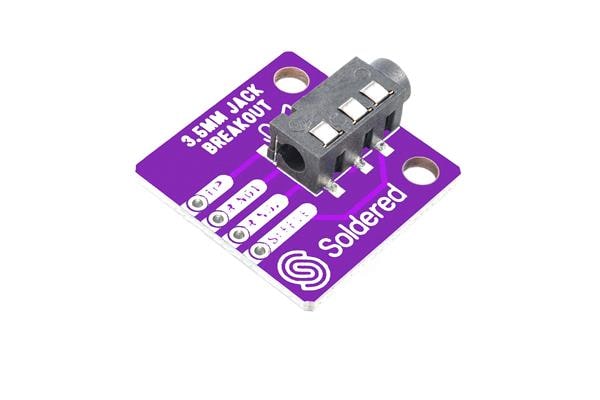
What this category is used for
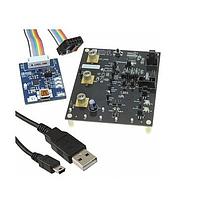
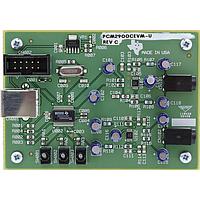
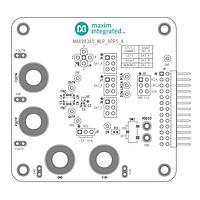
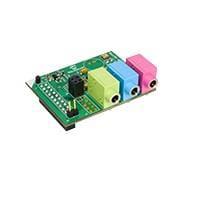
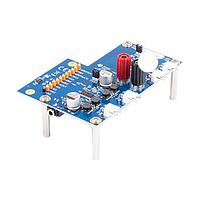
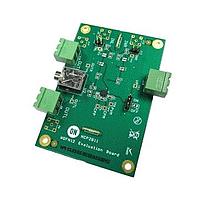
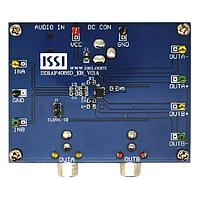
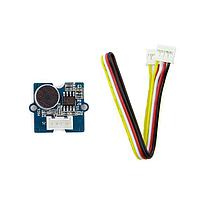
This category focuses on development and evaluation hardware used to test audio-related integrated circuits in a controlled, repeatable way. Depending on the design objective, that can include amplifier evaluation boards, differential ADC driver platforms, low-noise op amp boards, and audio-focused demo hardware for signal-chain verification.
Instead of building a custom prototype from scratch, engineers can use these boards to check signal integrity, power requirements, interface behavior, and analog performance much earlier. That shortens design iteration time and helps identify whether a device is suitable for voice, line-level audio, sensor front ends, or broader mixed-signal applications.
Typical tool types in the audio IC workflow
Audio development hardware is not limited to a single board style. Some kits are designed for evaluating power or audio amplifiers, while others are better suited to front-end analog conditioning, differential signal conversion, or precision stages that support audio acquisition and processing.
Examples in this category include the Infineon EVALAUDAMP24TOBO1 Amplifier Evaluation Development Board Kits for amplifier-focused testing, as well as several Analog Devices platforms such as the AD8233CB-EBZ, EVAL-SSM2380Z, and AD8138AARMZ-EBZ. Although each board targets a particular device, the broader purpose is similar: provide a practical environment for measuring behavior, checking stability, and understanding how the IC may fit into a larger design.
Where a project extends beyond audio amplification alone, related categories such as amplifier IC development tools or data conversion development tools may also be relevant.
Why evaluation boards matter in audio design
Audio systems are highly sensitive to layout quality, grounding strategy, supply noise, and input/output matching. A dedicated evaluation board offers a known baseline, allowing engineers to focus on the IC’s behavior before spending time on PCB optimization. This is particularly valuable when comparing multiple design approaches or validating a new architecture under realistic test conditions.
These tools also support faster lab work. Engineers can connect generators, analyzers, oscilloscopes, or ADC stages directly to the board and begin characterizing performance. In many cases, this helps teams verify low-noise operation, gain response, filtering needs, and differential interface compatibility before integrating the IC into a production design.
Representative products and use cases
Several products in this category illustrate the range of use cases audio developers may encounter. The Analog Devices ADA4932-2YCP-EBZ LOW POWER DIFFERENTIAL ADC DRIVER is suited to evaluating a differential driver stage where audio or analog signals must be prepared cleanly for conversion. Boards such as the AD8132-EVAL and AD8138ARM-EBZ support examination of differential amplifier behavior in applications where common-mode rejection and balanced signal handling are important.
For lower-noise analog stages, the Analog Devices ADA4817-2ACP-EBZ can support investigation of fast, low-noise front-end performance. Audio-centric evaluation is also represented by solutions such as EVAL-SSM2380Z, while the AD8220-EVALZ is useful when a design requires careful assessment of amplifier performance in a dedicated setup. In amplifier-heavy workflows, browsing Analog Devices platforms can help narrow down options by device family and signal-chain role.
How to choose the right audio IC development tool
The most effective way to select an evaluation board is to begin with the function you need to validate. If the goal is speaker output or amplifier stage testing, a board built around an audio amplifier is the most direct choice. If the design involves conditioning analog signals before digitization, a differential driver or precision op amp evaluation board may be more appropriate.
It also helps to consider the surrounding lab environment. Think about signal source type, expected bandwidth, measurement method, supply rails, and whether the board will be used for quick proof-of-concept work or more formal characterization. For projects centered on audio playback or codec-adjacent development, related audio IC development tools can provide a more focused starting point than general-purpose analog boards.
Manufacturer ecosystem can be another factor. For example, Infineon and Analog Devices both appear in this category through evaluation kits that support direct hands-on testing, but the best fit depends on the target IC and the type of audio architecture being developed.
Common engineering scenarios
In practice, these development tools are often used in early-stage product definition, circuit comparison, troubleshooting, and performance tuning. A team designing an industrial HMI may use an evaluation board to assess audible output stages and noise behavior. An embedded systems engineer may use a differential amplifier board to verify how cleanly an analog signal can be routed into a converter path.
They are also useful in educational and R&D environments where the goal is to understand device behavior without first designing custom hardware. That makes them valuable not only for final product development, but also for feasibility testing, architecture studies, and component qualification.
Building a broader signal-chain evaluation setup
Audio IC testing often overlaps with neighboring analog disciplines. An audio path may include amplification, filtering, conversion, and timing dependencies, so a single evaluation board is sometimes only one part of the test setup. Engineers comparing complete signal chains may also look at adjacent categories such as active filters or data conversion platforms to build a more complete validation flow.
That broader perspective is important when a design must balance audio quality, power efficiency, PCB complexity, and interface compatibility. Using the right combination of development tools can reduce redesign risk and improve confidence before moving to a custom board spin.
Final considerations
Choosing among Audio IC Development Tools is ultimately about matching the board to the function you want to verify: amplifier output, differential signal handling, low-noise analog performance, or audio-path prototyping. A well-chosen evaluation platform gives engineers a practical way to test ideas quickly, compare devices more effectively, and make design decisions based on measured behavior rather than assumptions alone.
Whether you are refining an audio front end or exploring a broader analog signal chain, this category provides a useful starting point for lab evaluation and component selection. Reviewing the available boards by device role, test objective, and manufacturer ecosystem will usually lead to a faster and more reliable development process.
Get exclusive volume discounts, bulk pricing updates, and new product alerts delivered directly to your inbox.
By subscribing, you agree to our Terms of Service and Privacy Policy.
Direct access to our certified experts