Backlighting Components
Reliable illumination is often a small part of the bill of materials, but it has a direct impact on readability, inspection accuracy, and overall device performance. In display assemblies, operator panels, and machine vision setups, the right backlight helps improve contrast, support consistent viewing conditions, and make critical information easier to detect.
Backlighting Components in this category cover both traditional and modern approaches, from CCFL lamps and inverters to LED-based backlighting modules for displays and industrial vision systems. Whether the requirement is compact panel illumination, replacement parts for legacy equipment, or controlled lighting for optical inspection, selecting the right technology starts with understanding the application environment and the optical objective.
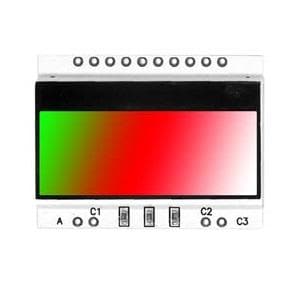
Where backlighting components are used
Backlighting is used anywhere a surface, display, or object needs to be illuminated from behind to improve visibility or reveal detail. In embedded displays, this may mean providing uniform light behind an LCD or graphic module. In industrial inspection, backlighting can help create high-contrast silhouettes that make edges, holes, shapes, or defects easier to identify.
This category is relevant for OEM design, maintenance, retrofit work, and production-line integration. It can support applications linked to display modules, operator interfaces, and imaging systems that also rely on compatible camera accessories for sensing and inspection performance.
Core technologies in the category
The product range typically falls into three practical groups: CCFL lamps, inverter circuitry for driving those lamps, and LED backlighting solutions. Each serves a different stage of product lifecycle and system design. CCFL-based parts are still relevant where legacy equipment must be maintained, while LED options are widely used for newer display assemblies and industrial vision lighting.
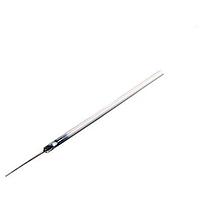
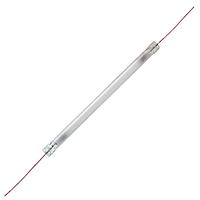
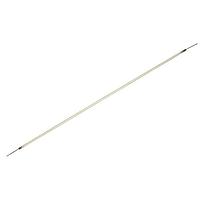
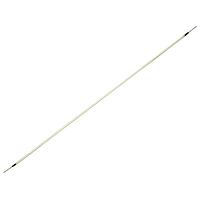
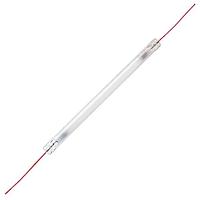
For example, the TDK CXA-P20L-L CCFL inverter is suited to applications where a cold cathode lamp needs the appropriate drive stage, while JKL Components BF26285-20B and BF6178-20B illustrate the role of miniature CCFL lamps in older or specialized lighting designs. On the LED side, products such as the Advantech 9680012622 LED backlighting unit and DISPLAY VISIONS modules for DOG series displays show how compact backlights are used as part of a display subsystem rather than as standalone illumination hardware.
LED backlighting for displays and machine vision
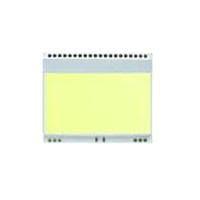
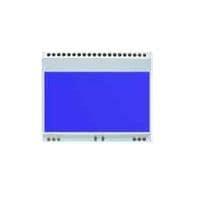
LED technology is often preferred where designers need lower maintenance, fast response, and flexible color options. In display-focused applications, LED backlights are commonly matched to specific module families, helping maintain even illumination and compact mechanical integration. DISPLAY VISIONS parts such as EA LED36x28-ERW and EA LED78x64-W are good examples of application-specific backlights intended to work with defined display platforms.
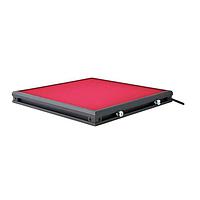
In machine vision, backlighting takes on a different role. Instead of simply making content readable, it helps create repeatable optical conditions for image capture. Banner Engineering models in this category, including the LEDWB150X150PW2-XQ, LEDBB225X150PW2-XQ, and LEDILB290XW6-XQ, represent industrial vision lights designed for controlled illumination, with options that vary by format and light color for different inspection tasks.
How CCFL solutions fit into legacy and specialized systems
Although LED technology now dominates many new designs, CCFL assemblies still matter in support, repair, and retrofit scenarios. Some older equipment was built around the electrical and optical behavior of fluorescent backlighting, so replacement often requires maintaining the same lamp type and using a suitable inverter. In these cases, compatibility at the system level is usually more important than simply choosing a newer technology.
A CCFL lamp and its inverter should be treated as a working pair. The lamp defines the physical and optical element, while the inverter provides the electrical drive needed for startup and operation. Products from TDK and JKL Components help cover this need where continued operation of existing hardware is the priority, especially in service environments where redesign is not practical.
What to consider when selecting backlighting components
The best choice depends on how the light will be used. For display integration, key factors usually include form factor, compatibility with the target module, desired illumination color, and how evenly the light needs to be distributed. For machine vision, the selection process shifts toward optical contrast, object geometry, installation space, ambient conditions, and whether visible or infrared illumination is more suitable.
Electrical and environmental requirements also matter. Many industrial LED vision backlights operate on 24 V dc, which can simplify integration into automation systems, but connector style, current demand, and ingress protection still need to be checked carefully. When comparing options from Banner Engineering or display-oriented parts from Advantech and DISPLAY VISIONS, it is useful to think in terms of the full assembly rather than the light source alone.
Choosing by application instead of by part type alone
A useful way to narrow the range is to start with the job the backlight needs to perform. If the goal is to restore or maintain an older display assembly, a CCFL lamp and matching inverter may be the correct route. If the requirement is a compact backlight for an LCD module, a dedicated LED backlight designed for that display family is usually the more efficient option.
For automated inspection, larger-area and linear backlights are often selected based on the object size and the imaging method. A panel-style backlight may suit silhouette inspection across a wider field, while a linear format can be effective where the lighting geometry is narrow or directional. If your project also involves broader optical hardware, related fiber optic components and imaging accessories may be relevant in the wider system design.
Representative manufacturers and product examples
This category includes solutions from established suppliers used across electronics and industrial applications. Advantech appears in compact LED backlighting for display-oriented integration, while DISPLAY VISIONS supports specific graphic display families with matched backlight modules. Banner Engineering stands out in the industrial vision segment, where backlights are selected as part of an inspection lighting strategy rather than as simple display illumination.
For legacy fluorescent solutions, JKL Components and TDK remain relevant references within the available range. Their presence is especially useful when supporting systems that still depend on CCFL technology. This mix of manufacturers makes the category suitable for both new builds and maintenance-driven sourcing, without forcing the same lighting approach onto every application.
Finding the right fit for your system
Backlighting performance depends on more than brightness alone. Mechanical fit, electrical compatibility, optical behavior, and the wider device architecture all influence whether a component will perform as intended once installed. That is why a category like this is most useful when approached as part of a complete display or vision solution, not just as a list of light sources.
If you are comparing options for panel illumination, machine vision, or replacement of older fluorescent assemblies, this selection provides a practical starting point across several backlighting technologies. Reviewing the intended application first will make it easier to identify the appropriate component type, narrow the manufacturer range, and choose a part that fits the real operating conditions of your equipment.
Get exclusive volume discounts, bulk pricing updates, and new product alerts delivered directly to your inbox.
By subscribing, you agree to our Terms of Service and Privacy Policy.
Direct access to our certified experts