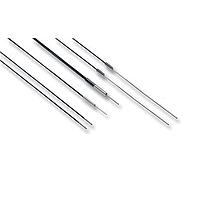
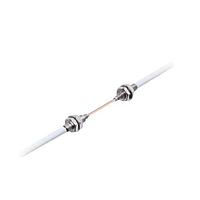
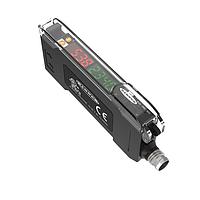
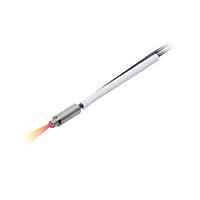
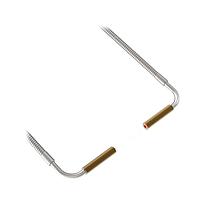
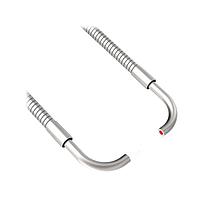
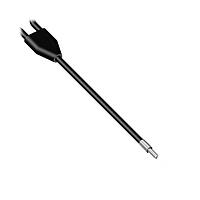
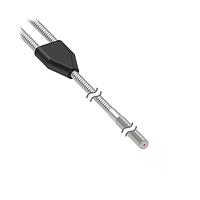
Fiber Optic Sensors
Reliable detection in tight spaces, harsh environments, or fast-moving production lines often depends on one thing: using the right optical sensing method. Fiber Optic Sensors are widely used when a standard photoelectric device is too large for the installation point, when the target is small, or when the sensing head needs to be separated from the amplifier for better durability and flexibility.
Within industrial automation, these sensors help solve practical challenges such as limited mounting space, precise object positioning, edge detection, presence verification, and stable sensing near heat, vibration, or electromagnetic noise. They are especially relevant in machinery, packaging, electronics handling, assembly systems, and other applications where repeatable, non-contact sensing is important.
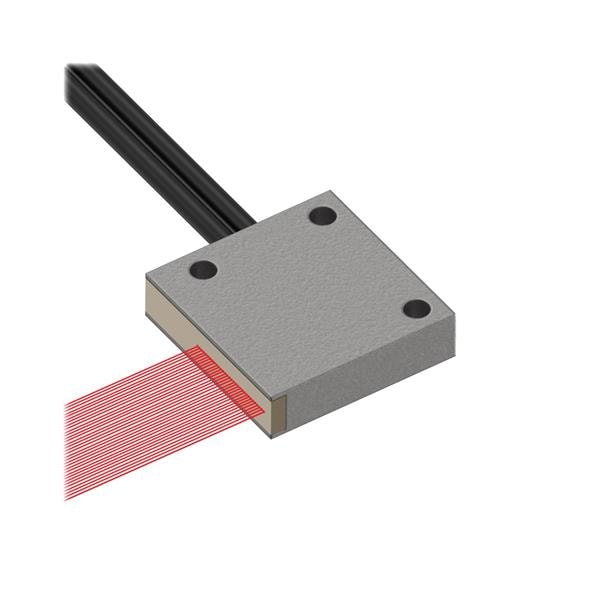
Where fiber optic sensing fits in industrial systems
A fiber optic sensor system typically uses light transmitted through optical fibers to a sensing point, while the evaluation electronics remain in a separate amplifier. This architecture allows the sensing tip to be compact and easier to position in areas that would be difficult for larger sensor bodies. It also helps when the application requires low mass at the detection point or careful routing around mechanical constraints.
Compared with broader fiber optic cables used mainly for light transmission or communication paths, fiber optic sensors are selected for detection tasks. In many installations, the sensing assembly works alongside control hardware, actuators, and machine safety logic to support automated decision-making on the line.
Typical applications for fiber optic sensors
These sensors are often chosen for small target detection, position confirmation, gap monitoring, label or mark detection, and counting functions. Because the sensing point can be very compact, they are useful in pick-and-place units, robotic end effectors, part feeders, semiconductor handling, and packaging equipment where a few millimeters of space can make a major difference.
Another common reason to use fiber optics is environmental separation. The amplifier can remain in a more protected cabinet area while the fiber head is routed to the process. That makes the technology attractive where there is heat, vibration, splashing, or restricted access near the actual detection point. In optical assemblies that require supporting interconnect components, users may also evaluate related products such as fiber optic connectors to complete the installation properly.
Key selection factors before you buy
Choosing the right product in this category usually starts with the application rather than the brand. Important considerations include sensing distance, target size, object material, installation geometry, bend routing, environmental conditions, and whether the application needs through-beam, diffuse, or other detection arrangements. Mechanical fit is especially important because fiber optic sensing is often selected specifically to solve a mounting constraint.
Buyers should also review compatibility across the sensing chain: fiber unit, mounting hardware, connection accessories, and amplifier interface where applicable. In many projects, the accessory itself is critical to long-term sensor performance because brackets, adapters, protective parts, and connection elements directly affect alignment stability and serviceability.
Accessories and support components matter more than they appear
Many product listings in this category serve as sensor accessories rather than stand-alone sensing heads. That is common in industrial sourcing, where maintenance teams and OEM buyers need replacement hardware, mounting parts, adapters, or interface components to keep installed systems running consistently. A well-matched accessory can simplify installation, reduce misalignment, and improve repeatability over time.
Examples from this catalog include parts such as IFM Electronic E30124, Honeywell 7200-106-15, Honeywell 060-0603-43-12, and Banner Engineering SMBTK-50-74744. These references illustrate the practical ecosystem around industrial sensing: not every required item is the sensor body itself, and procurement often depends on finding the exact accessory or mounting component specified by the machine design.
Representative manufacturers in this category
Several established industrial brands appear in the available range, including IFM Electronic, Honeywell, Banner Engineering, Festo, Aptiv, and Hirschmann. Each of these names is associated with broader sensing or automation portfolios, which is useful for buyers who prefer to standardize components across equipment platforms or maintenance inventory.
For example, IFM Electronic accessories such as E60041, E30128, E30130, and E40234 suggest a range oriented toward installation and sensor integration. Honeywell and Banner Engineering are also relevant when the requirement involves established industrial sensing ecosystems, while Festo-related accessories may be especially useful in pneumatic and motion-oriented machine assemblies. The right choice depends less on brand preference alone and more on fit, compatibility, and the exact maintenance or design requirement.
How fiber optic sensors differ from other fiber optic products
In sourcing workflows, it is easy to confuse sensing products with general optical transmission components. Fiber optic sensors are intended for detection and measurement logic, while other category types may focus on signal routing, attenuation, assembly, or prototyping. Understanding that distinction helps reduce ordering errors and keeps the project aligned with the intended function.
If your application is centered on pre-terminated optical interconnects rather than sensing, it may be more useful to review fiber optic cable assemblies. For engineering validation or prototype work, development-specific tools may also be more relevant than production sensing components.
Practical buying guidance for OEMs, integrators, and maintenance teams
For OEM design teams, the priority is usually repeatable fit within the machine architecture. That means verifying mounting method, routing path, service access, and compatibility with the intended amplifier or sensor family before ordering. For system integrators, it is also worth checking how the sensing point interacts with ambient light, target variation, and machine cycle speed.
Maintenance and MRO buyers often approach this category differently. Their focus is usually exact replacement, minimizing downtime, and matching the existing installed part number. In those cases, having access to known references such as Aptiv 12160761, Festo SL-DSM-S-M5-B, Festo SARA-RF-Q100-S, or Hirschmann 831-839-001 can help support faster replenishment and more accurate spare-parts management.
Conclusion
When a sensing task calls for compact installation, flexible routing, and dependable optical detection, fiber optic sensor solutions can be a strong fit. This category is particularly valuable not only for sensor-related components themselves, but also for the accessories and integration parts that keep industrial systems aligned, maintainable, and production-ready.
As you review available items, focus on application fit, mechanical compatibility, and the role each component plays in the wider sensing assembly. That approach makes it easier to identify the right part for new machine builds, upgrades, or replacement needs without overcomplicating the selection process.
Get exclusive volume discounts, bulk pricing updates, and new product alerts delivered directly to your inbox.
By subscribing, you agree to our Terms of Service and Privacy Policy.
Direct access to our certified experts