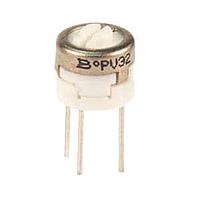
Trimmers
Fine adjustment is often what separates a circuit that merely works from one that performs consistently in real operating conditions. In prototype builds, calibration stages, analog signal conditioning, and maintenance work, trimmers give engineers and technicians a practical way to tune resistance values without redesigning the whole circuit.
Trimmers in this category are used where controlled, compact, and adjustable resistance is needed for setup or calibration. They are commonly selected for PCB-level tuning, sensitivity adjustment, offset correction, timing control, and other applications where a fixed resistor does not provide enough flexibility.
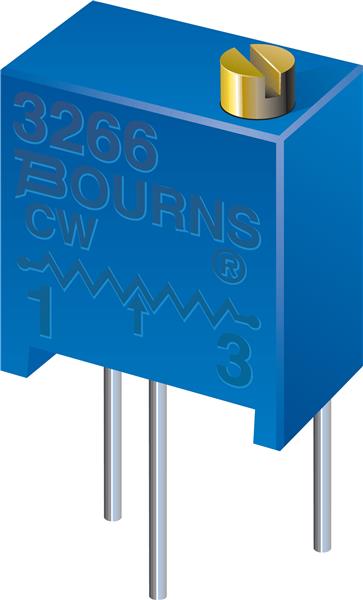
Where trimmers fit in electronic design
Unlike standard fixed resistors, trimmers are intended to be adjusted during assembly, testing, or service. They are especially useful in analog and mixed-signal designs where small resistance changes can influence gain, threshold, balance, or reference settings. This makes them relevant in industrial control boards, instrumentation, communication equipment, and embedded electronics.
Because they are part of the wider passive component ecosystem, trimmers are often chosen alongside parts such as capacitors and other tuning-related elements in the signal path. The key advantage is that they allow correction and optimization at the board level without changing the layout or replacing multiple surrounding components.
Common forms in this category
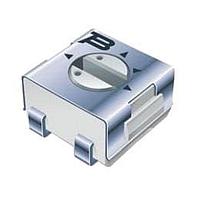
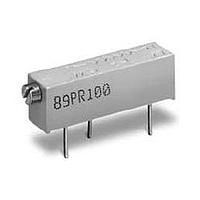
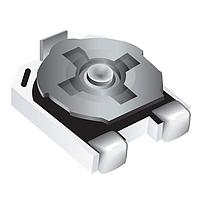
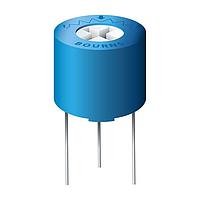
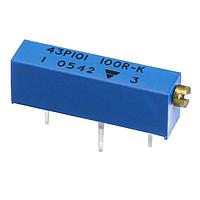
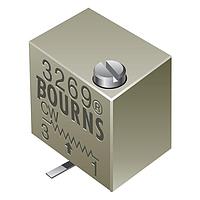
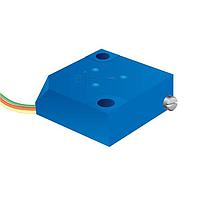
This category covers adjustable resistive components such as trimmer resistors, potentiometer-style devices, and rheostat-related solutions used for controlled manual adjustment. Depending on the design goal, a trimmer may be optimized for compact board mounting, repeated tuning, panel interaction, or single-point calibration during manufacturing.
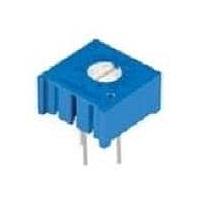
In practical terms, selection usually depends on how the component will be accessed and how often it will be adjusted. Some applications need a compact through-hole cermet trimmer for occasional calibration, while others may require a more user-facing rotary part that behaves closer to a small potentiometer in the finished equipment.
Representative manufacturers and product examples
This range includes solutions from well-known manufacturers such as Alps Alpine, Clarostat / Honeywell, and Murata. These brands are commonly specified when engineers need reliable adjustment components for signal tuning, user control, or calibration tasks across commercial and industrial electronics.
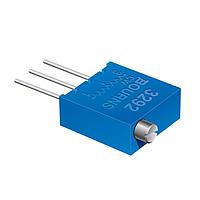
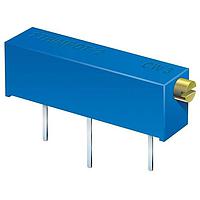
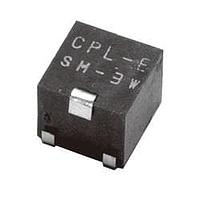
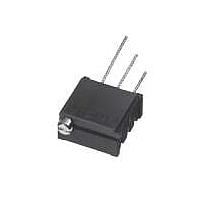
Examples in the category include Alps Alpine RK0972210-F20D35-C0C0-A502B104, Alps Alpine RK1631210-F25-C1-B502-L, Clarostat / Honeywell 53C32500, and Murata PV37Y502C01. These product references illustrate the range of form factors available, from compact trimmer styles to adjustable rotary components suited to different mechanical and electrical integration needs.
How to choose the right trimmer
The first step is to define the adjustment purpose. If the component is used for one-time or infrequent calibration, a compact board-mounted trimmer may be the most practical choice. If regular manual control is required, a rotary adjustable device may offer better accessibility and more intuitive operation.
Engineers also typically review factors such as resistance value, power rating, mounting style, adjustment turns, and environmental range. For example, the Murata PV37Y502C01 is presented here as a cermet trimmer with multi-turn adjustment, which is a useful indicator for applications where finer setting resolution is important. In contrast, many Alps Alpine and Clarostat / Honeywell parts in this category are often considered when mechanical format and user interaction are part of the selection logic.
Materials, stability, and application considerations
For calibration-related components, long-term behavior matters as much as initial adjustment. Designers often compare elements such as resistive material, expected drift, temperature behavior, and mechanical durability. A cermet trimmer, for instance, is often chosen when stable performance and precise adjustment are important in compact electronic assemblies.
Mechanical access should also be considered early in the design stage. The position of the adjustment screw or shaft, available board space, enclosure constraints, and service access all affect whether a particular trimmer style is practical in the finished product. This is especially relevant in industrial equipment where field maintenance and repeatable servicing are expected.
Typical use cases in industrial and electronic systems
Trimmers are widely used in control boards, sensing interfaces, power circuits, audio electronics, communication modules, and measurement equipment. They help tune reference levels, compensate tolerances, and align circuit behavior after assembly. In repair and maintenance environments, they also support re-calibration without replacing the full resistor network.
In broader circuit design, they are often selected together with related passive parts such as filters and frequency-dependent components, especially when a design requires balancing, matching, or signal conditioning. Their value lies in giving the designer or technician a controlled adjustment point inside a larger electronic system.
What to review before ordering
Before final selection, it is useful to confirm the expected adjustment frequency, installation method, available footprint, and target electrical range. For production use, consistency across batches and ease of calibration can be just as important as the nominal resistance value. For service applications, accessibility and replacement compatibility may take priority.
If you are comparing options in this category, it can help to separate requirements into electrical, mechanical, and maintenance criteria. That approach makes it easier to identify whether a compact trimmer, a rotary adjustable part, or another resistive adjustment component is the better fit for your design.
Final thoughts
When accurate setup and circuit fine-tuning are part of the job, the right trimmer can simplify calibration, improve usability, and support stable long-term operation. This category brings together adjustable resistive components from recognized manufacturers for applications ranging from PCB-level tuning to practical manual control.
Review the available series, compare the adjustment style and mounting approach, and choose the part that best matches your circuit architecture and service requirements. A careful selection process here can save time in both development and maintenance.
Get exclusive volume discounts, bulk pricing updates, and new product alerts delivered directly to your inbox.
By subscribing, you agree to our Terms of Service and Privacy Policy.
Direct access to our certified experts