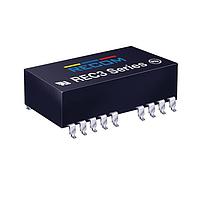
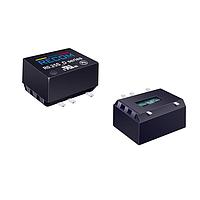
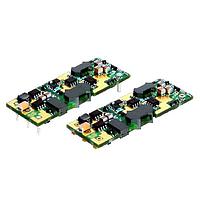
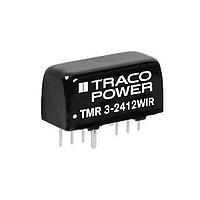
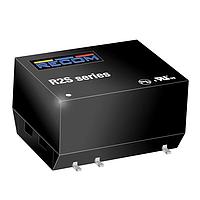
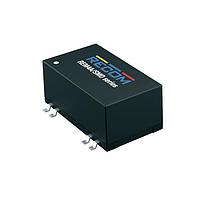
SMD Isolated DC/DC Converters
Space-constrained power designs often need more than simple voltage conversion. In many industrial, automation, and embedded systems, electrical isolation is just as important as regulation itself, helping protect sensitive circuits, reduce noise coupling, and support safer communication between different parts of a system. That is where SMD Isolated DC/DC Converters become especially useful.
This category is intended for engineers and technical buyers who need compact isolated power solutions for PCB-based designs. Surface-mount packages support automated assembly while still delivering the benefits of galvanic isolation, making these converters a practical choice for control boards, signal interfaces, distributed electronics, and space-limited industrial devices.
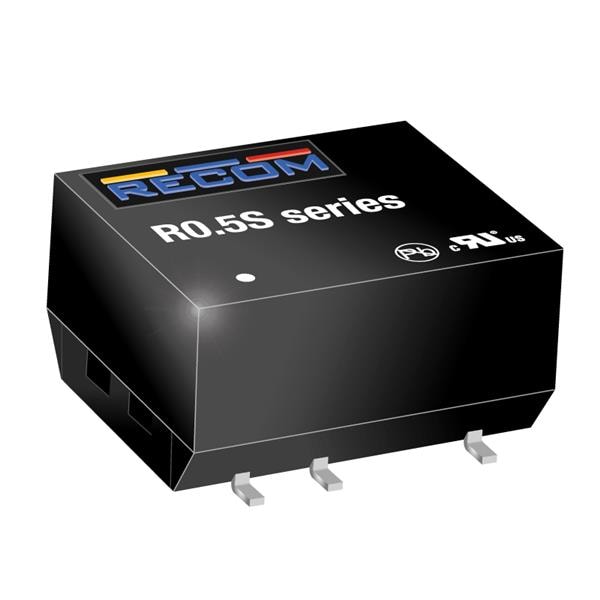
Why SMD isolated converters matter in modern electronic design
An isolated DC/DC converter transfers power from one DC voltage level to another while maintaining galvanic isolation between input and output. In real-world applications, this helps separate noisy sections of a circuit, avoid ground loop issues, and protect low-voltage control electronics from higher-energy domains.
In SMD form, these devices are especially well suited to compact assemblies where board space, production efficiency, and repeatable placement matter. Compared with larger board-level or chassis-mounted solutions, they fit naturally into high-density designs used in industrial controls, embedded measurement devices, communications hardware, and automation electronics.
Typical applications for SMD Isolated DC/DC Converters
These converters are commonly selected when a designer needs isolated power rails for interface circuits, analog front ends, sensor conditioning, or communication transceivers. They are also widely used to power isolated sections in PLC-related electronics, I/O modules, instrumentation, and signal acquisition systems where clean power separation improves reliability.
Another common use case is in mixed-signal systems, where digital switching noise can interfere with precision measurement or communication performance. By creating an isolated supply for a sensitive subcircuit, engineers can improve overall system stability without moving to a much larger power architecture.
How to choose the right part for your PCB
Selection usually starts with the required input voltage, output voltage, and power level, but those are only the basics. Engineers should also review the isolation requirement, expected operating environment, board layout constraints, thermal conditions, and whether the converter will serve a sensitive analog load, a communication interface, or a general logic supply.
Package style and assembly method are equally important in surface-mount design. If your project prioritizes automated PCB production and compact placement, this category is often the right fit. For applications that need a different mounting style, it may also be helpful to compare through-hole isolated DC/DC converters or review other isolated DC/DC converter formats depending on the mechanical and integration requirements.
Key evaluation points beyond basic voltage conversion
In technical purchasing, the best choice is rarely based on nominal voltage alone. Buyers and designers often compare factors such as isolation strategy, switching behavior, electromagnetic noise considerations, space efficiency, and compatibility with the rest of the board-level power tree. In many industrial projects, long-term availability and brand ecosystem also influence selection.
It is also important to think about the converter’s role inside the broader design. Some SMD isolated converters serve local power islands for communication or sensing circuits, while others are used to create functional separation between control and field-side electronics. That distinction affects not only electrical performance, but also PCB layout, shielding, and downstream regulation decisions.
Manufacturer options and sourcing context
This category may include solutions from recognized power and electronics suppliers such as Advanced Energy, Analog Devices, MEAN WELL, Murata, and Monolithic Power Systems (MPS). Each manufacturer brings different design strengths, and the right choice depends on the application’s electrical constraints, footprint expectations, and system-level reliability goals rather than brand name alone.
For teams standardizing component sourcing across multiple power architectures, it can be useful to compare this category with related board-level options such as chassis mount isolated DC/DC converters when enclosure-level integration or higher mechanical robustness is needed. That kind of comparison helps align the converter format with the final equipment design instead of treating all isolated converters as interchangeable.
Integration considerations for industrial and automation electronics
In industrial environments, isolated power is often used to support communication interfaces, sensor inputs, test points, and control modules exposed to electrical transients or differing ground references. A compact SMD solution helps maintain these protections without adding excessive wiring, bulk, or mechanical complexity to the finished assembly.
Design teams should still validate thermal performance, creepage and clearance considerations at the PCB level, and the interaction between the converter and nearby switching or high-speed circuits. Even when a converter is small, its placement can influence noise behavior, routing quality, and serviceability across the full system lifecycle.
A practical note on product and brand filtering
Because project requirements vary widely, the most efficient buying process usually starts with electrical and mechanical filters rather than a fixed part number. Engineers may narrow options by mounting style, isolation need, available board area, or preferred supplier family, then review suitable products from brands such as Murata or other established manufacturers in this category.
If your application needs a surface-mount isolated converter for a dense PCB layout, this category provides a focused starting point for comparing compact solutions without sorting through unrelated form factors. That makes specification review faster and helps match the converter to the real operating conditions of the end device.
Conclusion
SMD Isolated DC/DC Converters are a practical fit for modern PCB designs that require both compact integration and electrical isolation. They support cleaner power architecture in automation, instrumentation, communications, and embedded control systems where size, reliability, and circuit separation all matter.
When evaluating options, focus on the converter’s role in the full design rather than only the headline voltage figures. A well-matched isolated converter can simplify integration, improve noise immunity, and support more robust long-term system performance.
Get exclusive volume discounts, bulk pricing updates, and new product alerts delivered directly to your inbox.
By subscribing, you agree to our Terms of Service and Privacy Policy.
Direct access to our certified experts