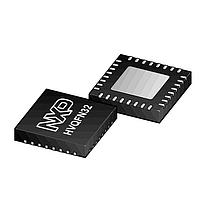
Wireless Charging ICs
As more electronic products move toward sealed enclosures, compact form factors, and simplified user interaction, wireless power has become a practical design choice rather than a niche feature. For engineers building consumer devices, medical products, industrial handhelds, and smart peripherals, Wireless Charging ICs help simplify charging architecture while reducing dependence on exposed connectors and cable wear.
This category brings together integrated circuits used to manage wireless power transfer on the transmitter side, receiver side, or in combined transceiver designs. Whether the goal is low-power charging, faster power delivery, or more flexible system integration, these devices are part of a wider battery management and power-conversion ecosystem.
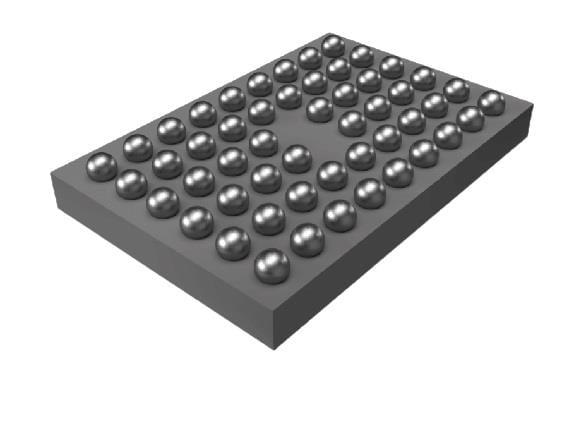
Where wireless charging ICs fit in a power design
A wireless charging solution typically includes a power transmitter, a receiver, control logic, and supporting power-path circuitry. The IC is the core element that regulates energy transfer, manages communication between charging sides, and helps maintain safe operating conditions during charging.
In practical product development, these ICs are often selected alongside AC/DC front-end stages, DC power regulation, and monitoring devices. Depending on system requirements, designers may also need related components such as current and power monitoring devices to supervise efficiency, thermal behavior, and load conditions.
Common device types in this category
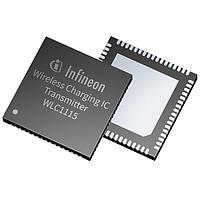
This category includes several functional classes. Wireless power transmitter ICs are used in charging pads, docking stations, and embedded charging surfaces. They drive the power transfer stage and coordinate charging behavior with the receiving device.
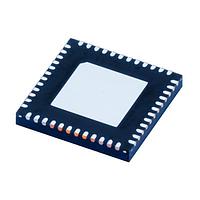
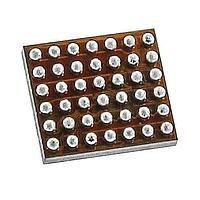
Wireless power receiver ICs are integrated into the end product being charged. These devices convert received energy into usable DC power for charging a battery or powering downstream circuits. Some designs also use receiver/transmitter or TRx devices, which are useful in products that need bidirectional or role-switching capability.
Examples in this range include transmitter-focused devices such as the Renesas Electronics P9242-R3NDGI8 and P9243-GBNDGI8, receiver solutions such as the Renesas Electronics DA2223-00VZ2 and ROHM Semiconductor BD57016GWL-E2, and more flexible devices like the NXP MWCT1015SFVLLPR or Renesas Electronics P9415-0AWQI8 with TRx-oriented capability.
Representative manufacturers and solution coverage
Several established semiconductor suppliers contribute to this product segment. Renesas Electronics, NXP, ROHM Semiconductor, and STMicroelectronics are particularly relevant within the products listed here, covering transmitter, receiver, and multi-mode wireless power designs.
For example, STMicroelectronics devices such as STWLC30JRF, STWLC33JRF, and STWLC33JR are commonly associated with integrated wireless power implementations where compact board space and multi-mode operation may matter. On the NXP side, MWCT2016SHT0VPAR, MWCT2016SHT0VPA, and MWCT1015SFVLLPR illustrate options for wireless power control across different system architectures. Renesas Electronics also offers broad coverage, from compact receiver devices to higher-power and dual-mode solutions such as P9225-RAHGI8 and P9415-0AWQI8.
How to choose the right wireless charging IC
The first step is to define the device role clearly: transmitter, receiver, or transceiver. That decision affects the control method, surrounding power stage, coil design, and overall firmware complexity. It also helps narrow the selection quickly when comparing parts for a charging pad versus a battery-powered endpoint.
Next, review the required power level, package constraints, and thermal environment. In compact wearables or small portable devices, package size and board area can be just as important as charging capability. In higher-power designs, thermal management, input supply range, and integration with protection circuits become more critical.
Designers should also consider how the wireless charging path interacts with the rest of the power tree. If the end product includes rechargeable cells, the charging IC will typically work alongside dedicated battery charging and protection functions. In more advanced platforms, configurable mixed-signal ICs may also support system control, sensing, or user-interface functions around the charging subsystem.
Typical applications and design considerations
Wireless charging ICs are widely used in handheld electronics, accessories, portable medical devices, smart home products, and sealed industrial equipment. In these applications, removing the physical charging connector can improve enclosure durability, simplify cleaning, and reduce mechanical failure points over time.
From an engineering standpoint, successful implementation depends on more than the IC alone. Coil alignment, shielding, thermal layout, foreign object detection strategy, and downstream regulation all influence final performance. A well-chosen IC helps manage these interactions, but the full charging system should be evaluated as an integrated design rather than as a single component choice.
Examples of product selection by design need
For compact receiver-side integration, parts such as the Renesas Electronics DA2223-00VZ2 or the ROHM Semiconductor BD57016GWL-E2 may be relevant when board space is limited and the product is designed to accept wireless power. For mainstream receiver implementations, devices like the Renesas Electronics P9225-RAHGI8 or STMicroelectronics STWLC30JRF can help address common charging use cases.
Where the design requires more flexible operating modes, STMicroelectronics STWLC33JR and Renesas Electronics P9415-0AWQI8 are notable examples because they point toward broader functionality than a simple fixed receiver path. On the transmitter side, the Renesas Electronics P9242-R3NDGI8 and P9243-GBNDGI8, as well as NXP MWCT2016 series devices, are relevant for charging stations and embedded charging surfaces.
Related categories worth reviewing
Wireless power design rarely stands alone. Input conversion, regulation, charging control, and system monitoring all affect end performance, especially in products expected to run reliably across varying loads and temperatures. For that reason, it is often useful to review related categories such as AC/DC converters for front-end power supply design.
Engineers developing complete charging platforms may also compare device options across battery charging, monitoring, and mixed-signal control functions before finalizing a bill of materials. Taking that broader view usually leads to a more stable and easier-to-validate power architecture.
Final thoughts
Selecting the right wireless charging IC starts with understanding the product’s charging role, power target, space constraints, and system-level power architecture. This category is designed to support that process with transmitter, receiver, and multi-mode options from recognized semiconductor manufacturers.
If you are comparing parts for a new design or refining an existing wireless power stage, focus on functional fit first, then evaluate package, thermal behavior, and integration with the rest of the power subsystem. That approach makes it easier to narrow the shortlist and choose components that align with real application requirements.
Get exclusive volume discounts, bulk pricing updates, and new product alerts delivered directly to your inbox.
By subscribing, you agree to our Terms of Service and Privacy Policy.
Direct access to our certified experts