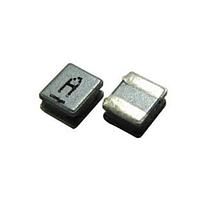
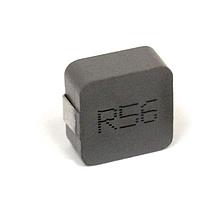
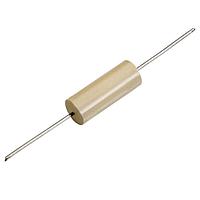
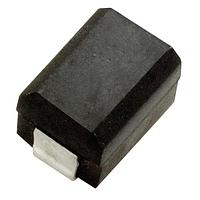
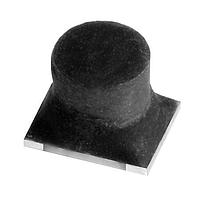
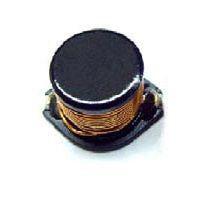
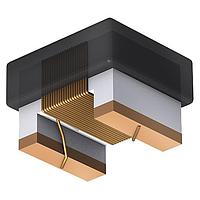
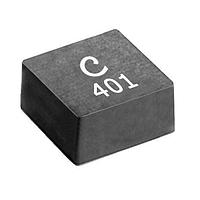
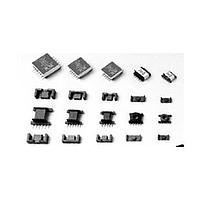
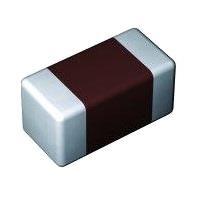
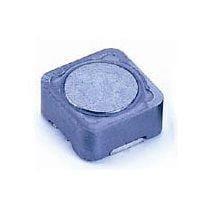
Inductors
Stable RF performance often depends on small passive parts that are easy to overlook. In wireless designs, inductors help shape impedance, suppress unwanted noise, support matching networks, and contribute to filtering and energy handling across a wide range of frequencies and layouts.
On this page, you can explore Inductors used in RF and wireless applications with a focus on practical selection for engineering, prototyping, and volume sourcing. Rather than treating them as generic passive components, it is more useful to view them as part of a wider signal chain where board space, frequency behavior, losses, and integration requirements all matter.
Why inductors matter in RF and wireless circuits
In RF designs, an inductor is rarely chosen by inductance value alone. Its behavior at operating frequency, parasitic effects, quality factor, current capability, and package style can all influence how a circuit performs in the real world. This is especially relevant in compact devices where layout constraints and electromagnetic interactions can quickly affect efficiency and signal integrity.
Inductors are commonly used in matching networks, bias tees, filters, oscillators, DC-DC support stages, and EMI control paths. Depending on the design goal, engineers may prioritize high Q, compact size, shielding, low DC resistance, or predictable high-frequency behavior. For that reason, category-level comparison is often the right starting point before narrowing down to a specific part family.
Common application areas for this category
RF and wireless inductors appear across communication modules, embedded electronics, industrial gateways, IoT nodes, automotive electronics, and consumer devices. In many of these systems, they support front-end tuning and impedance matching between active circuitry and elements such as an antenna, where even small component differences can affect overall transmission or reception performance.
They are also relevant in designs that combine sensing, connectivity, and compact power stages on the same board. In those environments, engineers may use inductors not only for RF tuning but also for isolation, filtering, or reducing coupling between nearby sections. This makes part selection highly dependent on both electrical targets and PCB implementation.
How to evaluate inductors for design and sourcing
A practical selection process usually starts with the intended function inside the circuit. If the inductor is part of an RF matching or resonant network, frequency-dependent behavior becomes more important than a simple nominal value. If it is used for suppression or power-related support near a wireless subsystem, current rating, resistance, and thermal considerations may carry more weight.
It is also useful to review package size, mounting style, and whether a shielded construction is preferred for dense assemblies. In compact wireless products, unwanted coupling can create performance drift or make tuning less repeatable. Designers comparing this category may also want to review related options such as attenuators or RF integrated circuits when building out the broader front-end architecture.
Manufacturer landscape within this category
Different manufacturers often serve different design priorities, from miniature SMD implementations to parts intended for tighter RF tolerances or broader industrial usage. Brands such as Coilcraft, Bourns, Eaton, and Alps Alpine are commonly recognized across the wider component ecosystem, giving buyers and engineers a useful mix of sourcing options depending on application constraints and approval preferences.
Selection at the manufacturer level should still be guided by the actual electrical role of the inductor in the circuit. A compact wireless node, for example, may call for a different balance of size, consistency, and loss than an industrial communication board exposed to harsher operating conditions. Looking at the supplier range can therefore help with both second-source planning and lifecycle management.
Inductors in the wider RF component ecosystem
Inductors rarely operate in isolation. They typically work alongside capacitors, active RF devices, matching structures, and identification or connectivity technologies depending on the product architecture. In short-range wireless or tagged systems, they may complement solutions found in the NFC/RFID space, where tuning and coupling behavior can be central to reliable operation.
This broader view is especially useful for B2B procurement teams and design engineers managing complete bills of materials. Evaluating compatibility across neighboring RF categories can reduce redesign effort later, particularly when the goal is to maintain repeatable performance from prototype through production.
What buyers and engineers typically look for
For engineering teams, the main concern is usually whether the selected part behaves predictably in the intended frequency range and board environment. For purchasing teams, availability, manufacturer continuity, package standardization, and alternate sourcing may be equally important. A good category page should support both perspectives by making the range easier to navigate without oversimplifying the technical tradeoffs.
When comparing options, it helps to align internal requirements early: target frequency, expected losses, board density, environmental constraints, and qualification needs. That approach leads to more efficient shortlisting and reduces the chance of selecting a part that looks suitable on paper but creates avoidable tuning or integration issues later.
Choosing the right inductor range for your project
The most effective way to use this category is to start from circuit intent, then narrow by electrical and mechanical constraints. For RF matching and filtering, pay close attention to frequency behavior and layout sensitivity. For supporting functions around wireless modules, also consider thermal margin, current handling, and the effect of nearby components.
Whether you are refining a new design or consolidating approved sources for production, a structured review of inductor options can improve both performance and sourcing confidence. This category is best used as a decision point within the wider RF design process, helping you connect the right passive component choices to the needs of your wireless system.
Get exclusive volume discounts, bulk pricing updates, and new product alerts delivered directly to your inbox.
By subscribing, you agree to our Terms of Service and Privacy Policy.
Direct access to our certified experts