RF Integrated Circuits
Designing a reliable wireless system depends on more than just selecting an antenna or defining a target frequency band. Signal generation, routing, amplification, filtering, conversion, and switching all happen at the component level, and that is where RF Integrated Circuits become central to system performance. For engineers, buyers, and sourcing teams, this category brings together the active building blocks used in communication modules, industrial wireless devices, test setups, and embedded RF designs.
Whether you are developing a compact transceiver path, refining receiver sensitivity, or managing signal distribution across multiple channels, the right RF IC selection helps balance gain, noise, linearity, power consumption, and integration density. This makes the category especially relevant for applications ranging from industrial connectivity and instrumentation to wireless embedded products and high-frequency design.
What is included in this RF IC category
This category covers a broad range of semiconductor devices used to process radio-frequency signals inside electronic systems. Instead of serving as passive support parts, these components actively control how RF energy is amplified, mixed, switched, modulated, detected, or transmitted across the signal chain.
Typical functions in this space include signal amplification, transceiver integration, front-end control, switching, filtering, and frequency translation. If your project also requires related product groups outside active RF semiconductors, it can be useful to explore complementary areas such as antenna components for the radiating side of the design or attenuators for signal conditioning and lab evaluation.
How RF integrated circuits fit into a wireless signal chain
In practical RF design, each IC often supports a specific stage of the transmit or receive path. A receiver may use a low-noise gain stage, filtering, switching, and frequency conversion before the signal reaches downstream processing. A transmitter path may combine modulation, amplification, and front-end routing to deliver the required output power and spectral behavior.
That is why category-level browsing matters. Engineers rarely choose an RF part in isolation; they choose it as part of a chain. A switch IC influences insertion loss and routing flexibility, a filter helps with selectivity, an amplifier shapes gain and output level, and a transceiver can reduce board complexity by integrating multiple functions in one device.
Representative devices and use cases
Several products in this category illustrate the range of functions available. The Analog Devices HMC926LP5E RF Amplifiers and Analog Devices HMC943LP5E RF Amplifiers are examples of gain stages intended for different frequency ranges and power profiles. In designs where frequency coverage and output compression behavior matter, these types of amplifiers are often evaluated alongside overall link budget and thermal constraints.
For signal routing, the Analog Devices HMC270MS8GETR RF Switch SPDT provides a useful example of an RF switch used to select signal paths in shared front ends, measurement setups, or multiband architectures. Where higher integration is preferred, the ams OSRAM NJG1159PHH-A-TE1 RF Front End (LNA+PA) reflects the role of front-end integration in reducing layout complexity and simplifying the receive/transmit path.
Filtering is also a critical part of RF system behavior. The Broadcom ACPF-7124-TR1 BAW Filters 50Ohm 5Pin T/R shows how compact filter devices support impedance-controlled signal paths and help improve selectivity in crowded spectrum environments. For broader device exploration by supplier, many buyers also review solutions from Analog Devices and Broadcom when comparing RF design approaches.
Key selection criteria for engineers and sourcing teams
The best RF IC choice usually depends on the role the device will play in the final architecture. Frequency range is often the first filter, but it should not be the only one. Gain, output power, noise figure, impedance, bandwidth, supply requirements, operating temperature range, and package style all affect whether a part is suitable for the target system.
For example, amplifier selection often starts with gain and output compression, but linearity and current draw may be just as important in real deployments. Switches are commonly judged by path configuration and frequency support, while transceivers may be assessed by how much external circuitry they eliminate. In industrial and embedded procurement, designers also look at mounting format, assembly compatibility, and how easily the part integrates into the broader RF layout.
Why integration level matters in modern RF design
As products become smaller and more function-dense, the degree of integration inside the RF section has a direct impact on board area, routing difficulty, and design risk. A highly integrated transceiver or front-end IC can reduce the number of discrete stages needed, which may simplify BOM management and shorten development cycles.
At the same time, discrete or semi-discrete solutions still remain important. Separate amplifiers, switches, filters, and modulators can give engineers more control over system optimization, especially when tuning for a specific band, output target, or performance trade-off. This is one reason the RF signal chain is often assembled from a mix of specialized components rather than a single all-in-one device.
Relationship to adjacent RF component categories
RF integrated circuits rarely operate alone. They sit alongside passive and electromechanical elements that influence matching, stability, isolation, and overall system efficiency. In many designs, IC selection happens in parallel with decisions about front-end structure, matching networks, and the external interface to the antenna or reader system.
If your application extends into wireless identification or short-range contactless systems, reviewing NFC/RFID products may provide useful context for the broader architecture. Likewise, inductive and matching behavior can become important around resonant or tuned sections, so related RF and wireless inductors may also be relevant depending on the design approach.
Who typically uses this category
This category is useful for hardware engineers building wireless boards, design teams refining RF subsystems, and procurement specialists supporting long-term component sourcing. It also serves test and measurement environments where signal routing, gain staging, and controlled RF paths are required in prototypes or production fixtures.
Because application requirements vary widely, the category supports both exploratory browsing and targeted sourcing. Some users arrive with a clear function in mind, such as a switch or amplifier. Others begin by comparing device roles across transceiver, front-end, filter, or mixer options before narrowing down to a shortlist of technically compatible parts.
Finding the right RF IC for your application
A practical way to narrow the range is to start from the signal-chain function you need to solve first. If the priority is transmit or receive integration, a transceiver or front-end device may be the logical starting point. If the challenge is path control, filtering, or gain staging, then focused device types such as switch ICs, filters, or amplifiers usually provide a clearer route to selection.
Within this category, you can compare parts by intended function, operating band, packaging, and integration level to build a more suitable shortlist for your design. Taking that approach helps reduce mismatches early and makes it easier to align engineering requirements with sourcing and production constraints.
Choosing RF components is ultimately about system balance rather than a single headline specification. By reviewing RF Integrated Circuits in the context of the full signal path, engineers and buyers can make more informed decisions on performance, integration, and implementation effort for wireless and high-frequency designs.
Get exclusive volume discounts, bulk pricing updates, and new product alerts delivered directly to your inbox.
By subscribing, you agree to our Terms of Service and Privacy Policy.
Direct access to our certified experts

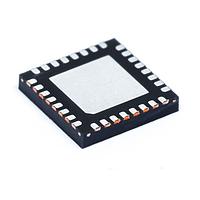
![Quantic X-Microwave XR-A412-0404D RF Detector Detector, HMC662LP3E [PCB: 1959]Recommended Bias Controller: XR-A414-0404D-SP](/s-cdn/96/96f58fe6cac671a2305e9c3b711c32e7f1f70d45.jpg)


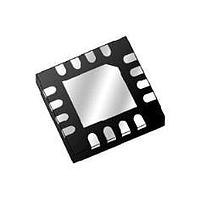
![Quantic X-Microwave XM-A662-0404D Gain Block Amplifiers Amplifier, HMC311LP3 [PCB: 269]Recommended Bias Controller: XM-A2J9-0404D-SP](/s-cdn/57/5752d0effd54418c26ff94c3d5b7270327649c19.jpg)