Thermal Cutoffs
Excess heat can shorten product life, damage nearby components, and create safety risks in everything from consumer appliances to industrial equipment. When a design needs a simple, dependable layer of overtemperature protection, thermal cutoffs are often one of the most practical solutions. This category brings together devices used to interrupt a circuit when a specified temperature threshold is reached, helping engineers and buyers choose protection components that fit the electrical load, mounting method, and thermal response required by the application.

Where thermal cutoffs fit in a protection strategy
A thermal cutoff is typically used as a protective element that reacts to heat rather than overcurrent alone. In many systems, it serves as a final safeguard when abnormal temperature rise occurs because of blocked airflow, stalled motors, overloaded power sections, failing bearings, or heat buildup inside compact enclosures.
These components are commonly selected alongside other thermal management parts such as thermistors and temperature sensing devices. The main difference is that a thermal cutoff is focused on protection and circuit interruption, while sensing components are usually intended for measurement, monitoring, or control.
Common product styles in this category
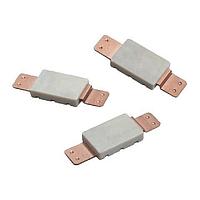
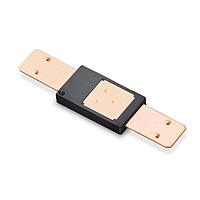
Not all thermal cutoffs are packaged the same way, and the mechanical format often matters as much as the electrical rating. In this range, you can find axial leaded parts suited to inline wiring or compact assemblies, blade-terminal versions designed for higher-current chassis mounting, and surface-mount options for board-level integration.
Examples from the catalog illustrate this variety well. PANASONIC EYP series parts such as the EYP2BN110 and EYP05BE115 represent axial leaded protection devices often considered for appliance or compact electrical assemblies. On the higher-current side, Bourns offers blade-style and chassis-mount options such as the CB77ABB, AA85AB0, and NR85CB0, while the SC82AAB shows how a surface-mount format can support designs where PCB assembly and space efficiency are important.
How to choose the right thermal cutoff
The first step is to match the device to the temperature trip point needed for safe protection. A cutoff that trips too early can create nuisance failures, while one that trips too late may not adequately protect sensitive wiring, plastic housings, power semiconductors, or nearby insulation. Engineers normally evaluate the expected operating temperature, worst-case fault conditions, and the thermal lag between the heat source and the protection device.
The next consideration is electrical capability. Current rating, voltage rating where applicable, and terminal style must align with the circuit and installation method. For example, a design using compact wire harnesses may favor an axial leaded thermal fuse, while higher-current applications may be better served by blade or chassis-mount devices. If thermal behavior is part of a broader control approach, related components such as board mount temperature sensors may also be useful elsewhere in the system.
Examples from leading manufacturers
Bourns is prominently represented in this category with several thermal cutoff formats covering different mounting preferences and current levels. Models such as CB72A1B, CB77A1B, AA72A10, and AA77AB0 show how designers can compare trip temperatures, package style, and installation layout within a broader protection family rather than selecting only on part number.
PANASONIC contributes well-known axial leaded options such as EYP1BF145, EYP2BN110, and EYP05BE115, which are relevant when compact size and straightforward integration are priorities. Vishay is also represented by the HCTF235L280000BR00, a thermal cutoff option suited to applications that require attention to both current handling and a defined overtemperature threshold. Together, these examples give buyers a practical starting point for comparing form factor and protection characteristics across reputable manufacturers.
Application areas and design considerations
Thermal cutoffs are used in equipment where heat buildup can become hazardous or lead to irreversible damage. Typical environments include power supplies, heating elements, transformers, small motors, battery-related assemblies, appliances, lighting products, and enclosed electronics where airflow may be limited. The exact placement of the device strongly affects protection performance, so location relative to the heat source is usually just as important as the rating itself.
In real designs, overtemperature protection rarely works in isolation. Airflow components, enclosure layout, and sensing points all influence the final result. Where active cooling is part of the system, reviewing related products such as fans and blowers can help support a more complete thermal strategy rather than relying on shutdown protection alone.
Key differences between one-time and resettable behavior
Buyers often use the term thermal cutoff broadly, but behavior can vary by device family. Some parts act as a one-time protective element that opens permanently after reaching the specified temperature. Others in this category may be selected in applications where reset behavior or reusable protection characteristics are relevant, depending on the series and mounting style.
Because of that, part selection should not be based on temperature alone. It is important to review whether the application needs permanent interruption for safety compliance or a device intended for repeated operation. This is especially relevant in serviceable equipment, automotive-adjacent assemblies, and systems where downtime, replacement access, and fault recovery all affect total lifecycle cost.
What matters for B2B sourcing and replacement
For OEMs, maintenance teams, and contract manufacturers, the right choice usually depends on more than a single rating. Buyers often compare terminal format, installation method, thermal threshold, load capacity, and the physical environment in which the component will operate. It is also useful to consider whether the selected part is intended for original design-in, field replacement, or a production line standardization effort.
This category is structured to help users narrow options by practical parameters and recognized manufacturers. If you are replacing an existing device, matching the original mounting style and protection behavior is essential before comparing adjacent ratings. For new designs, reviewing the surrounding thermal architecture early can reduce redesign work later and improve overall system reliability.
Finding a suitable thermal protection component
The best thermal protection choice depends on how the circuit fails, how quickly heat rises, and whether the product is intended to be reset or replaced after a fault. By comparing package type, trip temperature, and current handling across the available thermal cutoffs, engineers and purchasing teams can identify parts that align with both protection goals and assembly requirements.
Whether you are evaluating compact axial leaded parts from PANASONIC, higher-current chassis-mount options from Bourns, or additional alternatives from Vishay, this category provides a focused starting point for sourcing reliable overtemperature protection. A careful match between thermal behavior, electrical load, and installation conditions will usually deliver the most dependable result in real-world equipment.
Get exclusive volume discounts, bulk pricing updates, and new product alerts delivered directly to your inbox.
By subscribing, you agree to our Terms of Service and Privacy Policy.
Direct access to our certified experts