
Industrial Accelerometers
Reliable motion data is essential in condition monitoring, machine protection, embedded control, and equipment diagnostics. When a design or maintenance task depends on detecting vibration, shock, tilt-related movement, or dynamic acceleration, Industrial Accelerometers provide the core sensing function that turns physical motion into usable electrical or digital signals.
This category brings together accelerometer solutions used across industrial and electronic applications, from machine health monitoring to compact board-level motion sensing. Depending on the installation environment, required output type, and integration method, buyers may need anything from rugged vibration-focused devices to compact digital sensors for embedded systems.
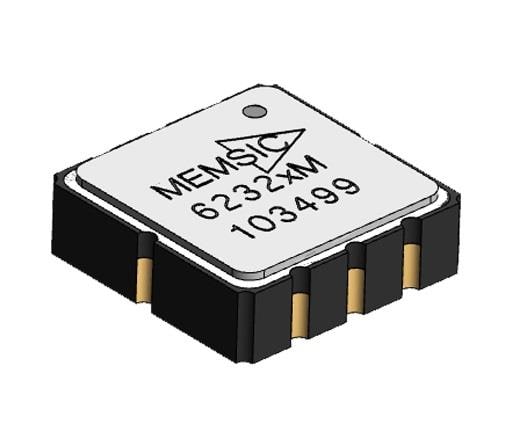
Where industrial accelerometers are used
Accelerometers are widely applied wherever motion, vibration, or impact must be measured or tracked. In industrial environments, they are often selected for rotating machinery monitoring, motor and pump diagnostics, structural vibration analysis, and system feedback in automation equipment. In electronic assemblies, they can also support orientation detection, motion-triggered functions, and embedded measurement tasks.
The required sensor type usually depends on the operating conditions. A machine monitoring application may prioritize robust construction and stable vibration measurement, while an embedded design may focus more on low-power digital communication and compact packaging. For applications that require a broader motion-sensing architecture, it can also be useful to compare related technologies such as gyroscopes when rotational movement data is needed alongside linear acceleration.
Key differences between accelerometer options
Not all accelerometers are designed for the same measurement task. Common selection factors include axis configuration, output type, supply requirements, mounting style, and expected operating environment. Some devices are intended for simple single-axis measurement, while others support 3-axis sensing for more complete motion capture.
Output format is another important point. Analog accelerometers can be suitable when a control system or signal conditioning path already exists, while digital devices with interfaces such as SPI may simplify integration into microcontroller-based designs. Environmental conditions also matter: temperature range, electrical compatibility, and mechanical robustness should all be checked early in the selection process to reduce redesign risk.
Representative products in this category
This range includes both rugged industrial-style models and compact electronic accelerometers from recognized manufacturers. Examples include Amphenol 797V Accelerometers, Amphenol 793VE Accelerometers, and Amphenol 793L Accelerometers, which are relevant when vibration-oriented sensing is part of the requirement. For embedded and digital motion sensing, the Analog Devices ADXL345X-C-RL 3 Axis Digital Accelerometer is a well-known example of a compact multi-axis device.
The category also includes parts such as the NXP FXPS7165DS4T1 Accelerometers and NXP FXPS7250DS4T1 Accelerometers, both listed with SPI output, as well as the NXP MMA1254KEG Analog Accelerometer, 5V, Z, 5g, SOIC 16 for applications that fit an analog signal path. Additional examples such as the Infineon TLE4959C Accelerometers and BAUMER GIM140R-M210.KC0.A Accelerometers show that the category covers more than one installation style and application level.
Leading manufacturers and platform compatibility
Several established suppliers appear prominently in this category, including Amphenol, Analog Devices, Infineon, BAUMER, and NXP. Each brand is associated with different strengths in the motion-sensing ecosystem, from industrial-grade vibration devices to semiconductor-based accelerometers for OEM integration.
For buyers, manufacturer choice is usually less about brand preference alone and more about fit with the wider system. That may include electrical interface compatibility, existing qualification standards inside a project, or alignment with preferred development tools and signal processing methods. If the application is centered on PCB integration rather than external industrial mounting, the broader board mount motion and position sensors range may also be relevant.
How to choose the right accelerometer
A practical selection process starts with the measurement objective. If the goal is machine vibration monitoring, focus on mounting method, expected frequency behavior, mechanical durability, and the way the signal will be collected or conditioned. If the goal is embedded product design, review axis count, communication interface, package style, voltage range, and software integration requirements.
It is also important to define whether the application needs continuous monitoring, event detection, or broader inertial sensing. For instance, a product such as the Analog Devices ADIS16445AMLZ Inertial Sensor 20-Pin Tray points toward applications where motion data may be part of a more complete sensing approach. In systems where angular rate or orientation change is critical, accelerometers are often considered together with other motion devices rather than in isolation.
Industrial vs. embedded motion sensing needs
Although grouped under one category, buyer intent can differ significantly. Some users are replacing or specifying sensors for industrial maintenance and vibration analysis, where mechanical stability and installation environment are central concerns. Others are sourcing compact components for electronics development, where digital output, low-voltage operation, and PCB assembly matter more.
This is why reading beyond the part name is essential. A device optimized for machine condition monitoring may not be the best fit for a compact controller board, just as a board-level MEMS accelerometer may not suit a harsh industrial mounting environment. For applications focused more on angular measurement or static inclination, related categories such as inclinometers may be worth reviewing as part of the selection process.
What to review before ordering
Before finalizing a part, verify the basics that most directly affect integration: sensing axes, signal output, supply voltage, operating temperature range, package or housing style, and intended use case. Even when two accelerometers appear similar, small differences in interface or mechanical format can have a major impact on installation and system performance.
It is also helpful to think about the downstream signal chain. Consider whether the sensor feeds a PLC, DAQ system, embedded controller, or monitoring gateway, and whether additional filtering, calibration, or software interpretation will be required. A good accelerometer choice is not only about the sensor itself, but about how efficiently it fits into the complete measurement system.
Finding the right fit for your application
This category supports a wide range of acceleration and vibration measurement needs, from industrial equipment monitoring to compact electronic motion sensing. With products from manufacturers such as Amphenol, Analog Devices, NXP, Infineon, and BAUMER, buyers can compare solutions based on output format, integration style, and operating environment rather than relying on a one-size-fits-all approach.
When evaluating options, start with the real measurement task, then narrow the shortlist by interface, installation method, and system compatibility. That approach makes it easier to identify an accelerometer that is technically appropriate, easier to integrate, and better aligned with long-term application requirements.
Get exclusive volume discounts, bulk pricing updates, and new product alerts delivered directly to your inbox.
By subscribing, you agree to our Terms of Service and Privacy Policy.
Direct access to our certified experts