Gyroscopes
Reliable angular rate data is essential in systems that need to detect rotation, stabilize motion, or track orientation in real time. From embedded control boards to industrial equipment and navigation-related electronics, gyroscopes help engineers measure rotational movement with the consistency needed for control, monitoring, and sensor fusion.
On this page, buyers and design teams can explore gyroscope components used in motion sensing applications where size, response, and integration matter. The category is especially relevant for OEM development, electronics manufacturing, and projects that combine rotational sensing with broader motion and position feedback.
Where gyroscopes fit in motion sensing systems
A gyroscope measures angular velocity, allowing a system to detect how fast an object is rotating around one or more axes. This makes it useful in balancing systems, platform stabilization, navigation support, robotics, handheld devices, and industrial assemblies that need to react to rotational movement rather than simple linear motion.
In many designs, gyroscopes are not used alone. They are often combined with accelerometers or other board mount motion & position sensors to improve orientation tracking, motion interpretation, and control loop performance. For applications that also require vibration or linear movement analysis, engineers may also review industrial accelerometers as part of the wider sensing architecture.
Common gyroscope formats and application needs
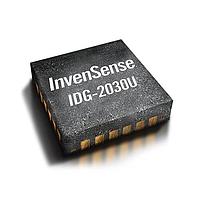
Within this category, many devices are based on MEMS gyroscope technology, which is widely used where compact size and electronic integration are important. These sensors are commonly selected for embedded electronics, compact control modules, and OEM assemblies where board space and repeatable output are key considerations.
Selection typically depends on factors such as the number of sensing axes, the expected rotational speed range, mounting format, and the signal quality required by the application. Some projects prioritize compact package styles for dense PCB layouts, while others need low-noise performance or a specific yaw-rate sensing profile for motion control and guidance-related functions.
Representative products in this category
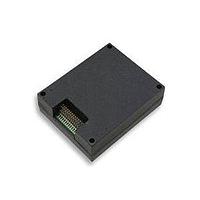
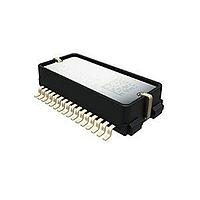
The available range includes both general gyroscope devices and specific motion-sensing components suited to different design approaches. For example, the STMicroelectronics L3GD20TR and STMicroelectronics L3G4200DH are familiar references for embedded motion-sensing designs, while the STMicroelectronics L3G4200DHTR highlights a triple-axis option for applications that require multi-axis rotational data.
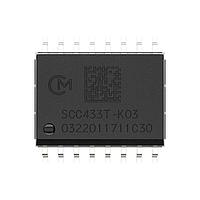
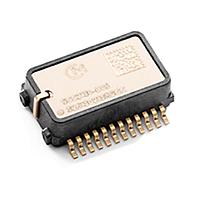
Other examples in the category illustrate how different products support different use cases. The Analog Devices AD22425Z-RL is presented as a low-noise yaw rate gyro, which is relevant when signal quality is a priority, while the Analog Devices ADXRS623BBGZ-RL is another established gyroscope option from Analog Devices. From Murata, parts such as the SCC433T-K03 and ENC-03RD show the breadth of available gyroscope formats, and Epson devices like the XV8000CB add further choice for specialized motion sensing requirements.
How to choose the right gyroscope
The best starting point is the actual motion profile of the system. Engineers should consider whether the application needs single-axis or multi-axis sensing, whether high rotational rates are expected, and how the gyroscope output will be used inside the control or monitoring logic. A mismatch here can lead to unnecessary complexity or sensing performance that does not align with the real operating conditions.
It is also important to evaluate package style, board integration, and system-level processing. Some designs need a compact tray or reel-packaged part for volume manufacturing, while others may focus more on prototyping, signal stability, or ease of integration into an existing PCB layout. If the project also involves tilt-based measurement, a complementary review of inclinometers may help define whether rotational sensing alone is sufficient.
Leading manufacturers and sourcing considerations
This category includes products from well-known motion sensing suppliers such as STMicroelectronics, Analog Devices, Murata, and Epson. These manufacturers are frequently specified in B2B sourcing and engineering environments where long-term availability, package consistency, and known sensor families can simplify both prototyping and production planning.
When comparing options, procurement teams often look beyond the part number itself. Lifecycle fit, preferred manufacturer ecosystems, mounting preferences, and compatibility with existing design libraries can all influence the final choice. This is especially true in projects where gyroscopes are part of a larger sensing platform rather than a standalone component.
Gyroscopes in broader system design
Rotational sensing becomes more valuable when interpreted in context. A gyroscope may support image stabilization, robotic navigation, equipment orientation control, or user-interface motion detection, but its real effectiveness depends on how it is integrated with firmware, filtering, calibration, and related sensor inputs.
For that reason, buyers and engineers often assess this category as part of a wider motion measurement strategy. In some systems, gyroscopes work alongside distance measurement, acceleration sensing, or orientation monitoring to build a more complete picture of machine or device movement. Reviewing the full set of available products can help identify components that are technically aligned with both immediate design goals and future platform expansion.
Finding a gyroscope for your application
Whether the requirement is a compact MEMS device for embedded electronics or a gyroscope tailored to specific rate sensing behavior, this category supports a wide range of motion-sensing projects. Products such as the STMicroelectronics LY3100ALH, LPR450AL, and LPR410AL also show how closely related motion sensor devices can support different integration needs within rotational sensing and adjacent applications.
Choosing the right part usually comes down to application demands, integration constraints, and the level of motion insight the system needs to deliver. By comparing suitable gyroscopes from established manufacturers and aligning the sensor choice with the broader control architecture, teams can make more confident decisions for both development and production use.
Get exclusive volume discounts, bulk pricing updates, and new product alerts delivered directly to your inbox.
By subscribing, you agree to our Terms of Service and Privacy Policy.
Direct access to our certified experts