Contactor Accessories
Keeping a motor starter or contactor assembly running reliably often depends on the small parts around the main device. In many control panels, maintenance teams are not replacing an entire unit, but sourcing the right coil, auxiliary contact block, wiring kit, conversion part, or installation accessory that restores function and preserves compatibility. That is where Contactor Accessories become especially important for repair, retrofit, and panel optimization work.
This category brings together the supporting components used with contactors and starters in industrial control systems. Whether the goal is to replace a failed coil, add signaling contacts, simplify wiring, or adapt an existing assembly for a different control voltage, the right accessory helps extend equipment life and reduce unnecessary downtime.

What belongs in this category
Contactor accessories cover a wide range of parts that work alongside electromechanical contactors rather than replacing their core switching role. Common examples include replacement coils, coil kits, auxiliary contact modules, wiring kits, fuse clip kits, and conversion kits used on starters and contactor assemblies.
In practical terms, these parts support commissioning, maintenance, and system changes. A damaged coil may be replaced without changing the full contactor, while an auxiliary block can add extra NO or NC signaling points for control logic, status indication, or interlocking. For broader context, users comparing the main switching devices themselves can also review electromechanical contactors.
Typical applications in industrial control panels
These accessories are commonly used in motor control centers, OEM machinery, HVAC control panels, pumping systems, conveyors, and general factory automation. In these environments, contactors often need configuration changes during installation or service life, especially when voltage requirements, wiring layout, or auxiliary feedback needs change over time.
For example, a replacement part may be needed after coil wear, overheating, or voltage mismatch. In other cases, a wiring or bus assembly accessory helps simplify panel buildout, while a contact block provides additional status points to interface with PLCs, pilot devices, or protection logic. If your application also involves adjacent control components, it can be useful to explore related relay products within the same control architecture.
Examples of accessories available
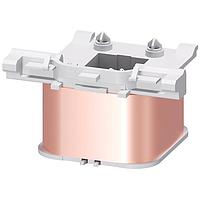
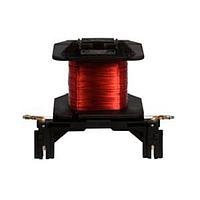
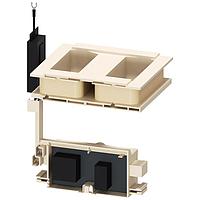
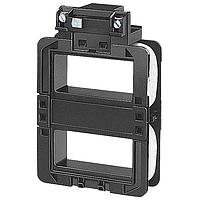
The products in this category illustrate several common accessory roles. On the coil replacement side, items such as the Eaton XTCERENCOILDAD Replacement Coil and the SIEMENS 3RT29245AH21 Magnet Coil are intended for restoring contactor operation when the original coil is no longer serviceable or when a matched replacement is required for a specific compatible series.
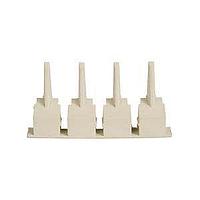
There are also add-on and installation-oriented parts such as the Eaton DILM32-XHIC22 top auxiliary contact, the SIEMENS 3RA29231DB2 wiring kit, and the Eaton C351KD22-61 fuse clip kit. These are not stand-alone switching devices; instead, they support assembly, expansion, or field installation tasks around the primary contactor or starter.
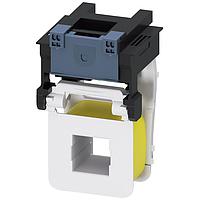
For retrofit scenarios, coil conversion and renewal parts are also represented by products such as the Eaton C335KD3R1 DC magnet coil conversion kit and Eaton 9-3006-7 renewal parts/accessories coil. These kinds of components can be relevant when an installed control system must be adapted without replacing the full motor control arrangement.
How to choose the right contactor accessory
The most important factor is compatibility. Contactor accessories are typically designed for specific series, frame sizes, or starter families, so the matching reference matters more than general appearance. Buyers should verify the exact contactor or starter model, mounting position, control voltage, and whether the accessory is intended for new assembly or replacement in the field.
It is also helpful to identify the accessory function clearly. A coil kit, an auxiliary contact block, a wiring assembly, and a fuse clip kit serve very different purposes, even though all may sit within the same product family. Checking the intended use statement, such as “for use with” a load feeder, motor control coil, or a specific contactor series, can prevent ordering errors.
For broader manufacturer-specific sourcing, many customers narrow their search by platform preference or installed base. In that case, browsing Eaton products or SIEMENS components can help when standardization and series continuity are priorities.
Replacement, retrofit, and maintenance considerations
One of the main reasons engineers and maintenance teams buy contactor accessories is to avoid replacing complete assemblies when only one supporting part has failed. A worn or open coil, missing auxiliary contact, or damaged wiring accessory can often be addressed more economically by selecting the correct replacement component.
Retrofit work requires extra care. Even when voltage or function appears similar, mounting style, terminal arrangement, and supported contactor family can differ significantly. In preventive maintenance programs, keeping critical accessories on hand can shorten service interruptions, especially for high-utilization motor control circuits where a failed coil or contact module can stop production.
Why accessory selection matters in control system performance
Although these parts are smaller than the main contactor, they can directly affect uptime, control logic visibility, and installation quality. A properly matched coil helps ensure dependable actuation, while auxiliary contacts support interlocks, alarms, and feedback loops used by PLCs and supervisory systems. Wiring and assembly accessories can also improve panel organization and reduce installation errors.
That makes this category relevant not only for replacement purchasing, but also for engineers designing maintainable systems. Selecting the right accessory at the start of a project can simplify future service work, reduce panel rework, and support cleaner integration with the rest of the control cabinet.
Finding the right part for your application
When comparing options in this category, start with the installed contactor or starter reference, then confirm accessory type, control voltage where relevant, and intended use. This is especially important for coil-related parts, because electrical mismatch can lead to nuisance operation or outright failure.
With a mix of replacement coils, coil kits, wiring assemblies, auxiliary contacts, and enclosed control accessories, this category is intended to support real industrial maintenance and panel-building needs. If you already know the base device family, choosing a correctly matched accessory is usually the fastest path to restoring performance and keeping the control system consistent.
Get exclusive volume discounts, bulk pricing updates, and new product alerts delivered directly to your inbox.
By subscribing, you agree to our Terms of Service and Privacy Policy.
Direct access to our certified experts