Automotive Relays
Modern vehicle electrical systems rely on compact switching components that can handle repeated operation, vibration, temperature variation, and demanding load conditions. Automotive relays play that role by allowing low-power control signals to switch higher-current circuits used in lighting, HVAC, pumps, motors, body electronics, and many other automotive functions.
For engineers, buyers, and maintenance teams, selecting the right relay category is not only about voltage or form factor. It also involves contact arrangement, mounting style, current handling, environmental suitability, and how the relay fits into the wider wiring and protection architecture of the vehicle platform.
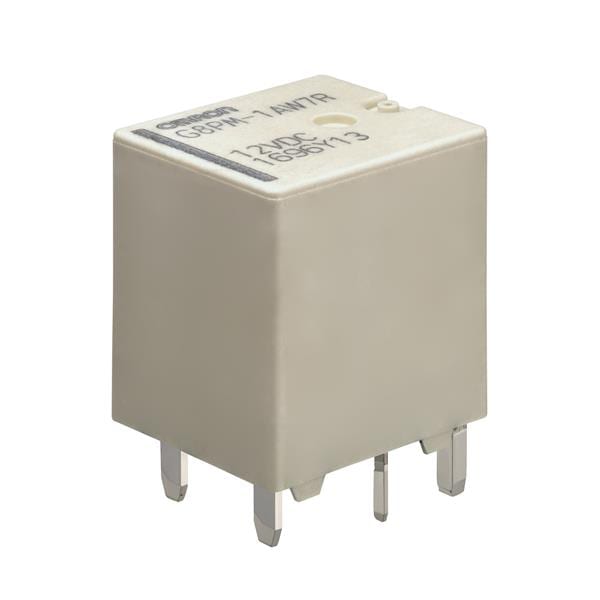
Where automotive relays are used
In automotive and mobile equipment, relays are commonly used wherever a control circuit must safely and reliably switch a heavier electrical load. Typical examples include cooling fans, horn circuits, defoggers, battery-related switching, power distribution paths, and auxiliary systems that need isolation between the control side and the load side.
Compared with general-purpose relay applications, the automotive environment adds extra design constraints. Components often need to withstand heat, shock, moisture exposure, and continuous cycling over long service intervals, which is why this category is distinct from broader industrial relay solutions used in panel or factory equipment.
Key selection points for automotive relay design
When narrowing down suitable parts, engineers usually start with the rated coil voltage and the expected load characteristics. A relay used for a resistive load behaves differently from one switching inductive or motor-driven circuits, so current level alone does not tell the full story.
Other practical considerations include contact form, number of poles, switching frequency, PCB or plug-in mounting preference, and available installation space. In many vehicle applications, the balance between compact size and dependable switching performance is critical, especially in distributed electronic modules.
Thermal performance also matters. Automotive systems may operate in elevated ambient temperatures, so relay selection should take account of derating, enclosure conditions, and duty cycle rather than relying only on nominal catalog values.
Product examples in this category
This category includes representative parts from established manufacturers such as OMRON, Amphenol, Molex, and Littelfuse. Examples include models such as OMRON G8JR-1A2T-R-F1-DC12, OMRON G8W-1A6T-F-R-DC12, OMRON G8JE-1A7T-R DC12, and Amphenol LVRCM35SCF.
Some listings may appear as complete relay devices, while others are associated with automotive interconnect or wiring ecosystems. For that reason, it is helpful to review each product page carefully to confirm its intended role in the assembly, whether for direct switching, integration into a harness design, or use within a specific electrical subsystem.
A more detailed electromechanical example in this range is the OMRON G8HN-1C2T-R DC12, which shows how factors such as SPDT contact arrangement, 12 VDC coil rating, and operating temperature capability can influence suitability for real vehicle loads.
Understanding relay types within the broader relay ecosystem
Not every relay is designed for the same signal level or switching task. Automotive relays are generally intended for power and control functions inside vehicles, whereas categories such as low signal PCB relays are more appropriate for sensitive control circuits with smaller loads.
Likewise, applications involving radio-frequency paths require a very different construction than vehicle power switching, which is why RF relays are considered a separate class. Understanding these distinctions helps buyers avoid selecting a relay family that matches the package size but not the actual electrical duty.
Manufacturer coverage and sourcing considerations
This category highlights parts from manufacturers commonly associated with automotive and interconnect applications, including OMRON, Amphenol, Molex, and Littelfuse. Each brand may serve different priorities, such as compact relay construction, connector compatibility, power distribution support, or integration into broader vehicle electrical architectures.
For sourcing teams, consistency of manufacturer, footprint, and electrical characteristics can simplify qualification and replacement planning. It is often useful to compare relay options alongside related components from the same supplier ecosystem, especially when designing for serviceability, harness compatibility, or long-term platform support.
What to review before ordering
Before purchasing, check the application requirements against the product data shown on the item page. Important points typically include coil voltage, contact configuration, terminal style, current capacity, and the environmental conditions expected in the final installation.
If the relay will be installed in a compact control box or near heat-generating components, evaluate thermal conditions and switching frequency carefully. For repair and replacement scenarios, matching the original electrical and mechanical interface is just as important as matching the nominal voltage.
It can also be useful to compare this category with other automotive relay options when looking for alternate package styles or different switching arrangements within the same application area.
Choosing the right automotive relay category
The right choice depends on how the relay will function inside the vehicle system: load type, control logic, available space, mounting method, and operating environment all affect the decision. A relay that works well for a fan or heater circuit may not be the ideal fit for a compact electronic module or a high-cycle switching task.
By reviewing the product range in context rather than focusing on part number alone, buyers can make a more reliable selection for both new designs and replacement needs. This Automotive Relays category is intended to support that process with access to relevant products, recognized manufacturers, and a clearer path to comparing relay options for vehicle electrical systems.
Get exclusive volume discounts, bulk pricing updates, and new product alerts delivered directly to your inbox.
By subscribing, you agree to our Terms of Service and Privacy Policy.
Direct access to our certified experts