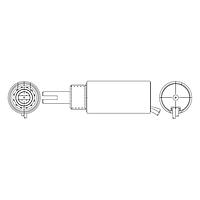
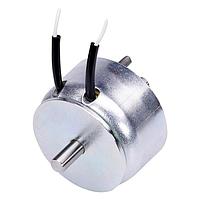
Solenoids & Actuators
Precise linear motion is a common requirement in packaging, assembly, material handling, and automated test systems. When a machine needs controlled push, pull, lift, or positioning functions, Solenoids & Actuators become a practical part of the motion and control chain, helping convert electrical input into reliable mechanical movement.
Within this category, buyers typically compare devices based on motion type, travel, force, installation constraints, and how easily they integrate into a wider automation system. Whether the application calls for compact positioning on a small mechanism or repeatable movement on a guided axis, this range supports industrial users looking for motion components that fit real operating conditions.
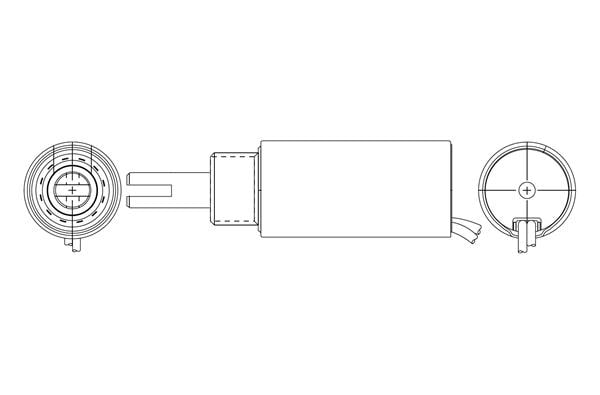
Where solenoids and actuators fit in industrial systems
Although these terms are often grouped together, they can serve different roles depending on the machine design. In general, a solenoid is used for fast, direct electromagnetic motion, while an actuator may provide more controlled linear movement for positioning, feeding, clamping, or adjustment tasks.
In many control panels and automated assemblies, these devices work alongside relays, switching devices, and other motion-control components. The result is a coordinated system in which an electrical command triggers a mechanical response with the level of speed and repeatability required by the process.
Why electric linear actuators are widely used
A significant part of demand in this category comes from electric linear actuators, especially in applications where controlled stroke movement and predictable positioning matter more than simple on/off motion. They are commonly selected for systems that need cleaner installation, easier integration, and more straightforward electrical control within modern automation architectures.
Examples in this range include models from Festo such as the ELGC-BS-KF-80-600-16P, ESBF-BS-63-400-25P, ESBF-BS-63-300-10P, and EHAM-E20-40-E8-35, as well as options from Igus including the DLE-SA-0006 and DLE-SA-0001. Rather than treating these as interchangeable, it is usually more useful to match each actuator to the required stroke profile, mounting space, and duty pattern of the application.
How to choose the right product for the application
The most effective selection process starts with the motion requirement itself. Buyers typically define whether the device must push, pull, index, lift, open, close, or position a load, then narrow the search by available installation space and the level of control needed during operation.
For linear solutions, key considerations usually include stroke length, load direction, repeatability, mounting orientation, and how the actuator connects with guides, frames, sensors, or drive components. In applications where electrical switching and mechanical movement are closely linked, it may also be helpful to review related categories such as switches to ensure consistent control logic across the system.
Comparing common actuator options in this category
Different product families suit different machine-building priorities. A compact unit may be appropriate for space-limited equipment, while a larger guided linear actuator may be more suitable when stability and longer travel are important. This is why model names alone are rarely enough for selection; understanding the operating context matters just as much.
For example, the Festo ESBF series shown here appears in several variants such as ESBF-BS-63-400-5P, ESBF-BS-63-400-10P, ESBF-BS-63-300-25P, and ESBF-BS-32-200-5P, indicating that users often need alternatives across different stroke and mechanical configurations. Igus DLE-SA models provide another useful reference point for buyers seeking electric linear motion components within compact automation layouts.
Integration with broader control and motion hardware
Solenoids and actuators do not operate in isolation. In most industrial environments, they are part of a wider network that may include controllers, sensors, contactors, protection devices, and interface components. Selection therefore needs to consider not only movement, but also wiring, switching behavior, response timing, and service access.
For applications that combine actuation with power switching or machine interlocks, related hardware such as electromechanical contactors can be relevant elsewhere in the system. Looking at the full control architecture early in the design stage often helps reduce rework and improves long-term maintainability.
Typical use cases for industrial buyers
This category is relevant to OEMs, panel builders, maintenance teams, and automation integrators who need dependable motion components for repetitive machine tasks. Typical use cases include positioning assemblies, opening and closing mechanisms, controlled linear transfer, fixture movement, and automated handling steps inside production equipment.
In practice, the best product is not simply the one with the largest dimensions or the most familiar brand name. It is the one that matches the machine’s motion profile, available space, electrical environment, and maintenance expectations over time. That makes careful comparison especially important when specifying parts for new equipment or replacements in existing lines.
What to review before placing an order
Before final selection, it is worth confirming the mechanical envelope, mounting method, required movement range, and compatibility with the rest of the machine. Buyers should also check whether the application needs straightforward actuation or a more controlled linear positioning approach, since that distinction influences both performance and integration effort.
If you are comparing options across the category, focusing on function first will usually lead to a better result than filtering only by brand or model code. A clear view of the load, stroke, control method, and operating environment makes it easier to identify suitable solenoids and actuators for reliable day-to-day industrial use.
For engineers and purchasing teams working on automation projects, this category provides a practical starting point for sourcing motion components that support controlled mechanical action. By comparing actuator type, application fit, and system compatibility, it becomes easier to choose parts that align with real machine requirements rather than generic specifications alone.
Get exclusive volume discounts, bulk pricing updates, and new product alerts delivered directly to your inbox.
By subscribing, you agree to our Terms of Service and Privacy Policy.
Direct access to our certified experts