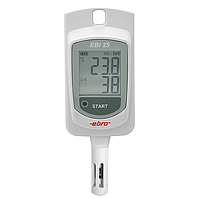
Data Acquisition & Logger
Reliable process data is the basis for traceability, troubleshooting, quality control, and continuous improvement in industrial environments. When measurements need to be captured over time rather than checked only at a single moment, Data Acquisition & Logger solutions help turn temperature, pressure, analog signals, and event data into usable records for analysis and reporting.
This category brings together instruments and accessories used to collect, store, and review measurement data across laboratories, production lines, utilities, warehouses, and field applications. From compact standalone loggers to modular interfaces for smart sensing, these products support practical monitoring tasks where consistency, history, and documentation matter.
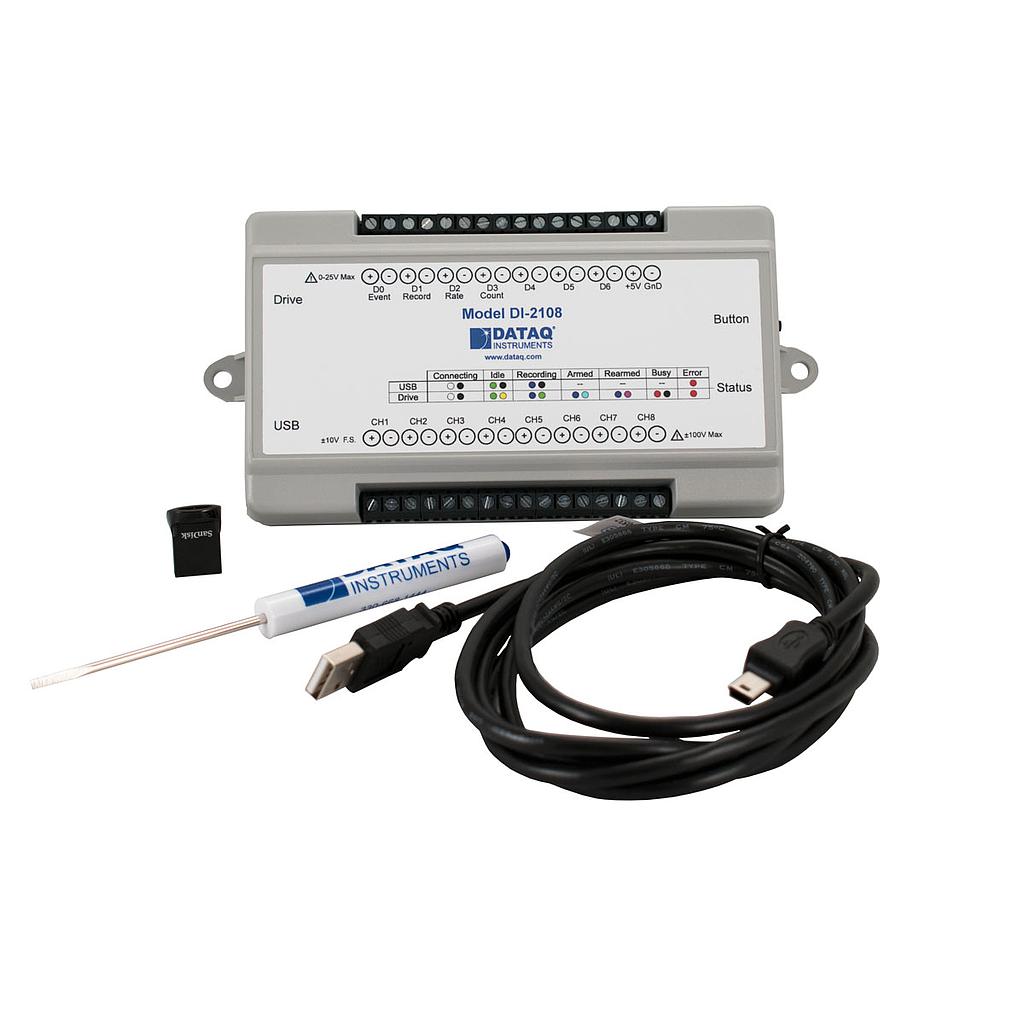
Where data acquisition and logging fit in industrial work
In many operations, a handheld reading is useful for spot checks, but it does not show how conditions change over hours, days, or production cycles. A logging system fills that gap by automatically recording values at defined intervals, making it easier to identify drift, excursions, process instability, or recurring events.
This is especially relevant for environmental monitoring, pressure observation, process validation, storage conditions, and maintenance diagnostics. Depending on the application, users may need simple onboard memory, downloadable records through USB, or wider connectivity through wireless, Modbus, or cloud-connected architectures.
Typical device types in this category
The category covers several related approaches to measurement data collection. Standalone temperature loggers are often chosen for compact deployment and routine environmental recording, while chart-based systems remain useful in facilities that prefer visual paper records for review and archiving.
Modular smart interfaces expand data acquisition beyond one variable. They can bring in process current, voltage, pulse signals, pressure, or specialty measurements such as heat flux, allowing users to build a more flexible monitoring point around the signal type already present in the system.
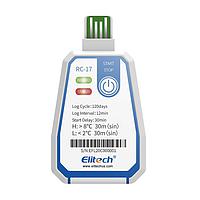
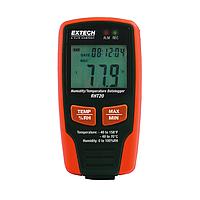
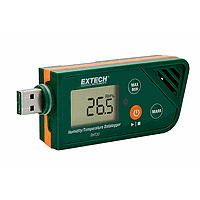
- Mini data loggers for temperature or environmental history
- Chart recording consumables and accessories for compatible recorders
- Smart probes for pressure monitoring in different ranges and reference types
- Process interfaces for analog, digital, and pulse-based signals
- Specialized sensor interfaces for application-specific measurements
Representative products and how they are used
A compact example is the TESTO 174 T Mini Temperature Data Logger, designed for recording temperature over time in a small form factor. With a wide measurement range, onboard memory, and export options, this type of logger suits cold chain checks, room condition monitoring, and storage verification where data history needs to be reviewed later rather than observed continuously on-site.
For recorder-based workflows, the SATO 7210-82 7-Day Temperature Recording Chart supports compatible thermohygrograph instruments by providing a clear physical recording medium over a weekly period. Related accessories such as the SATO 7238-04 Cartridge Pen play an important supporting role in the recording ecosystem, even though they are not the primary measuring device themselves.
On the process side, OMEGA SP-006-Series Smart Pressure Probes illustrate how data acquisition increasingly overlaps with connected sensing. Models in this series cover multiple ranges such as 1 psi, 50 psi, 100 psi, and 250 psi, with both gauge and absolute options available in the listed products. That gives users a practical path to matching the pressure reference and scale to the actual process instead of forcing one sensor range into every job.
Selection factors that matter before you buy
Choosing the right logger or acquisition device starts with the measurement type. Temperature, pressure, current, voltage, pulse signals, and specialized parameters each require the correct sensing method and input design. A mismatch here can limit accuracy, connectivity, or usability even if the product appears similar at first glance.
The next factor is data workflow. Some users need local storage with later download by USB, while others want integration into broader monitoring networks through wireless communication or industrial protocols. If records must be reviewed in spreadsheets, reports, or audit documentation, it is also worth checking software compatibility and export formats.
Physical installation should not be overlooked. Operating temperature, enclosure rating, connection type, number of channels, and available I/O all affect whether the device is suitable for a lab bench, a production machine, or a more demanding field location. In many B2B projects, the most efficient choice is the one that reduces adaptation work during commissioning.
Examples of application-driven configuration
For low-range gas or airflow-related pressure tasks, a model such as the OMEGA SP-006-1-C-001G may be more appropriate than a higher-range pressure probe, because range selection directly affects useful resolution and interpretation. By contrast, hydraulic or general process systems may require options such as the 50 psi, 100 psi, or 250 psi versions depending on normal operating pressure and safety margin.
If the monitoring point is not pressure-based, modular interfaces can be a better fit. The OMEGA SP-014-1 supports analog process signals such as current and voltage, while the SP-013-1 is intended for counter and totalizer style inputs including rate, pulse width, and duty cycle. For thermal studies involving energy transfer, the SP-016-1 heat flux interface represents a more specialized route within the same smart probe ecosystem.
Non-contact temperature measurement can also be part of a logging architecture. The OMEGA SP-002-1 Smart IR Sensor is relevant when surface temperature needs to be monitored without direct contact, such as on moving targets, hot surfaces, or locations where a contact probe is impractical.
Why accessories and consumables still matter
Data logging is not always only about the main instrument. In chart recorder systems, consumables determine whether the recorder can continue to deliver legible, time-based documentation. A pen cartridge or recording chart may seem minor, but without the correct accessory, the recorder cannot provide the continuous record the application depends on.
This is one reason category-level sourcing is useful in industrial procurement. Buyers can evaluate not only the measuring device itself, but also the supporting items needed to maintain uptime and recording continuity over the full service interval.
Manufacturer ecosystem and solution breadth
This category includes products from established instrumentation brands such as SATO and TESTO for recording applications, along with OMEGA for modular smart sensing and process-oriented monitoring. The broader manufacturer mix in the category also helps buyers compare different approaches to data capture, from conventional recording methods to more connected architectures.
For organizations standardizing around one vendor ecosystem, brand consistency can simplify software use, maintenance planning, and procurement. For others, the better strategy may be to select by application need first, then align the logger, probe, or interface to the required signal type, deployment environment, and reporting workflow.
Choosing a practical path forward
The best fit usually depends less on product format and more on the measurement objective. If the goal is environmental history, a compact logger may be enough. If the task involves machine signals, process loops, or smart field data, a modular acquisition interface or pressure probe may be more suitable. If existing operations rely on paper traceability, chart recorder supplies remain fully relevant.
By comparing measurement type, recording interval, data access method, environmental suitability, and required accessories, buyers can narrow the options quickly and avoid over-specifying or under-specifying the system. A well-chosen data acquisition setup does more than capture numbers; it improves visibility into how the process actually behaves over time.
Get exclusive volume discounts, bulk pricing updates, and new product alerts delivered directly to your inbox.
By subscribing, you agree to our Terms of Service and Privacy Policy.
Direct access to our certified experts