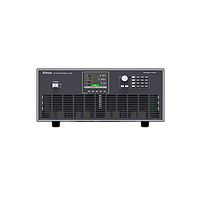
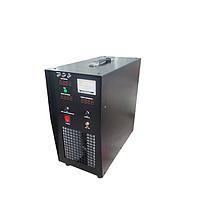
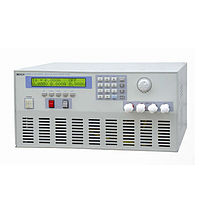
DC electronic load
When validating DC power supplies, battery packs, fuel-cell outputs, chargers, or power conversion stages, the load is just as important as the source. A DC electronic load gives engineers and test teams a controlled way to absorb power, simulate operating conditions, and evaluate how a device behaves across voltage, current, and power ranges.
In industrial R&D, production test, service labs, and energy-related applications, these instruments are used to check regulation, transient response, protection behavior, efficiency, and long-duration stability. This category brings together DC load solutions for everything from lower-voltage high-current testing to high-voltage applications that demand wider operating ranges and more advanced power handling.

Where DC electronic loads are used
A DC electronic load is commonly selected whenever a real, repeatable, and adjustable electrical load is needed. Typical use cases include testing bench power supplies, DC sources in automation systems, battery discharge behavior, EV-related subsystems, solar and storage components, and DC-DC converter outputs.
Compared with fixed resistive loads, electronic loads offer much better control. They allow the user to set current, voltage, resistance, or power-related operating conditions with higher repeatability, which is critical for engineering validation and production environments where the same test must be repeated across multiple units.
Key operating considerations when choosing a model
The right selection usually starts with the voltage-current-power envelope. Some applications need very high voltage with moderate current, while others require low voltage but extremely high current. In this category, the available examples illustrate that range clearly, from models such as the EA-ELR 10080-510 for 80 V and very high current operation, up to the EA-ELR 12000-20 for applications reaching 2000 V.
Power rating is equally important because it defines how much energy the load can absorb continuously. Several highlighted models in this range support up to 15,000 W, while others are rated at 10,000 W, making them suitable for different test benches, endurance procedures, and source capacities.
Engineers should also look at minimum operating voltage under sink conditions, insulation limits, and output capacitance, especially when testing sensitive sources or dynamic converters. These details affect startup behavior, control stability, and how closely the instrument matches the real test scenario.
Why regenerative load technology matters
For medium- to high-power DC testing, regenerative DC electronic loads can provide a practical advantage by returning absorbed energy to the grid instead of dissipating all of it as heat. This can help reduce cooling demand and improve overall energy efficiency in repetitive or long-duration tests.
The EA Elektro-Automatik models shown in this category are representative of that approach, with efficiency figures in the mid-90% range in the provided examples. If your application specifically prioritizes energy recovery and reduced thermal stress in the lab, you may also want to explore the dedicated regenerative DC electronic load range for a broader view of this test architecture.
Example product coverage in this category
The listed products demonstrate how broad the DC load requirement can be in real projects. For high-voltage testing, examples such as EA-ELR 11500-20, EA-ELR 11500-30, and EA-ELR 12000-20 address applications where the source output may extend to 1500 V or 2000 V. These types of instruments are relevant in HV DC source development, insulation-related evaluation, and advanced power electronics test setups.
On the other end of the spectrum, models like EA-ELR 10200-210 and EA-ELR 10080-510 are oriented toward lower-voltage, high-current scenarios. That makes them useful where current draw and power handling are more critical than maximum voltage, such as battery-related discharge testing, power bus validation, or high-current DC supply verification.
Mid-range options such as EA-ELR 10500-60, EA-ELR 10750-40, EA-ELR 10750-60, and EA-ELR 11000-40 show how the category supports a balanced mix of voltage and current capabilities. This flexibility helps integrators and lab managers standardize around one product family while still matching different DUT profiles.
Manufacturers commonly considered for DC load applications
Buyers evaluating this category often compare platforms from well-known test and measurement suppliers such as CHROMA, KEITHLEY, KEYSIGHT, BKPRECISION, EA Elektro-Automatik, GW INSTEK, and KIKUSUI. Brand preference usually depends on the required power class, control functions, interface expectations, and how the load needs to fit into an existing lab or production workflow.
Within the current product examples, EA Elektro-Automatik is especially visible, with models covering multiple voltage and current combinations in the 10 kW and 15 kW classes. That makes this category relevant for users who need scalable DC load platforms across different test stations without changing the basic selection logic too often.
How this category relates to other electronic load types
Not every application is served by the same load architecture. If you need broader source compatibility beyond DC-only testing, the wider AC/DC electronic load category may be more relevant. For LED driver characterization or current sink simulation in lighting applications, a dedicated LED DC Electronic Load Simulator can be the better fit.
There are also setups where modular expansion is important, especially in multi-channel or configurable test environments. In those cases, users may review mainframe systems if the test architecture relies on a chassis-based approach rather than a standalone instrument.
Selection tips for engineering and procurement teams
For engineering teams, it helps to define the DUT’s maximum voltage, expected current draw, continuous power, and likely transient conditions before narrowing the shortlist. Procurement teams should then confirm whether the selected load aligns with the intended test environment, including bench space, thermal management, electrical infrastructure, and long-term usage patterns.
It is also useful to think beyond the immediate project. A model that covers some future headroom in voltage or current may reduce replacement costs later, while a regenerative platform may offer operational benefits when tests are frequent or power levels are high. The best choice is usually the one that matches the real test profile rather than the widest specification on paper.
Finding the right DC load for your test setup
This category is designed for users who need controlled, repeatable, and scalable DC sink capability for power electronics testing. Whether the priority is high voltage, high current, 10 kW to 15 kW class power handling, or a more energy-efficient regenerative approach, the available range supports a variety of engineering and industrial scenarios.
If you are comparing models, start with the electrical envelope of the DUT and then review how the load will be used in practice: development, validation, burn-in, or automated production test. That approach makes it much easier to identify a DC electronic load that fits both the technical requirement and the workflow around it.
Get exclusive volume discounts, bulk pricing updates, and new product alerts delivered directly to your inbox.
By subscribing, you agree to our Terms of Service and Privacy Policy.
Direct access to our certified experts