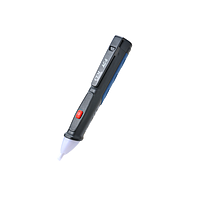
Low Voltage Tester
When you need a fast safety check before touching a cable, opening a panel, or tracing live wiring, a Low Voltage Tester is often the first tool picked up. These compact testers are widely used in maintenance, installation, facility management, and electrical troubleshooting because they help confirm the presence of AC voltage quickly without adding unnecessary setup time.
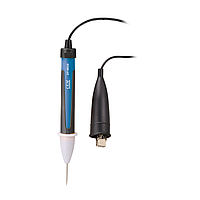
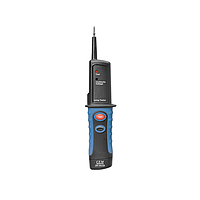
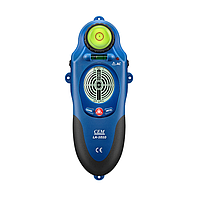
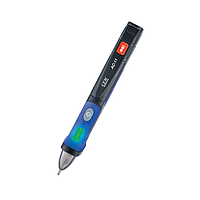
On this page, you can explore low voltage testers designed for non-contact detection, quick live-wire identification, and everyday electrical checks across building services, control circuits, and general low-voltage environments. The range includes pen-style detectors and compact handheld models suited to technicians who need a practical tool for routine field work.
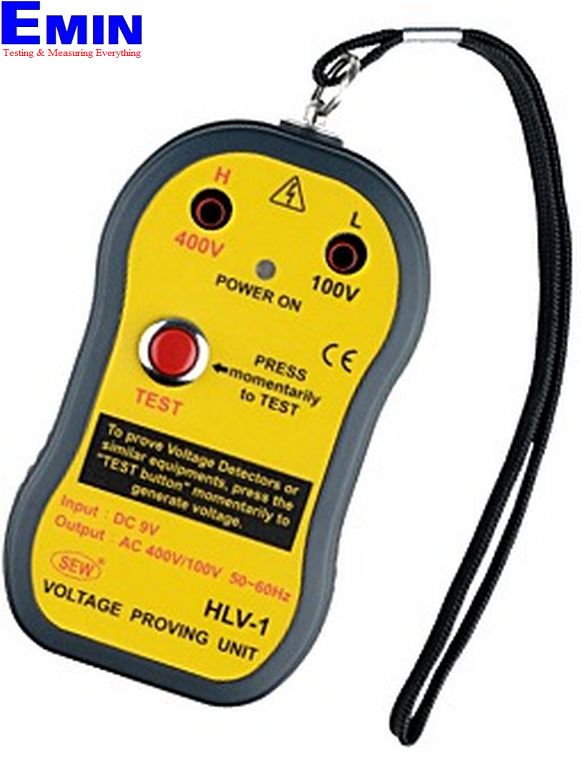
Why low voltage testers are widely used in electrical work
In many service and maintenance tasks, the goal is not to perform a full measurement immediately, but to verify whether voltage is present before moving to the next step. That is where these testers are especially useful. A non-contact detector can help identify energized conductors through insulation, support first-pass troubleshooting, and improve safety habits during inspection.
Compared with a full multimeter, a low voltage tester is simpler and faster for preliminary checks. It does not replace full diagnostic measurement when exact voltage values are required, but it is highly practical for screening outlets, switch lines, lighting circuits, terminal areas, and basic control wiring.
Common working principle and typical use cases
Most products in this category work by sensing the electrostatic field generated by AC voltage, allowing non-contact voltage detection through wire insulation. Visual indicators such as LEDs, and in many cases audible alarms, notify the user when voltage is detected. This makes them useful for quick confirmation without direct exposure to a bare conductor during initial checking.
Typical use cases include identifying live conductors in panels, checking receptacles and branch circuits, locating energized wiring paths near outlets or switches, and screening cables before maintenance. In some environments, technicians also use them as a first safety step before moving on to more detailed testing with tools such as an earth resistance/resistivity tester or other electrical measurement instruments, depending on the job scope.
What you can expect in this category
The selection covers several practical sensitivity ranges and feature sets. Some models are intended for standard AC detection in a broad range such as 90 V to 1000 V AC, while others are designed to respond at lower thresholds for control circuits or applications where earlier indication is useful. You will also find models with dual-range detection, flashlight functions, low-pass filtering, and visual plus audible alerts.
For example, FLUKE offers well-known pen-style voltage detectors such as the Fluke-1LAC-A-II, FLK-2AC/APAC VoltAlert™, FLK-1ACA1II/APAC, and LVD2, which are commonly chosen for fast field checks. HIOKI 3481-20 is another compact option for general AC detection, while TESTO 745 adds features such as a low-pass filter and a high ingress protection rating that may matter in tougher industrial environments.
How to choose the right low voltage tester
The right choice depends on how and where the tester will be used. One of the first things to review is the voltage detection range. If you mainly work on standard building power circuits, a general 90 V to 1000 V AC detector may be sufficient. If you also need to check lower-voltage control circuits, a model with lower starting sensitivity may be more suitable.
Another important point is the indication method. Some users prefer a simple LED tip indication, while others benefit from combined buzzer and light alerts in noisy or visually restricted areas. Battery type, auto power-off, tip style, and overall form factor also affect day-to-day convenience, especially for service teams carrying the tool all day.
Safety category and environmental resistance should not be overlooked. Depending on the model, you may find ratings such as CAT III or CAT IV, as well as different IP protection levels. For routine indoor work this may be less critical, but for plant maintenance, outdoor service, or demanding sites, a more robust tester can be the better long-term fit.
Representative models and brands in the range
Several manufacturers in this category are familiar to professional users. FLUKE appears prominently with multiple non-contact voltage detectors for standard AC checking, including models aimed at compact everyday use and others with dual-level indication. HIOKI provides lightweight detectors such as the 3481-20 for quick live-wire identification in up to 600 V AC applications.
EXTECH also adds practical options such as the DV25 dual-range AC voltage detector and DV30 adjustable non-contact AC voltage detector, both useful when sensitivity flexibility matters. For users looking at ruggedness and filtering capability, the TESTO 745 stands out with IP67 protection and non-contact AC voltage detection from 12 to 1,000 V AC. Chauvin Arnoux C.A 732 is another relevant choice for phase identification and contact-free AC voltage detection in everyday electrical service work.
When a low voltage tester is enough and when it is not
A low voltage tester is ideal for presence/absence screening, quick live-wire checks, and safer first inspection. It helps answer practical questions such as whether a conductor appears energized, whether an outlet is likely live, or whether a cable route is carrying AC voltage under normal conditions. For many maintenance routines, this saves time and reduces unnecessary contact.
However, these tools are not intended to replace measurement instruments that provide actual values, continuity testing, or broader diagnostic functions. If the task requires exact voltage, current, resistance, waveform behavior, or system fault analysis, you should move on to a dedicated measuring device. In fault-related work, some users may also need tools such as a ground fault locator for deeper troubleshooting beyond basic live-voltage indication.
Practical buying considerations for B2B users
For industrial buyers, contractors, MRO teams, and technical procurement departments, selection often goes beyond a single feature. It is helpful to consider whether the tester will be issued to individual technicians, stored in maintenance kits, or purchased in quantity for teams. In those cases, consistency of operation, battery format, visible alert behavior, and durability become important purchasing criteria.
It is also worth matching the tester type to the application environment. A simple pen-style detector may be perfect for building maintenance and basic service work, while facilities with mixed control and power circuits may prefer models with lower detection thresholds, dual sensitivity, or stronger environmental protection. Choosing the right tool for the job improves both workflow efficiency and operator confidence.
Find a suitable low voltage tester for routine electrical checks
This category brings together compact testers for everyday electrical verification, from standard non-contact AC detection to more specialized models with dual ranges, flashlights, adjustable sensitivity, or enhanced protection. Whether the goal is a quick panel check, outlet screening, or safer first-pass troubleshooting, these tools support faster field decisions without unnecessary complexity.
If you are comparing options for maintenance teams, service kits, or general electrical work, focus on the detection range, alert method, safety category, and working environment. A well-matched low voltage tester will not replace every measuring instrument, but it can become one of the most frequently used tools in daily electrical practice.
Get exclusive volume discounts, bulk pricing updates, and new product alerts delivered directly to your inbox.
By subscribing, you agree to our Terms of Service and Privacy Policy.
Direct access to our certified experts