Sensors and Transducers
Reliable measurement starts at the point where a physical condition is converted into usable data. In test benches, automation cells, research setups, and industrial monitoring systems, that role is handled by Sensors and Transducers that bridge the real world and the measurement platform. Choosing the right interface components in this category helps improve signal quality, simplify integration, and support more repeatable results across demanding applications.
Where sensors and transducers fit in a measurement system
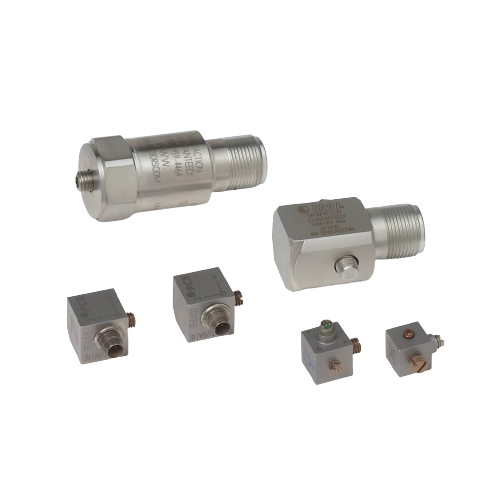
In practical terms, these devices detect variables such as position, pressure, temperature, force, flow, proximity, or motion and convert them into electrical signals that can be read by a data acquisition or control system. Within an accessory ecosystem, they are often the front-end element that determines how accurately a process or experiment can be observed.
This makes selection more than a simple catalog choice. The sensor must match the target variable, expected operating conditions, signal type, and the way it will connect with the rest of the setup. For many users building complete test and automation environments, this category naturally works alongside cables and related interface hardware to create a stable signal path from field device to instrument.
Common application needs across industrial and lab environments
The demand for sensors and transducers spans a wide range of B2B use cases. In manufacturing, they support machine monitoring, positioning, process feedback, and basic condition sensing. In laboratory and validation environments, they are used to capture physical behavior during product development, verification, and long-duration testing.
Some installations prioritize compact integration and fast response, while others focus on environmental resistance, long-term stability, or compatibility with existing measurement architecture. This is why buyers often compare not only the sensing principle itself, but also mounting style, output signal behavior, and how easily the device can be incorporated into broader power accessory and instrumentation arrangements.
Key considerations when selecting the right device
A good starting point is the measured variable. Pressure, flow, temperature, displacement, force, and presence detection all require different sensing approaches, and performance expectations can vary widely depending on the application. The right choice depends on what must be measured, how quickly it changes, and how precise the reading needs to be for the process or test objective.
Next comes electrical and mechanical compatibility. Signal output, connector style, supply requirements, environmental exposure, and installation constraints all influence whether a sensor will perform reliably in the field. In many systems, selection also depends on whether the device will operate with dedicated signal conditioning, directly with measurement hardware, or alongside broader accessory solutions already used in the setup.
It is also important to consider maintenance and lifecycle expectations. Industrial users often need components that are easy to replace, calibrate, or standardize across multiple machines and stations. In test applications, repeatability and traceable behavior are often more important than simply achieving a nominal measurement range.
Representative manufacturers in this category
This category may include products from established names used in sensing, industrial automation, and instrumentation. Brands such as Banner Engineering, Dwyer, Endress+Hauser, Honeywell, and Honeywell Test & Measurement are commonly associated with solutions for process feedback, environmental monitoring, and machine-level sensing tasks.
Additional manufacturers such as 3M, Adafruit, Alps Alpine, Amphenol, and Festo can also be relevant depending on the interface, installation method, or system architecture involved. Rather than focusing only on brand familiarity, most technical buyers evaluate how a given device fits the required measurement principle, operating environment, and integration workflow.
Integration with data acquisition and control workflows
In measurement systems, a transducer is only one part of the full signal chain. Performance can be affected by wiring layout, shielding, grounding, power quality, and the input characteristics of the receiving hardware. A well-matched sensor may still produce weak or unstable results if the surrounding accessories are not selected carefully.
That is why this category is often considered together with supporting items such as sensor and transducer accessories, interconnect components, and application-specific cabling. Looking at the full path from sensing element to software interface helps reduce noise issues, connection errors, and unexpected measurement drift during operation.
How to compare options without overcomplicating the decision
For many purchasing teams, the most effective approach is to narrow the shortlist using a few practical filters: target variable, installation environment, electrical interface, and system compatibility. That keeps the evaluation focused on devices that are realistic for the application instead of comparing unrelated sensing technologies.
From there, it becomes easier to review whether the priority is accuracy, responsiveness, durability, compact form factor, or ease of integration. In industrial procurement, the best fit is often the one that aligns with existing equipment standards, maintenance practices, and test procedures rather than the one with the longest feature list.
Supporting more dependable measurement results
Sensors and transducers are foundational components in modern test, monitoring, and automation systems because they define how physical conditions are captured in the first place. A suitable choice can improve data quality, reduce integration friction, and help maintain consistency across equipment builds or measurement stations.
Whether the requirement involves process sensing, machine feedback, or lab-based data acquisition, this category supports the transition from physical phenomena to actionable signals. Reviewing application conditions, interface requirements, and supporting accessories together is the most reliable way to select a solution that performs well in real operating environments.
Get exclusive volume discounts, bulk pricing updates, and new product alerts delivered directly to your inbox.
By subscribing, you agree to our Terms of Service and Privacy Policy.
Direct access to our certified experts