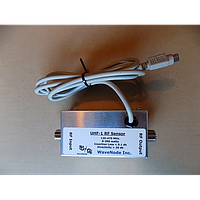
RF, Microwave Power Meter
Accurate RF power measurement is a basic requirement in transmitter testing, microwave lab work, telecom maintenance, and component validation. When signal level, loss, efficiency, or output stability must be verified with confidence, a RF, Microwave Power Meter becomes one of the most practical instruments in the measurement chain.
This category brings together benchtop meters, USB-based sensors, waveguide sensors, and supporting accessories used for power measurement across a wide frequency span. It is suitable for users working from lower RF bands up to millimeter-wave ranges, with options that fit production benches, R&D environments, service applications, and automated test systems.
Where RF and microwave power meters are used
In practical RF work, power is not just a single number on a display. It affects link budget, amplifier verification, antenna feed performance, device compliance checks, and system tuning. A dedicated power meter with the right sensor helps engineers measure average, peak, or relative power more directly than many general-purpose instruments.
These instruments are commonly selected for test tasks such as transmitter output checks, gain and insertion loss validation, pulse or modulated signal analysis, and waveguide measurements at very high frequencies. In many setups, they are used alongside a signal generator to create repeatable test conditions and verify power behavior throughout the RF path.
Common product types in this category
The category typically includes both power meters and power sensors. A benchtop meter acts as the main display and control unit, while the connected sensor determines much of the usable frequency range, connector style, and measurement method. This makes sensor compatibility an important part of instrument selection.
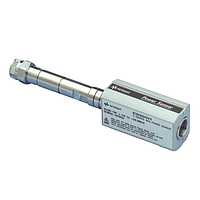
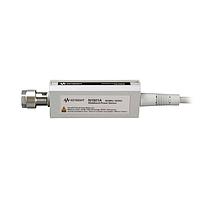
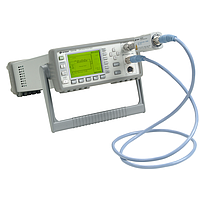
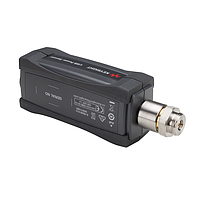
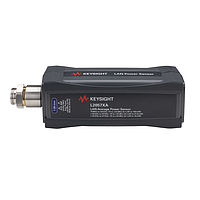
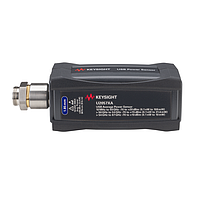
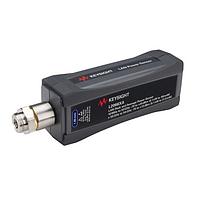
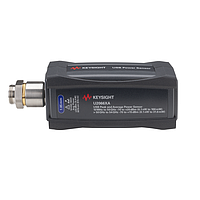
For example, the KEYSIGHT N1913B is a single-channel average power meter, while the KEYSIGHT N1914B expands this approach to dual-channel measurement. For applications where the sensor itself is the key element, products such as the KEYSIGHT N8485A thermocouple power sensor or KEYSIGHT U8485A USB thermocouple power sensor provide compact measurement options for different workflows.
At the high-frequency end, waveguide-based solutions such as the KEYSIGHT N8486DD-200 and N8486DG-200 are relevant for millimeter-wave measurement. For field-oriented RF power analysis, the Bird 4391A also illustrates how some systems combine power reading functions with broader operational utility in radio and transmission environments.
How to choose the right instrument
The first selection factor is usually frequency coverage. Some setups only need conventional RF or microwave measurement, while others extend into waveguide bands above 100 GHz. Choosing a meter and sensor combination with suitable coverage avoids unnecessary complexity and helps maintain measurement validity across the intended range.
The second factor is power range and signal type. Average power measurement may be enough for many CW and steady-state applications, but pulsed and burst signals often require sensor and meter combinations designed for fast response or peak-related measurement. If your work includes modulation analysis or signal behavior over time, it may also be helpful to review a signal analyzer for complementary insight.
Other practical criteria include channel count, interface requirements, connector type, and automation support. Bench systems often benefit from LAN, USB, GPIB, or SCPI compatibility, while compact USB sensors can simplify portable or software-driven measurements. If the test setup includes directional power and mismatch evaluation, users may also compare related tools such as a VSWR Analyzer.
Examples of instruments in this range
For general-purpose bench measurement, KEYSIGHT is strongly represented in this category. The N1913B and N1914B are good examples of meter platforms designed to work with multiple compatible sensors, allowing users to scale from single-channel tasks to more flexible multi-channel workflows depending on the application.
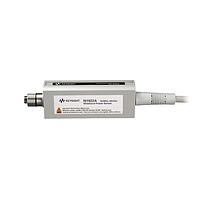
Sensor-focused solutions cover a broad spread of use cases. The N1923A wideband power sensor suits wideband RF work, while the N8485A thermocouple power sensor addresses microwave measurement over a defined range. USB-connected devices such as the U8485A can be attractive when direct PC integration is preferred over a traditional bench meter.
For specialized high-frequency applications, waveguide sensors such as the N8486DD-200 and N8486DG-200 extend measurement capability into very high microwave and millimeter-wave bands. In parallel, Bird remains relevant for users who need practical RF power monitoring in operational or service contexts, illustrated here by the Bird 4391A RF Power Analyst.
The role of accessories and sensor ecosystem
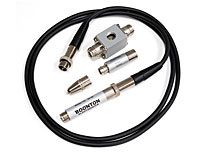
Power measurement systems often depend on more than the main instrument body. Cables, adapters, and sensor interfaces affect reliability, repeatability, and ease of integration. In a busy test bench, choosing the correct accessory can prevent unnecessary mismatch, connection errors, or downtime during setup changes.
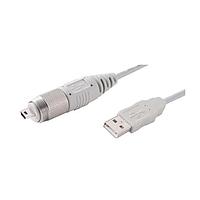
Products such as the KEYSIGHT E9288A power sensor cable and KEYSIGHT U2031C cable show how accessories support the wider measurement ecosystem rather than acting as standalone instruments. Their role is especially important when a sensor family must be connected to a compatible meter or host interface under stable, repeatable conditions.
Typical applications across telecom and RF test
In telecom and broadcast-related environments, RF power meters are used for transmitter alignment, amplifier verification, path loss checks, and service diagnostics. They are also relevant in component manufacturing, where repeatable power readings help verify device performance during assembly, calibration, or final inspection.
In laboratory settings, these instruments are often part of a broader workflow that may include source generation, spectral observation, and transmission path validation. For feeder lines, matching networks, and antenna systems, an engineer may pair power measurement with a cable and antenna analyzer to better understand both delivered power and RF path condition.
What matters for long-term usability
Beyond headline frequency and power numbers, long-term usability depends on workflow fit. Clear display behavior, stable calibration routines, sensor interchangeability, and software control all influence how efficiently the instrument can be used in routine testing. For production and validation environments, repeatability and straightforward integration can matter as much as raw range.
It is also worth considering how the instrument will be used over time. A modular bench meter may support future sensor expansion, while a compact USB sensor may be the better option for decentralized or space-limited setups. The right choice depends less on one specification alone and more on how the instrument supports the actual measurement task.
Finding the right RF power measurement solution
This category is intended for users who need practical options for measuring RF and microwave power across a variety of test scenarios. Whether the priority is a single-channel bench meter, a dual-channel platform, a thermocouple sensor, a waveguide sensor, or the supporting cable required for an existing setup, the available products reflect different levels of frequency coverage and workflow complexity.
When comparing models, it helps to start with the signal type, required frequency band, and preferred test architecture. From there, selecting the appropriate meter, sensor, and accessory combination becomes much more straightforward, leading to a measurement setup that is accurate, usable, and aligned with the demands of real RF work.
Get exclusive volume discounts, bulk pricing updates, and new product alerts delivered directly to your inbox.
By subscribing, you agree to our Terms of Service and Privacy Policy.
Direct access to our certified experts