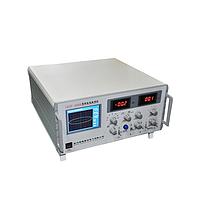
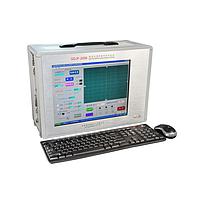
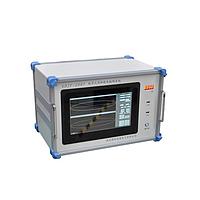
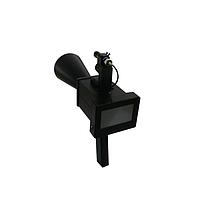
Partial Discharge Test System
Early signs of insulation deterioration are often invisible during routine operation, which is why partial discharge monitoring and diagnostic testing play such an important role in medium- and high-voltage asset management. For utilities, cable contractors, panel builders, and maintenance teams, the right Partial Discharge Test System helps identify developing defects before they become service interruptions, costly failures, or safety risks.
This category brings together instruments used for partial discharge detection, indication, location, and analysis across switchgear, cables, and HV test environments. Depending on the application, users may need a portable handheld scanner for field surveys, an online alarm system for continuous supervision, or a more advanced diagnostic platform for cable testing and defect localization.
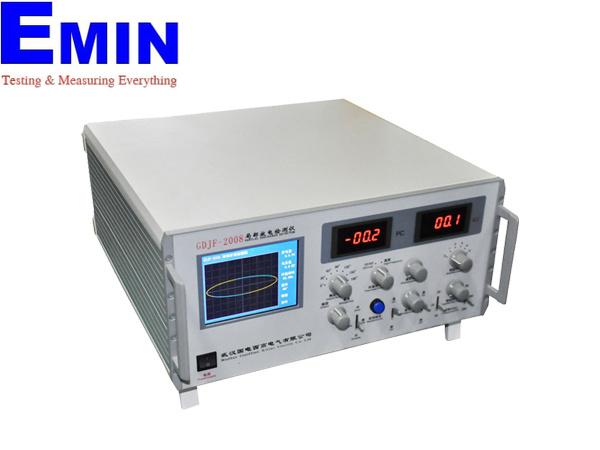
Where partial discharge testing is used
Partial discharge testing is commonly applied where insulation reliability is critical. Typical examples include MV and HV switchgear, power cables, substations, transformers, and factory or site acceptance testing for electrical equipment. In these environments, discharge activity can indicate voids, contamination, surface tracking, poor joints, or insulation aging long before a complete breakdown occurs.
Different assets require different test approaches. A handheld survey tool may be suitable for periodic inspections in switchgear rooms, while cable diagnostics often require coupling units, signal processing, and location functions. In some maintenance programs, PD testing is also combined with withstand voltage testing to build a broader picture of insulation condition.
Main types of systems in this category
This category includes a range of solutions rather than one single instrument type. Portable survey devices focus on fast screening in the field, often using TEV, ultrasonic, or HFCT methods to detect discharge-related signals around switchgear and cable accessories. Systems for online monitoring are intended to remain connected and generate alarms when abnormal activity is detected.
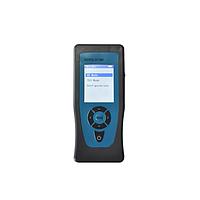
There are also dedicated diagnostic platforms for cable testing and defect localization. For example, the BAUR PD-TaD 62 and BAUR PD-TaD 80 are designed for portable PD diagnostics in cable applications, while the BAUR liona Online PD Spot Tester supports spot measurement and analysis workflows. In a different use case, the ndb Technologies PD Annunciator Partial Discharge Alarm System is oriented toward alarm-based monitoring, and accessories such as the ndb Technologies HFCT 20HD + cáp BNC PD Detection Clamps support signal pickup within a broader measurement setup.
Detection methods and what they help reveal
A practical strength of modern PD systems is the ability to work with multiple sensing methods. TEV measurement is widely used for metal-clad switchgear inspection, while ultrasonic sensing helps detect acoustic emissions associated with discharge activity. HFCT-based measurement is especially relevant when monitoring currents on cable earth connections or related conductors.
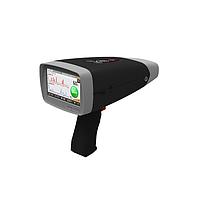
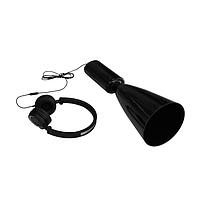
The MEGGER PD SCAN Handheld Scanner for PD Surveying in MV and HV Plants is a good example of a field-oriented instrument that combines TEV, acoustic, and HFCT techniques in one portable platform. For corona or discharge screening from an acoustic perspective, the JFE MK-720-E and JFE MK-720L-E Corona Discharge Checker models provide another approach for maintenance personnel who need quick directional assessment during inspection rounds.
Using more than one sensing principle can help reduce false interpretation. A signal seen electrically but not acoustically may require further validation, while correlated readings across two methods often give maintenance teams more confidence when deciding whether to continue monitoring, schedule outage work, or carry out deeper diagnostic testing.
How to choose the right partial discharge test system
The best fit depends first on the asset under test and the objective of the job. If the priority is periodic switchgear inspection, a lightweight handheld unit may be more useful than a larger diagnostic platform. If the goal is cable assessment, defect location, or repeatable acceptance testing, a dedicated PD diagnostics system with higher measurement capability and suitable accessories will usually be the better choice.
It is also worth considering whether the work is offline or online. Offline testing is often used during commissioning, maintenance shutdowns, or fault investigation. Online systems are more suitable when operators want continuous visibility without taking the asset out of service. In cable-focused workflows, users may also compare PD solutions alongside a VLF testing setup or a capacitance and tan delta instrument when insulation diagnosis requires multiple methods.
Other selection points include portability, environmental protection, interface type, number of input channels, reporting workflow, and whether alarms or software-based analysis are needed. These factors matter just as much as raw sensitivity, especially for teams that need repeatable field procedures across many substations or cable routes.
Representative products and application fit
Several products in this category illustrate the range of available solutions. The BAUR PD-TaD 62 and PD-TaD 80 portable systems are aligned with cable PD diagnostics and localization tasks, making them suitable where users need more than simple detection. The BAUR liona Online PD Spot Tester is positioned for focused measurement and software-supported analysis in cable-related applications.
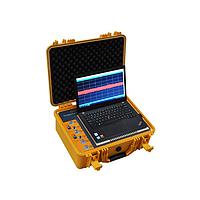
For survey work in MV and HV plants, the MEGGER PD SCAN offers a compact route to routine inspection. For targeted discharge indication using acoustic techniques, the JFE MK-720-E and MK-720L-E can support maintenance teams during on-site checks. In a laboratory or high-voltage test environment, the MultiTech MTYD-10/100 AC Partial Discharge Test System represents a different class of equipment intended for controlled PD test conditions.
Supporting components are also relevant. The BAUR tracy Partial Discharge Inductor serves a specific role in the measurement ecosystem, while HFCT clamps and related accessories from ndb Technologies can be important for establishing the right sensing path in practical installations.
Why PD testing is often part of a wider diagnostic workflow
Partial discharge results are most valuable when interpreted in context. A PD indication may point to insulation stress, but maintenance decisions usually benefit from correlation with other electrical tests, operating history, asset age, and installation conditions. That is why many engineering teams do not treat PD testing as an isolated activity.
In cable and HV commissioning work, PD measurement may sit alongside withstand tests, VLF methods, or dissipation factor assessment. For users working with cable systems, BAUR equipment in this category is often relevant because the brand also appears in adjacent diagnostic workflows, including BAUR test and diagnostic solutions. Building a suitable workflow depends on the asset class, test standard, outage window, and the level of detail needed for decision-making.
What buyers should look for on a category page
When comparing products in this category, it helps to start with the intended measurement scenario rather than the product name alone. Ask whether the system is meant for spot checks, continuous monitoring, cable diagnostics, defect location, or factory-style high-voltage testing. Then review practical details such as sensor compatibility, data handling, portability, and power requirements.
If you are selecting for a multi-site maintenance program, ease of use and reporting may matter as much as advanced analysis functions. If you are working in a specialized cable diagnostics role, location capability, signal acquisition performance, and integration with related test methods will likely be more important. The most effective choice is usually the one that matches the workflow your team actually performs in the field.
Conclusion
A well-chosen partial discharge test system can help move maintenance from reactive troubleshooting toward earlier detection and more informed planning. Whether the requirement is handheld switchgear surveying, online alarm-based monitoring, or deeper cable diagnostics, this category covers a range of tools suited to different stages of insulation assessment.
By comparing application focus, sensing method, portability, and diagnostic depth, buyers can narrow the options to the equipment that best fits their assets and testing practice. That approach leads to more meaningful PD data and, ultimately, better decisions about reliability, maintenance, and asset life.
Get exclusive volume discounts, bulk pricing updates, and new product alerts delivered directly to your inbox.
By subscribing, you agree to our Terms of Service and Privacy Policy.
Direct access to our certified experts