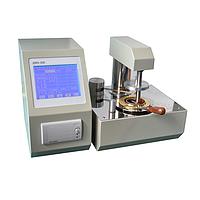
Flammability Testing Equipment Calibration Service
Accurate fire-performance testing depends on more than the test method alone. When a flammability tester is used for product qualification, quality control, or compliance work, its timing, temperature-related behavior, burner setup, airflow conditions, and measurement functions all need to remain consistent. That is why Flammability Testing Equipment Calibration Service plays an important role in maintaining confidence in test results and reducing uncertainty across repeated evaluations.
This category is intended for users who need calibration support for flammability testing systems used in laboratories, inspection environments, and industrial testing workflows. Whether the equipment is part of routine verification or a broader maintenance program, calibration helps confirm that the instrument continues to operate within expected performance conditions and supports more reliable comparison between test runs.
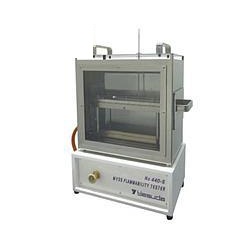
Why calibration matters for flammability testing equipment
Flammability testing often involves tightly controlled conditions where even small deviations can affect how a material appears to ignite, burn, self-extinguish, or respond to a defined flame source. In practical terms, an instrument that is out of calibration may introduce avoidable variation into test outcomes, making trend analysis and documentation less dependable.
A structured calibration service helps verify the key parameters that influence test repeatability. This is especially important in environments where results are used to support product development, supplier validation, internal quality procedures, or external audit requirements. For organizations managing several types of physical test instruments, calibration planning is often coordinated alongside services such as furnace calibration where thermal performance is also critical.
What this service typically supports
Flammability testing equipment can include systems used to evaluate ignition behavior, flame spread characteristics, afterflame time, afterglow time, and related test conditions depending on the applicable procedure. While exact checkpoints vary by instrument design and test standard, calibration generally focuses on confirming that core operating conditions remain stable and measurable.
This may involve inspection and verification of timing functions, setup geometry, control elements, and other measurement-related points relevant to the equipment’s intended use. The goal is not simply to “check the machine,” but to support traceable, consistent operation in the context of real testing work. In laboratories that also manage barrier-property evaluation, it can be useful to align service intervals with related categories such as oxygen permeation system calibration to maintain a more organized calibration schedule.
Supported brands and example service options
This category includes calibration service options for selected manufacturers commonly used in flammability testing workflows. Priority brands in this range include Yasuda, JFM, and TONYHK, allowing buyers to locate service coverage that matches their installed equipment base without searching across unrelated categories.
Representative listings in this category include the Yasuda Flammability testing equipment Calibration Service, JFM Flammability testing equipment Calibration Service, and TONYHK Flammability testing equipment Calibration Service. These examples help clarify manufacturer-specific service availability, while the broader category remains relevant for procurement teams, laboratories, and maintenance coordinators comparing calibration options for different equipment fleets.
How to choose the right calibration service
When selecting a calibration service, it is useful to begin with the actual equipment brand and the role of the instrument in your testing process. A laboratory performing regular product validation may prioritize calibration intervals and documentation practices differently from a production site that uses flammability testing mainly for periodic quality checks.
It is also important to consider how the instrument fits into the wider test environment. If your lab manages multiple physical-property systems, grouping services by application can improve uptime and simplify records. For example, teams responsible for packaging or film evaluation may also review water vapor transmission rate test system calibration as part of the same maintenance planning cycle.
Benefits for laboratories, QA teams, and industrial users
A dependable calibration program supports more than equipment upkeep. It helps laboratories improve test repeatability, maintain clearer records for internal and external review, and reduce the risk of questionable results caused by unnoticed drift. For QA teams, this can make investigations more efficient when material behavior changes from one batch or supplier to another.
From a business perspective, calibration also contributes to better workflow control. Instruments that are checked on a planned basis are easier to schedule, easier to document, and generally easier to integrate into broader quality systems. This is especially valuable in B2B environments where traceability, consistency, and audit readiness are part of day-to-day operations rather than occasional requirements.
When to arrange calibration
Calibration is commonly scheduled at regular intervals, but timing should also reflect actual usage conditions. Equipment that is used frequently, moved between locations, exposed to demanding lab environments, or relied on for formal test reporting may need closer attention than systems used only occasionally.
Many organizations also arrange service after maintenance work, after unexpected performance changes, or before major validation programs. If other material test instruments are managed under the same system, services such as abrasion tester calibration may be reviewed at the same time to keep documentation and scheduling aligned across the lab.
What to prepare before requesting service
To make the calibration process more efficient, it helps to gather basic equipment information in advance. This usually includes the manufacturer, equipment name, internal asset reference, current condition, and any recent observations such as inconsistent readings, setup drift, or maintenance history.
If the instrument is tied to a specific internal procedure or customer requirement, noting that context can also help ensure the service request is evaluated appropriately. For multi-site companies or central procurement teams, keeping a clear list of installed units by brand, such as Yasuda, JFM, or TONYHK, can simplify recurring service planning and reduce delays in approval or coordination.
Supporting reliable fire-performance testing over time
Choosing the right calibration support helps protect the value of your flammability testing process. When equipment is checked at appropriate intervals and matched to the correct manufacturer service pathway, laboratories and industrial users can manage testing with greater consistency and clearer documentation.
This category brings together relevant service options for users who need practical support for maintaining flammability test equipment in working condition. If your operation depends on repeatable physical testing data, a well-planned calibration approach is a straightforward step toward more stable results and better long-term equipment control.
Get exclusive volume discounts, bulk pricing updates, and new product alerts delivered directly to your inbox.
By subscribing, you agree to our Terms of Service and Privacy Policy.
Direct access to our certified experts