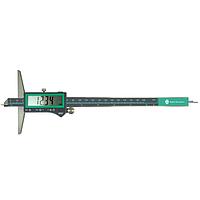
Depth Gauge Inspection Service
Accurate depth measurement is essential when checking slot depth, hole depth, step height, and recessed features in machining, toolmaking, maintenance, and quality control. When a gauge is used repeatedly on the shop floor, even a small deviation can affect inspection results, setup decisions, and product acceptance. A reliable Depth Gauge Inspection Service helps verify that the instrument is still performing within expected measurement accuracy and remains suitable for daily use.
This service category is intended for companies that rely on depth gauges as part of routine dimensional inspection. Whether the instrument is used in incoming inspection, in-process checking, or final quality verification, regular inspection supports traceability, reduces measurement uncertainty in practice, and helps maintain confidence in reported results.

Why depth gauge inspection matters in production and quality control
A depth gauge is often used to confirm dimensions that are not easy to judge visually. Examples include groove depth, blind-hole depth, counterbore depth, and height differences between reference surfaces. Because these checks are often tied directly to fit, assembly, or machining quality, measurement reliability is more than a formality.
Over time, contact surfaces can wear, zero reference can shift, or the measuring movement may no longer feel consistent. Inspection helps identify these issues before they lead to incorrect decisions on the production line. For businesses that also manage other dimensional tools, related services such as callipers inspection may be relevant as part of a broader instrument control plan.
What is typically checked during a depth gauge inspection service
The purpose of inspection is to confirm that the instrument functions correctly and that its indication or reading behavior remains dependable for the intended measurement range. In practical terms, this usually involves checking the reference base, measuring rod or probe movement, scale readability, and the instrument’s response at selected points.
For a mechanical measuring instrument such as a depth gauge, the inspection process may also focus on smooth travel, visible condition, contact integrity, and reading consistency. The exact procedure can vary depending on the gauge design and manufacturer, but the overall goal is the same: to assess whether the tool is still fit for dimensional verification tasks in real working conditions.
Common cases where inspection is recommended
Many companies schedule periodic inspection as part of preventive quality management, but there are also situations where an additional check is especially useful. Instruments that are used frequently, exposed to vibration or coolant, or moved between departments may require more attention than gauges kept in controlled inspection rooms.
Inspection is also worth considering when a depth gauge has been dropped, shows unstable readings, feels mechanically rough, or is being returned to service after long storage. If your metrology workflow includes other handheld tools, it may be useful to review services like micrometer inspection to maintain consistency across the full set of measuring equipment.
Supported brands and service examples
This category includes inspection service options for widely used brands in dimensional measurement. Examples available here include the Mahr Depth Gauge Inspection Service, MITUTOYO Depth Gauge Inspection Service, MOORE & WRIGHT Depth Gauge Inspection Service, Niigata Seiki Depth Gauge Inspection Service, and TECLOCK Depth Gauge Inspection Service.
Brand-specific service listings can help users quickly find the most relevant option for the instrument they already own. At the same time, the main decision should still be based on the gauge type, its condition, and how it is used in the actual inspection process rather than on brand name alone.
How to choose the right service for your instrument
When selecting a service, start by confirming the instrument brand and the exact type of depth gauge being used. This helps avoid mismatches and makes it easier to route the tool into the appropriate inspection workflow. If your facility uses several brands, checking service availability by manufacturer can save time when planning periodic verification.
It is also useful to consider how the gauge is applied in your process. A tool used for routine go/no-go style checks may not face the same demands as one used for documented dimensional records or customer-facing quality reports. In both cases, however, a properly inspected gauge supports more stable measurement practice and clearer maintenance planning.
Depth gauges within a broader measuring instrument management system
Depth gauges are only one part of a typical mechanical measurement environment. In many factories, they are managed alongside calipers, micrometers, thickness gauges, and other handheld inspection tools. Coordinating inspection intervals across these instruments can simplify internal asset control and reduce the risk of overlooked devices.
Where materials or surface condition are also part of the quality process, some businesses may additionally review services such as thickness gauge inspection or hardness meter inspection. This kind of structured approach is especially helpful in production environments where multiple inspection tools contribute to a single acceptance decision.
Who can benefit from this service category
This category is relevant for machine shops, manufacturers, maintenance teams, quality departments, laboratories, and industrial suppliers that depend on repeatable dimensional checks. It is particularly useful where depth measurements affect assembly clearance, machining accuracy, or compliance with internal inspection procedures.
Organizations with formal equipment management processes can also benefit from grouping services by instrument family. That makes it easier to review service history, plan future inspections, and keep measuring tools available for production without unnecessary disruption.
Find a practical inspection option for your depth gauge
Choosing the right inspection service is ultimately about maintaining confidence in the measurements used to support production and quality decisions. A depth gauge may look simple, but its reliability depends on stable reference contact, consistent movement, and trustworthy readings during actual use.
By selecting a suitable depth gauge inspection option for your instrument brand and application, you can support better measurement control across the workshop or inspection area. If you manage multiple handheld measuring tools, this category can also serve as part of a broader, more organized instrument verification program.
Get exclusive volume discounts, bulk pricing updates, and new product alerts delivered directly to your inbox.
By subscribing, you agree to our Terms of Service and Privacy Policy.
Direct access to our certified experts