Picoammeter/Nanovoltmeter Repair Service
When ultra-low current or microvoltage measurements begin to drift, fluctuate, or fail altogether, the impact is often much larger than the instrument itself. In research labs, semiconductor testing, materials analysis, and precision electronics work, reliable measurement at the picoamp and nanovolt level is essential for valid data and stable processes. That is why a dedicated Picoammeter/Nanovoltmeter Repair Service matters for organizations that depend on high-sensitivity electrical measurements.
This service category is intended for users working with precision instruments that detect extremely small currents and voltages, where issues such as noise, zero instability, input damage, display faults, or communication problems can quickly compromise results. Whether the equipment is used in R&D, quality control, failure analysis, or advanced test benches, professional repair helps restore usability while reducing the risk of replacing valuable equipment too early.
Why picoammeter and nanovoltmeter repair requires specialized handling
These instruments operate in a measurement range where environmental interference, leakage current, shielding quality, and input-stage integrity all play a major role. Unlike general-purpose electrical meters, a picoammeter or nanovoltmeter is built to resolve signals that can be affected by contamination, damaged input circuits, unstable internal references, or aging components.
Because of this, precision repair is not only about replacing faulty parts. It also involves careful fault isolation, attention to signal integrity, and verification that the instrument can return to stable low-level measurement performance. For users comparing service options, this is an important distinction between standard meter repair and work on ultra-sensitive instrumentation.
Common issues seen in low-current and low-voltage instruments
Fault symptoms can vary depending on how the instrument is used and the conditions in the test environment. Some units show excessive noise, offset drift, slow settling, unstable readings, or measurement values that no longer track expected behavior. Others may have power-up problems, failed interfaces, front-panel issues, or damaged input sections caused by overload or improper connections.
In many cases, the challenge is not only the visible fault but also the hidden effect on measurement credibility. An instrument may still turn on and display values while no longer maintaining the low-noise behavior required for sensitive applications. For teams troubleshooting adjacent equipment, it can also be useful to review related services such as multimeter repair when broader electrical measurement capability is involved.
Typical equipment covered in this category
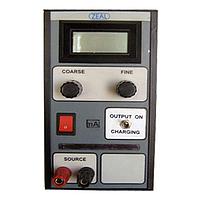
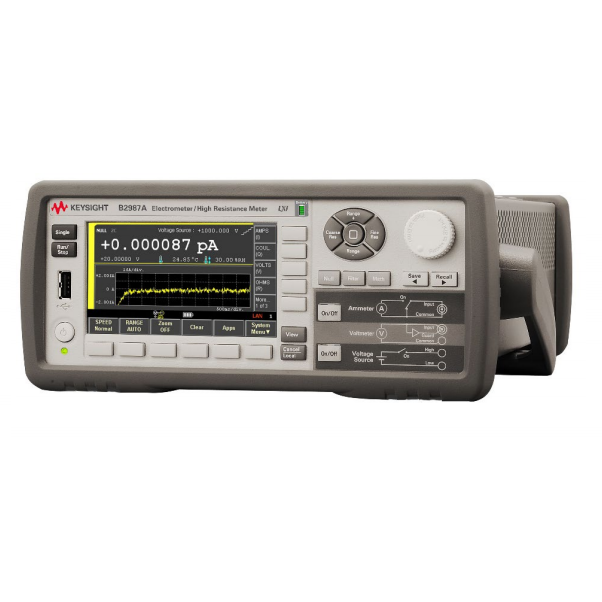
This category includes repair support for representative instruments such as the KEITHLEY Picoammeter/Nanovoltmeter Repair Service, the KEYSIGHT Picoammeter/Nanovoltmeter Repair Service, and the ZEAL DC Low Current Source Repair Service. These examples reflect a practical service scope around instruments designed for extremely low current measurement, nanovolt-level voltage work, and related precision source or measurement tasks.
Different brands may use different architectures, interfaces, and operating modes, but the service objective remains similar: restore dependable functionality for sensitive measurement workflows. In this category, manufacturer context helps identify the right service path without turning the page into a simple brand list.
How to evaluate whether repair is the right next step
Repair is often worth considering when the instrument still has clear application value, integrates into an existing test setup, or supports a process that would be costly to revalidate with a replacement unit. This is especially true for precision electrical test equipment already embedded in laboratory procedures, engineering validation routines, or production support environments.
A practical starting point is to note the operating symptom clearly: does the issue appear at startup, only after warm-up, during low-range measurements, or when switching functions or connections? The more precisely the fault is described, the easier it becomes to assess repairability and expected service workflow. If your maintenance needs span several types of handheld or bench instruments, related categories such as clamp meter repair may also be relevant within a broader service plan.
Brand context and service relevance
Among commonly requested names in this area, KEYSIGHT and KEITHLEY are often associated with demanding low-level measurement tasks in labs and electronic test environments. ZEAL is also relevant where DC low current source equipment supports specialized verification or process needs. Mentioning these manufacturers is helpful because users frequently search by brand first and service category second.
At the same time, good service content should focus on the application and fault context rather than repeating manufacturer names excessively. The real concern for most B2B buyers is whether the repair path matches the instrument’s role in their workflow, the sensitivity of the measurements, and the urgency of returning the equipment to operation.
Applications where reliable repair support matters most
Low-level electrical measurement tools are used in environments where small errors can lead to poor design decisions, invalid test results, or delayed troubleshooting. Typical use cases include leakage current testing, component evaluation, materials characterization, sensor analysis, and research setups that depend on stable current and voltage readings near the lower limits of detectability.
In these settings, instrument downtime affects more than one device. It can interrupt qualification plans, slow engineering investigations, and reduce confidence in historical data comparisons. For organizations managing a mixed fleet of electrical test equipment, adjacent service areas such as multifunction electrical installations meter repair can also support a more complete maintenance strategy.
What to prepare before sending an instrument for repair
Before arranging service, it is useful to record the model name, observed fault symptoms, operating conditions, and any recent event that may have triggered the problem. Notes about unstable readings, overload history, failed self-check behavior, communication errors, or inconsistent zero performance can help streamline evaluation.
If accessories, fixtures, or specific test conditions are needed to reproduce the fault, that information is also valuable. For sensitive instruments, a clear service request can reduce back-and-forth communication and improve the chance of identifying the root cause efficiently. This is particularly important for equipment used in high-sensitivity measurement workflows where the failure mode is not always obvious from a simple power-on check.
Choosing a repair path that fits precision measurement work
Selecting the right repair service for picoammeters and nanovoltmeters is less about broad marketing claims and more about matching the service scope to the instrument’s technical role. Users typically need confidence that the repaired unit can return to meaningful low-level measurement tasks, not merely power on or pass a superficial inspection.
For teams working with KEITHLEY, KEYSIGHT, or ZEAL equipment, this category provides a focused starting point for restoring instruments used in demanding low-current and low-voltage applications. A well-matched repair service helps extend equipment life, support continuity in test workflows, and maintain confidence in measurement performance where precision matters most.
Get exclusive volume discounts, bulk pricing updates, and new product alerts delivered directly to your inbox.
By subscribing, you agree to our Terms of Service and Privacy Policy.
Direct access to our certified experts