Hydraulics, Lifting equipment
Moving heavy loads, applying controlled force, or generating stable pressure for testing all require equipment that is both practical and predictable. In industrial maintenance, production support, workshops, and field service, the right hydraulic and lifting tools help teams work more safely, reduce manual effort, and handle demanding tasks with better control.
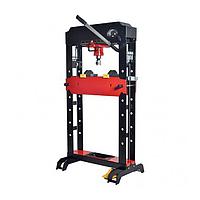
Hydraulics and lifting equipment covers a broad range of solutions, from compact bottle jacks and hydraulic cylinders to test pumps and material-handling tools. This category is designed for buyers who need dependable equipment for lifting, positioning, pressing, transporting, or pressure-related service work across many industrial environments.
Where hydraulic and lifting equipment is commonly used
Hydraulic force is widely used when high load capacity is needed in a compact format. Typical applications include machine installation, equipment maintenance, structural alignment, workshop lifting, pressure generation, and service operations where manual mechanical force is not enough or would be inefficient.
In practice, this category may support very different tasks. A maintenance team may use a hydraulic jack to raise a load for repair, while a calibration technician may rely on a pressure test pump from Fluke (Calibration) to compare and verify pressure instruments. In manufacturing and automation environments, hydraulic cylinders from brands such as SMC, Festo, or Parker can also be relevant when controlled linear motion is part of the system design.
Main product groups in this category
This category includes several types of equipment that serve different roles in a hydraulic ecosystem. Some products create force for lifting or pressing, some generate pressure for testing, and others support transport and handling around the workplace.
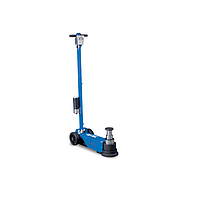
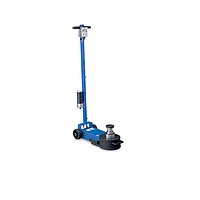
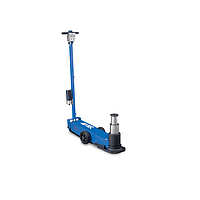
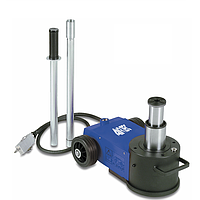
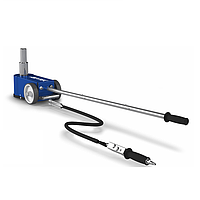
Examples from the current range illustrate that diversity well. The ENERPAC SCL1002H Hydraulic jacks is suitable for high-force lifting tasks, while the SATA 97801A Hydraulic Bottle Jack 2T and SATA 97802A Hydraulic Bottle Jack 4T fit more general lifting needs in workshop or service settings. For pressure work, models such as the Fluke (Calibration) P5515-140M Comparison Test Pump, P5513-20M Pneumatic Comparison Test Pump, and P5510-2M Pneumatic Comparison Test Pump address hydraulic and pneumatic pressure generation for test and calibration processes.
Hydraulic cylinders for controlled linear force
When the application requires straight-line motion or actuation, hydraulic cylinders are often a key component. They convert fluid pressure into linear force, making them useful in clamping, positioning, machine functions, and other tasks where controlled movement under load is needed.
Representative products in this category include the SMC AMC-EL6 Hydraulic cylinder, Festo MS6-LFM-A Hydraulic cylinder, Festo MS6-LFM-BI Hydraulic cylinder, and Parker P31KA00ESE or P31KA00ESC Hydraulic cylinder. While each model is application-dependent, the selection process usually starts with stroke, mounting style, force requirement, pressure compatibility, and how the cylinder integrates into the wider pneumatic or hydraulic circuit. Buyers looking at brand-specific options may also compare broader portfolios from Festo and Parker based on installation standards and system preferences.
Lifting equipment for maintenance and workshop use
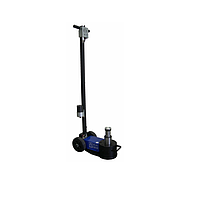
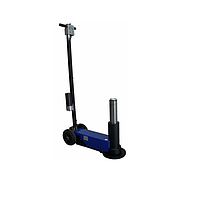
For lifting and support tasks, the most important decision is matching the tool to the real load and working conditions. Compact jacks are often chosen for vehicle service, equipment support, or maintenance access, while higher-capacity hydraulic jacks are more relevant in industrial lifting, plant shutdown work, and heavy mechanical service.
The SATA bottle jack range shown here offers simple lifting support for lighter to mid-range applications, including 2T and 4T options. At the heavier end, the ENERPAC SCL1002H Hydraulic jacks is built for substantially higher load handling and is better aligned with demanding industrial lifting scenarios. This difference matters because lifting equipment should always be selected not only by nominal capacity, but also by available lift height, stability, access space, and the overall lifting method being used.
Pressure generation and test support
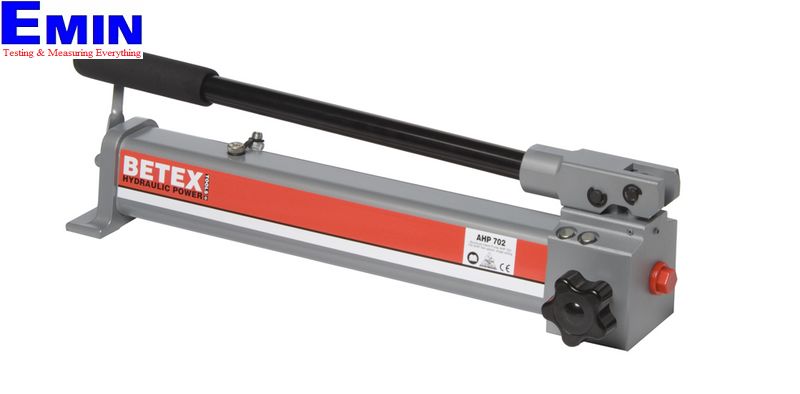
Not all hydraulic equipment is used for lifting. In many plants and laboratories, controlled pressure generation is essential for checking transmitters, gauges, switches, and other pressure instruments. In these cases, a comparison test pump or pneumatic test pump becomes a precision support tool rather than a load-handling device.
The Fluke (Calibration) P5515-140M is intended for higher-pressure hydraulic comparison work, while the P5513-20M and P5510-2M cover pneumatic pressure generation across different ranges. For maintenance and calibration teams, key selection points typically include pressure range, port compatibility, working medium, portability, and how easily the pump fits into existing calibration procedures. This makes hydraulic equipment relevant not only to mechanical lifting, but also to measurement and verification workflows.
Material handling and supporting equipment
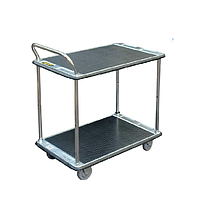
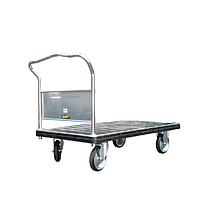
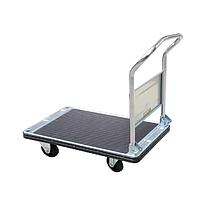
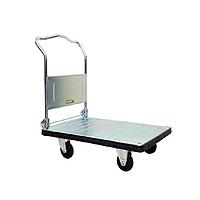
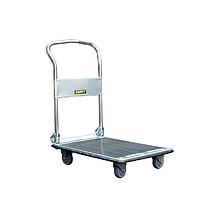
Some products in this category support the movement of tools, parts, or equipment rather than applying hydraulic force directly. A good example is the STANLEY PC528 4 Wheel Trolley, which is designed for practical transport of loads within workshops, warehouses, and service areas.
Although a trolley is different from a hydraulic jack or cylinder, it still belongs naturally in the broader load-handling workflow. In many B2B environments, lifting, positioning, and transporting are closely connected tasks. Choosing the right combination of support equipment can improve operator efficiency and reduce unnecessary manual handling between workstations.
How to choose the right equipment
A useful starting point is to define the job in terms of force, load, motion, and pressure. If the task is to raise or support a load, capacity and lift geometry come first. If the task is to create linear motion, cylinder type and system integration matter more. If the goal is instrument testing, pressure range and connection standards become critical.
It is also important to consider working environment, available space, duty cycle, portability, and compatibility with hoses, gauges, pumps, or related accessories. For example, a compact bottle jack may be sufficient for occasional workshop lifting, while a heavy-duty hydraulic jack from ENERPAC is more suitable for concentrated high-force jobs. In a calibration context, a technician may instead prioritize pump stability, adapter options, and manageable bench or field use.
Why category-level selection matters in B2B sourcing
Industrial buyers rarely choose hydraulic and lifting products in isolation. A maintenance department may need a jack, related accessories, and transport support as part of the same job. An automation team may evaluate cylinders based on compatibility with existing brand standards. A calibration team may compare test pump ranges to match site requirements.
That is why a well-structured category helps narrow down solutions by application rather than by product name alone. Reviewing representative items from SMC, Festo, Parker, Fluke (Calibration), SATA, STANLEY, and ENERPAC can make it easier to identify the right product family before moving into model-level comparison.
Final considerations
Hydraulic and lifting equipment plays a practical role wherever controlled force, safe lifting, or stable pressure generation is required. The right choice depends on the actual task: lifting a load, moving equipment, producing linear motion, or supporting calibration and test work.
By focusing on application needs, operating conditions, and compatibility with the rest of the system, buyers can shortlist more suitable products and avoid over- or under-specifying the job. Whether the requirement is a compact bottle jack, a heavy-duty hydraulic jack, a hydraulic cylinder, or a pressure test pump, this category brings together the core tools used in real industrial work.
Get exclusive volume discounts, bulk pricing updates, and new product alerts delivered directly to your inbox.
By subscribing, you agree to our Terms of Service and Privacy Policy.
Direct access to our certified experts