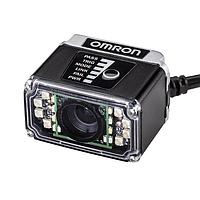
Cameras & Accessories
Machine vision projects rarely start with the camera alone. In most industrial environments, image quality, communication reliability, lens compatibility, lighting, and installation conditions all affect whether inspection runs smoothly on the line. That is why choosing the right Cameras & Accessories category matters for production, quality control, and automation teams that need dependable image capture in real operating conditions.
This category brings together imaging hardware and supporting components used across inspection, identification, and process verification tasks. It is relevant for manufacturers building or expanding automated systems, integrators specifying inspection stations, and engineering teams comparing compact vision platforms with broader machine vision setups.
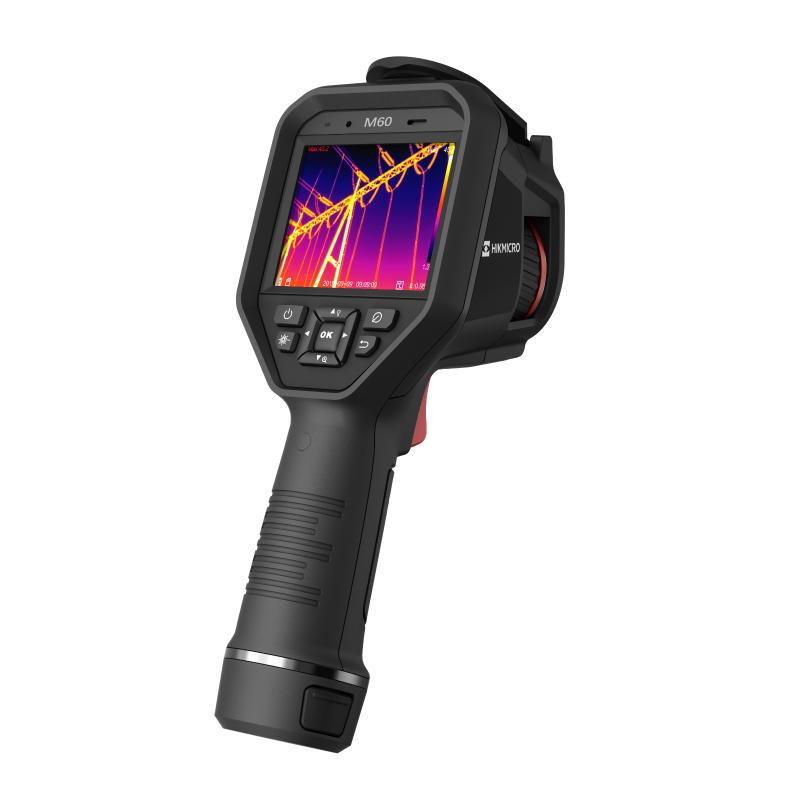
Where cameras and accessories fit in industrial automation
In an automated line, cameras are often used to verify part presence, read codes, detect position, inspect surface features, and support pass/fail decisions. Accessories such as lenses, mounts, lighting, cables, and interface components are just as important because they directly influence field of view, contrast, repeatability, and ease of integration.
For many projects, camera hardware also needs to work closely with industrial controllers and plant communication networks. A well-matched system helps transfer inspection results to PLCs, HMIs, MES platforms, or other control layers without adding unnecessary complexity.
Typical product scope in this category
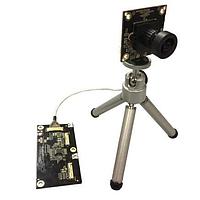
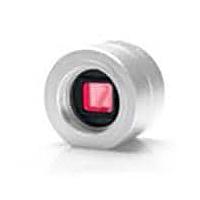
This category supports a wide range of industrial imaging requirements, from standalone vision devices to supporting optics and accessories used to complete a working inspection station. Depending on the application, buyers may be evaluating complete smart vision systems, camera modules, dedicated lenses, or accessory items that improve installation and performance.
The broader ecosystem also includes options for enclosed industrial use, development-oriented camera tools, and specialized imaging hardware. If your project requires more application-specific imaging hardware, related solutions may also be found under industrial camera products or adjacent vision-related groups within the same automation environment.
Smart vision systems for inspection and code reading
Among the representative products in this category, Cognex In-Sight systems illustrate how modern machine vision platforms are designed for industrial deployment. These units combine image acquisition, onboard processing, industrial communication support, and I/O in a compact housing, making them suitable for inspection tasks where space, speed, and integration all matter.
Examples include the Cognex In-Sight 7501, 7600, 7800, 7801, 7802, 7802P, 7900, 7901, 7902, 7902P, and 7905 vision systems. Across these models, buyers can see practical differences in resolution, image type, acquisition rate, and HDR support. That makes the range useful for applications such as high-speed presence checks, detailed feature inspection, or reading marks and codes under changing lighting conditions.
Several listed models also support industrial protocols such as OPC UA, EtherNet/IP, PROFINET Class B, and Modbus TCP, which helps when inspection data must be exchanged with line equipment. For users comparing system architecture, this is often a key factor alongside optics, mounting method, and environmental protection.
Key selection criteria before you buy
Choosing a camera or vision device should begin with the inspection objective. A simple part-detection task may prioritize frame rate and stable triggering, while dimensional checks or fine-detail verification may require higher pixel density. In practice, the right balance usually comes from evaluating resolution, speed, sensor type, and lighting strategy together rather than in isolation.
Environmental conditions are equally important. Many industrial installations require compact hardware with sealed construction, vibration tolerance, and dependable connectors. In the listed Cognex examples, IP67-rated designs, M12 connectivity on some models, and built-in I/O support reflect the kind of features typically valued in factory deployments.
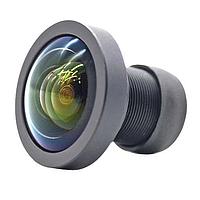
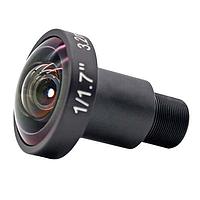
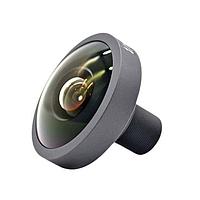
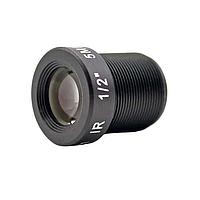
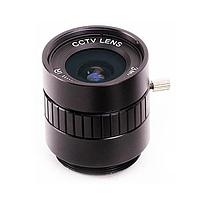
Lens compatibility should also be reviewed early. Support for C-mount or S-mount/M12 options affects working distance, field coverage, and the ability to adapt the system as the project changes. When optics are a deciding factor, it is worth reviewing related camera lenses to build a complete imaging setup rather than selecting the camera body in isolation.
Why accessories matter as much as the camera
A high-performing imaging system depends on more than the sensor. Accessories determine how consistently the camera captures useful images over time, especially in production environments with motion, dust, reflective surfaces, and varying ambient light. Even a capable vision system can underperform if the lens, lighting, or trigger arrangement is not matched to the task.
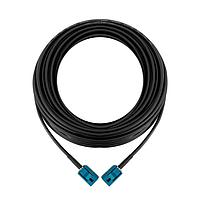
This is why buyers often evaluate the entire vision ecosystem at once: camera, lens, illumination, mounting, cabling, and interface hardware. For example, built-in and external lighting options can affect contrast on shiny or low-contrast parts, while additional I/O modules may simplify connection to sensors, triggers, or reject mechanisms. A complete setup usually reduces commissioning time and makes troubleshooting more straightforward later on.
Common application scenarios
Cameras and accessories in industrial automation are commonly used for barcode and 2D code reading, label verification, assembly confirmation, orientation checks, and defect detection. They are also useful in packaging, electronics assembly, automotive component production, food processing, and other manufacturing settings where repeatable visual verification is required.
In some systems, camera data is paired with timing or motion feedback from devices such as counters and tachometers to improve synchronization with moving parts. This can be especially relevant in conveyor-based inspection, indexing machinery, or applications where trigger timing influences image quality and inspection consistency.
Comparing representative Cognex In-Sight models
The listed In-Sight family shows how different model variants can serve different inspection priorities. Lower-resolution but higher-speed options such as the In-Sight 7600, 7800, and 7900 may suit fast inspection points where cycle time is critical. Mid-range and higher-resolution models such as the 7501, 7801, 7901, 7802, and 7902 support applications that need more image detail without moving to the highest pixel count available.
For more demanding detail capture, the In-Sight 7802P and 7902P provide monochrome imaging at 1920 x 1200 with HDR support, while the In-Sight 7905 extends to 2448 x 2048 with HDR support for applications that benefit from finer image detail. The right choice depends on part size, required inspection tolerance, lighting conditions, and how much processing speed the application needs.
Rather than selecting by model name alone, it is usually more effective to define the inspection target first, then narrow the options by image type, resolution, acquisition rate, communication requirements, and installation constraints.
Choosing a scalable solution for future changes
Many industrial imaging projects evolve after the first deployment. A station that begins with simple pass/fail verification may later need traceability, additional inspections, or tighter process feedback. Selecting camera hardware with appropriate protocol support, flexible optics options, and room for external lighting or I/O expansion can make those upgrades easier.
It also helps to think about maintenance and standardization across multiple lines. Using related platforms within one vision family can simplify spare parts planning, operator training, and validation. For engineering teams managing several automation cells, that consistency can be just as valuable as raw image performance.
Final considerations
When evaluating cameras for industrial automation, the most reliable results usually come from treating the camera and its accessories as one integrated system. Resolution, frame rate, lens choice, lighting, communication protocols, enclosure rating, and mounting practicality all contribute to inspection success.
This Cameras & Accessories category is designed to support that broader selection process, whether you are specifying a compact smart vision device, comparing machine vision hardware, or completing an imaging setup with the right supporting components. A well-chosen system helps improve inspection stability today while leaving room for future process changes and expansion.
Get exclusive volume discounts, bulk pricing updates, and new product alerts delivered directly to your inbox.
By subscribing, you agree to our Terms of Service and Privacy Policy.
Direct access to our certified experts