Circuit Protection
Electrical faults rarely announce themselves in advance. In industrial panels, automation cabinets, power distribution assemblies, and embedded electronics, the right protection strategy helps reduce unplanned downtime, limits component damage, and improves long-term system reliability. This is where Circuit Protection devices play a practical role across both new designs and maintenance work.
On this page, you can explore protection components used to manage overcurrent, surge events, inrush current, and temperature-related risks. The category supports a wide range of industrial and electronic applications, from power entry and control cabinets to sensor circuits and compact control boards.
Why circuit protection matters in industrial systems
Even well-designed equipment can face abnormal conditions such as short circuits, overloads, switching transients, and thermal stress. A proper protection scheme helps isolate faults before they spread to more expensive assemblies, wiring, power supplies, or control hardware. In many installations, protection is not a single part but a coordinated combination of devices selected around the expected risk profile.
For example, overcurrent protection may rely on fuses, while voltage spikes are handled by surge suppression devices or related technologies. Temperature-sensitive behavior can also be used as part of the protection concept, especially where NTC thermistors help control startup current or support thermal sensing functions. When protection components are matched correctly to the load and operating environment, they contribute to safer operation and more stable equipment performance.
What you can find in this category
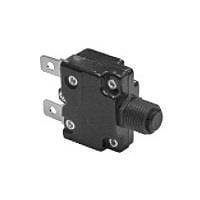
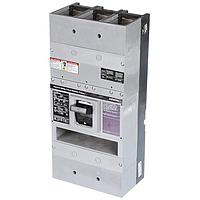
This category covers a broad set of products used to protect circuits at different points in a system. That includes traditional overcurrent devices, thermistor-based solutions, surge-related components, fuse mounting hardware, and supporting parts used in control panels and electronic assemblies. If your application spans power entry, branch circuits, or sensitive electronics, it is often useful to review the wider circuit protection portfolio rather than selecting parts in isolation.
Typical selection goals include interrupting fault current, limiting inrush during startup, suppressing transient events, and reducing thermal stress on nearby components. Depending on the design, protection may be placed at the AC input, DC bus, individual load branches, communication interfaces, or close to vulnerable semiconductor devices.
Representative product types and use cases
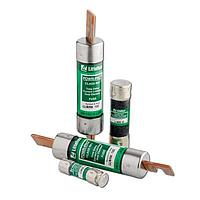
Fuses remain one of the most familiar protection options for isolating overcurrent faults. In practical terms, they are often chosen where predictable fault interruption and straightforward replacement are important. Examples in this category include parts such as the American Power Conversion FFA-0032, FFA-0033, FFA-0036, and FFA-0040, which illustrate how fuse-based protection fits into broader power management and equipment protection strategies.
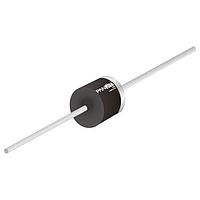
For transient events, surge-related devices are used to reduce the impact of voltage spikes caused by switching activity or external disturbances. The American Power Conversion PMG2X-A Surge Arrestors is one example of this type of protection-oriented component, useful for understanding the role of surge mitigation in system-level design.
Thermistor-based products are also important in this category. Components such as the Amphenol EC95R102WN, Amphenol DKF104N5, Amphenol TH420J34GBNI(25/85), Amphenol C100F103J, and ams OSRAM NRL2233J3935B1J show how NTC devices are used in applications where temperature response or current-limiting behavior is relevant. If your design work focuses specifically on thermally responsive resistive components, you may also want to review thermistors as a broader related group.
How to choose the right protection approach
Selection usually starts with the fault you are trying to control. Overcurrent, inrush, surge, and thermal events each require different protection behavior, and one part rarely solves every problem. Engineers and buyers typically consider the normal operating current, startup profile, system voltage, expected fault conditions, replacement strategy, and available installation space before narrowing down product options.
It is also important to think in terms of coordination. A fuse may protect against major current faults, while a thermistor may reduce startup stress, and a surge device may help manage transient events at the power entry stage. In panel-based applications, this protective layer often sits alongside switching and control equipment such as contactors or logic hardware within industrial controllers, so compatibility with the wider system architecture matters.
Brands commonly seen in this category
This category includes products from recognized manufacturers used across industrial and electronic applications. Among the notable names represented here are Amphenol, American Power Conversion, and ams OSRAM. These manufacturers appear in different parts of the protection ecosystem, from NTC thermistors to fuse-related and surge-related products.
Rather than choosing by brand alone, it is usually better to compare the intended protection function first and then confirm fit within the required mechanical, electrical, and environmental conditions. That approach helps avoid over-specifying one parameter while overlooking another that is critical in real operating conditions.
Where these products are typically used
Circuit protection components are used in automation panels, power supplies, drives, control cabinets, communication equipment, embedded systems, and service replacement work. In OEM environments, they are selected early in the design process to support compliance, serviceability, and equipment robustness. In maintenance and retrofit projects, they are often chosen to restore original protection behavior or improve resilience against recurring faults.
Protection requirements can vary widely between a compact board-level assembly and a larger industrial power system. That is why category-level browsing is useful: it helps users compare different protection methods, understand how related device families fit together, and identify whether the application needs a fuse, thermistor, surge solution, or a coordinated combination of several parts.
Building a more reliable protection strategy
A good protection design is usually layered, application-specific, and easy to maintain. Instead of treating protection as a final checklist item, it is more effective to view it as part of the full electrical design, especially where startup behavior, transient exposure, thermal loading, and service access all affect long-term system reliability.
Whether you are sourcing replacement parts or selecting components for a new build, this category provides a useful starting point for comparing protection technologies and narrowing down the right solution for your application. Reviewing the protection function first, then the installation and operating requirements, will usually lead to a more dependable and easier-to-service result.
Get exclusive volume discounts, bulk pricing updates, and new product alerts delivered directly to your inbox.
By subscribing, you agree to our Terms of Service and Privacy Policy.
Direct access to our certified experts