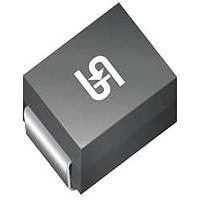
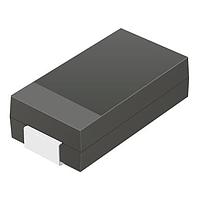
ESD Protection Diodes
Unexpected voltage spikes can damage sensitive interfaces long before a fault becomes visible at system level. In control boards, communication ports, sensor lines, and compact embedded electronics, fast transient protection is often a basic design requirement rather than an optional safeguard. ESD Protection Diodes help absorb and divert electrostatic discharge events away from vulnerable semiconductor nodes, supporting better reliability in industrial and electronic equipment.
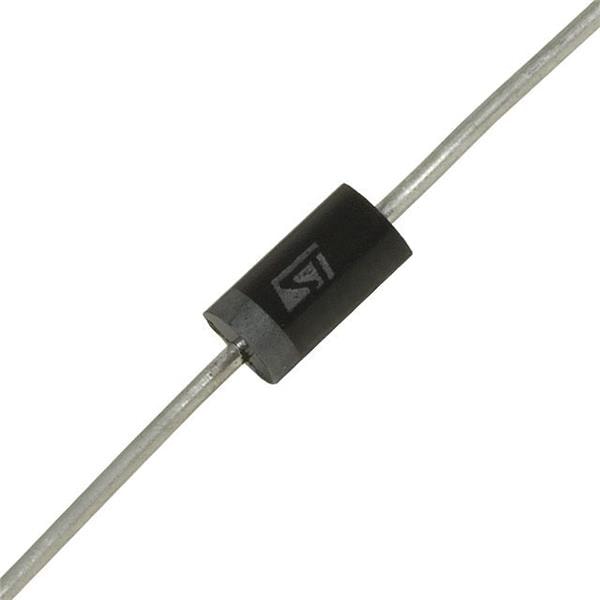
Why ESD protection matters in electronic design
Electrostatic discharge can be introduced during handling, cable connection, switching events, or interaction with exposed connectors. Even when the energy level seems small, the rise time of an ESD event can be extremely fast, which makes low-voltage ICs, data lines, and high-speed interfaces particularly vulnerable.
Using dedicated protection components near the point of entry helps limit overvoltage stress before it reaches the protected circuit. In many applications, this is especially important for I/O ports, field wiring interfaces, communication channels, and compact boards where space is limited and signal integrity still needs to be preserved.
How ESD protection diodes work
An ESD protection diode is designed to remain unobtrusive during normal operation and react quickly during a transient event. When voltage exceeds the intended threshold, the device clamps the surge and diverts current away from the sensitive path, reducing the risk of permanent damage or latent degradation.
Selection often depends on a balance between stand-off voltage, clamping behavior, capacitance, package style, and whether the protected line requires unidirectional or bidirectional protection. For signal lines, low capacitance can be important to avoid degrading data transmission, while for more exposed power or interface lines, pulse capability and package robustness may carry more weight.
Typical applications for this category
These devices are widely used across industrial and embedded systems where boards are exposed to field wiring, operator contact, or cable plug-in events. Common use cases include PLC interface boards, sensor modules, communication gateways, human-machine interfaces, portable electronics, and compact power or control assemblies.
They are also frequently paired with other circuit protection measures depending on the overall risk profile of the design. For broader protection planning, it can be useful to review related products such as circuit protection kits or mechanical support components like a fuse holder when the application combines transient suppression with overcurrent protection.
Examples of device types available
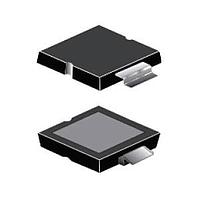
This category can support both highly sensitive signal-line protection and more general transient suppression duties. For example, the Infineon SP001594878 is notable for very low capacitance and a compact 2-pin package, making it relevant for lines where parasitic loading needs to be minimized. You can also explore the broader Infineon range when comparing semiconductor protection options for dense electronic designs.
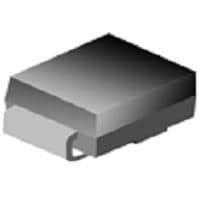
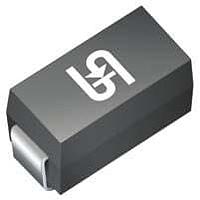
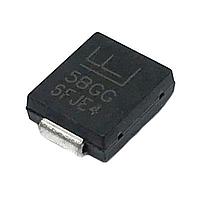
For applications requiring TVS-style surge handling across different voltage levels, the range also includes parts such as KYOCERA AVX SMCJ8.0CA, SMAJ7.0A, SMBJ36CA, SMAJ110A, and AVXSMBJ6.0CA. These examples show how designers may choose between lower-voltage and higher-voltage options, as well as between bidirectional and unidirectional configurations, depending on the protected circuit.
If you are standardizing around a particular supplier family, the KYOCERA AVX portfolio in this category provides several surface-mount options suited to compact board layouts and elevated operating temperatures.
Key selection criteria
Choosing the right part starts with the working voltage of the protected line. The reverse stand-off voltage should align with normal operating conditions so the device does not interfere during standard use. Next, consider the expected transient environment, including whether the threat is mainly handling-related ESD, cable-induced surges, or a combination of both.
Capacitance is another important factor, especially for high-speed data, RF-adjacent paths, or precision measurement signals. A very low-capacitance option may be preferable for preserving signal quality, while higher-power TVS devices are often selected where line robustness is the main concern. Package format, mounting method, temperature range, and board density should also be reviewed early in the design process.
Where multiple protection layers are needed, engineers may also compare these products with dedicated signal-line ESD solutions and adjacent overcurrent hardware in the same protection ecosystem to build a more complete front-end defense strategy.
Unidirectional vs. bidirectional protection
Unidirectional devices are commonly used on DC lines where the protected signal or supply remains in one polarity during normal operation. They are often chosen when tighter clamping behavior in one direction is desirable. Bidirectional parts are typically more suitable for AC-coupled lines, differential interfaces, or signal paths that can swing positive and negative relative to ground.
The correct choice depends on how the line behaves under real operating conditions, not only on the connector type. Reviewing the circuit topology, expected common-mode behavior, and any fault or hot-plug conditions helps avoid under-protection or unwanted loading.
Integration considerations on the PCB
Placement has a major effect on protection performance. In most cases, the diode should be located as close as practical to the external connector or entry point so the transient is shunted before it can travel deeper into the board. Short return paths and controlled layout around ground references can improve the effectiveness of the protection network.
It is also good practice to evaluate the protected node as part of the full system, including cable length, enclosure grounding strategy, and nearby components. A suitable device selection is important, but real-world protection often depends just as much on layout and grounding discipline as on the component itself.
Choosing parts for procurement and long-term support
For purchasing teams and design engineers, category-level comparison is useful when aligning technical requirements with packaging, sourcing consistency, and assembly method. Surface-mount 2-pin options are common in this range, which supports streamlined placement in automated production and compact product designs.
When narrowing down alternatives, it helps to compare voltage suitability, protection direction, environmental limits, and the sensitivity of the target interface. Looking at representative parts within the category gives a practical way to move from design intent to shortlist without overcomplicating the first pass.
For electronics exposed to operator handling, cable transients, or sensitive communication paths, ESD protection should be considered early rather than added as an afterthought. A well-matched selection from this category can help protect critical circuitry, support stable field performance, and simplify design decisions across industrial, embedded, and OEM applications.
Get exclusive volume discounts, bulk pricing updates, and new product alerts delivered directly to your inbox.
By subscribing, you agree to our Terms of Service and Privacy Policy.
Direct access to our certified experts