Industrial Enclosures
Protecting electrical and automation hardware is not only about housing components in a box. In real installations, the enclosure strategy affects reliability, cable organization, maintenance access, safety, and the long-term stability of the entire control system. For panel builders, machine integrators, facility engineers, and industrial buyers, choosing the right Industrial Enclosures category means looking at both protection and practical installation needs.
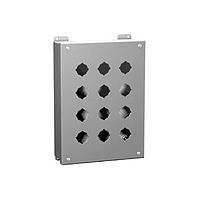
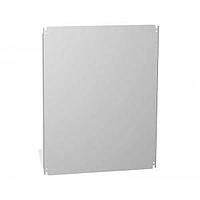
This category supports a wide range of industrial applications, from compact control panels and wall-mounted cabinets to structured rack environments and cable management hardware. Whether the goal is to shield devices from dust and contact, improve serviceability, or organize network and automation infrastructure, enclosure selection has a direct impact on how efficiently equipment performs in the field.
Built for protection, access, and system organization
In industrial environments, enclosures do much more than provide a physical boundary. They help protect sensitive components from environmental exposure, support orderly cable routing, and create a controlled space for power distribution, communications, and automation hardware. This is especially important where multiple devices must operate together without unnecessary clutter or accidental interference.
A practical enclosure setup also improves maintenance. Clear routing paths, usable mounting space, and appropriate access points can reduce installation time and simplify troubleshooting later. In larger systems, enclosure planning often works alongside industrial controllers and related automation hardware, making layout and cable segregation just as important as the outer cabinet itself.
Typical products found in this category
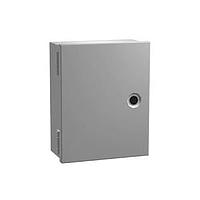
The scope of this category covers both primary housings and supporting hardware used to complete a robust installation. On one end, there are compact steel enclosures intended for protecting electrical assemblies. A representative example is the APC by Schneider Electric NSYSM14840P compact enclosure, which illustrates the kind of cabinet used where material strength, installed dimensions, and ingress protection matter in everyday industrial deployment.
On the infrastructure side, many projects also require rack and cable management components rather than standalone boxes alone. Belden products in this category, such as the BHFB11U rack mount finger bracket, BHH193UC horizontal manager, BHVL010 vertical manager, and BHTR196 transition tray, show how enclosure-related hardware supports cleaner routing, separation, and movement of cables between panels or rack sections.
Why cable management matters inside enclosure systems
As systems scale, poor cable routing can quickly become a source of heat buildup, service delays, and accidental disconnections. That is why many industrial enclosure projects include accessories such as gate kits, bonding hardware, dead-end straps, and vertical or horizontal managers. These are not secondary details; they help preserve bend radius, improve traceability, and keep pathways accessible when equipment needs to be expanded or serviced.
Examples such as Belden BHGL03X, SC11-1, and X9905753 reflect this supporting ecosystem. They are useful illustrations of how enclosure accessories contribute to a more complete installation, especially in rack-based communications or control environments where organization and grounding continuity are part of system quality rather than optional add-ons.
How to choose the right enclosure for your application
The right selection usually starts with the installation environment. Buyers often evaluate whether the enclosure will be used indoors or in harsher locations, how much internal space is needed, what level of sealing is appropriate, and whether the structure must support door access, cable entry, or future expansion. Material choice and physical dimensions are also key when the enclosure must fit into a machine frame, wall-mounted area, or plant utility space.
It is also helpful to think beyond the cabinet itself. If the project includes power distribution, control devices, or switching hardware, the enclosure should leave room for wiring paths and service access. In these cases, related categories such as circuit protection and contactors are often part of the same design workflow, even when they are selected separately.
Rack-based solutions for data, control, and communications infrastructure
Not every industrial enclosure application is a traditional electrical cabinet. In many facilities, rack-based structures are used to support networking, low-voltage distribution, multimedia connectivity, and organized cable transitions between zones. These setups are common in industrial IT, control rooms, building infrastructure, and mixed automation environments where equipment density and routing discipline are important.
Belden’s presence in this category is especially relevant for these use cases. Components such as the BHVHH10 heavy-duty vertical manager, BHVHL03 combo vertical manager, and A0643205 multimedia outlet demonstrate how rack ecosystems can be configured for both protection and usability. For buyers standardizing around structured connectivity hardware, exploring the broader Belden range can help align enclosure accessories with cabling and network infrastructure requirements.
Manufacturer context within the category
This category includes solutions from recognized suppliers used across industrial and infrastructure projects. APC by Schneider Electric is relevant where cabinet-style enclosures are needed for electrical installations, while Belden is strongly associated with rack-related management and structured connectivity support. The available mix helps buyers compare solutions based on installation style rather than forcing one enclosure approach onto every application.
Other manufacturers in the broader category landscape can also support specialized requirements, but selection should always be based on the needs of the build: cabinet protection, rack organization, cable routing, or supporting accessories. A category like this is most useful when it helps engineers and procurement teams match enclosure format to actual operating conditions and system architecture.
Where industrial enclosures fit in a larger automation system
Industrial enclosures sit at the intersection of protection, layout, and maintainability. They support everything from standalone electrical assemblies to interconnected automation cells, communications racks, and plant-level distribution points. In some applications, enclosure planning also relates to monitoring and diagnostics hardware such as counters and tachometers, where safe mounting and clean wiring contribute to dependable signal handling.
As systems become more integrated, enclosure choices influence how easily teams can scale, service, and document an installation. Well-matched cabinets, rack hardware, and cable management accessories help reduce unnecessary complexity while improving access for commissioning and maintenance.
Choosing with long-term use in mind
For industrial buyers, the best enclosure strategy is usually the one that balances protection level, usable internal space, installation efficiency, and future service needs. A compact enclosure may suit a localized control function, while a rack-oriented design with vertical and horizontal management may be more appropriate for communications-heavy infrastructure. Looking at the surrounding ecosystem of brackets, trays, outlets, and grounding accessories can prevent design compromises later.
This Industrial Enclosures category is therefore more than a list of cabinets and accessories. It is a practical starting point for building protected, organized, and maintainable automation installations, whether you are planning a new panel, upgrading a rack layout, or standardizing hardware for ongoing industrial projects.
Get exclusive volume discounts, bulk pricing updates, and new product alerts delivered directly to your inbox.
By subscribing, you agree to our Terms of Service and Privacy Policy.
Direct access to our certified experts