Racks & Accessories
When instruments, control hardware, and supporting electronics need to be organized in a secure and serviceable way, the mounting system matters just as much as the equipment itself. A well-planned rack setup helps save panel space, improves cable routing, supports maintenance access, and creates a cleaner installation for labs, test benches, and industrial environments.
Racks & Accessories covers the hardware used to support, mount, adapt, and complete rack-based installations. In practice, this category is especially relevant for users integrating benchtop or half-rack instruments into permanent systems, where consistent mechanical fit and reliable installation are essential.
Why rack accessories are important in technical installations
In many industrial and electronic environments, equipment is expected to do more than simply operate correctly. It also needs to fit into a repeatable layout, remain accessible for service, and support stable operation over time. Rack accessories help bridge the gap between standalone instruments and a structured installation.
This is particularly important for test and measurement devices, power-related equipment, and communication hardware that may be used in system integration projects. Proper mounting hardware can reduce mechanical stress, improve front-panel alignment, and make it easier to standardize multi-instrument setups across different sites or workstations.
Typical products found in this category
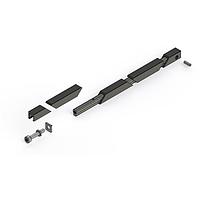
This category often includes mounting components designed to adapt specific instruments or equipment formats into a rack-ready configuration. In the current selection, several representative products are KEYSIGHT 1CM028A Rack Mount Flange Kit, KEYSIGHT 1CM110A Rack Mount Flange Kit, KEYSIGHT 1CM124A Rack Mount Flange Kit, and KEYSIGHT 1CM010A Rack Mount Flange Kit.
These items are not standalone racks by themselves; they serve a supporting role within the larger installation ecosystem. A rack mount flange kit is typically used to secure compatible equipment into a rack structure, helping users convert instrument placement from bench use to a more permanent and organized rack-based arrangement.
How rack accessories fit into the broader enclosure ecosystem
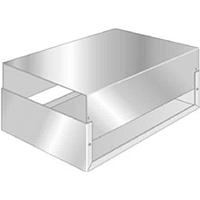
Rack components are often selected alongside other enclosure and mounting products rather than in isolation. Depending on the application, users may also need complementary solutions such as rack cabinets for complete housing or electrical enclosure accessories for cable management, hardware finishing, and installation support.
For projects that involve panel systems, communication equipment, or control assemblies, it can also be helpful to review broader industrial automation enclosures to understand how rack-based mounting integrates with the surrounding mechanical and electrical infrastructure. This broader view is useful when planning airflow, protection level, maintenance clearance, and overall equipment density.
Selection considerations for racks and accessories
Choosing the right accessory starts with equipment compatibility. Rack mounting kits and related hardware are usually designed for specific instrument families, dimensions, or front-panel formats. That means buyers should confirm that the accessory matches the intended equipment rather than assuming that all rack hardware is interchangeable.
It is also important to think about the installation context. A laboratory test rack, a production verification station, and an industrial control environment may each place different demands on mounting stability, access, and surrounding hardware. In some cases, the accessory is mainly about mechanical adaptation; in others, it supports a larger strategy for system organization, serviceability, and long-term maintenance.
Additional practical points include available rack space, front access requirements, cable exit direction, and whether the installation may need future expansion. These factors often determine whether a simple flange kit is sufficient or whether the project should be planned together with a more complete rack or enclosure solution.
Manufacturer context and product ecosystem
Within this category, KEYSIGHT is a clearly relevant manufacturer because the featured products are rack mount flange kits intended to support instrument installation. For users already working with test and measurement platforms, selecting the correct mounting accessory from the same equipment ecosystem can simplify integration and reduce uncertainty during deployment.
At the same time, rack-based installations often involve a wider mix of brands across power distribution, connectivity, wiring, and enclosure hardware. Manufacturers such as Eaton, Belden, Molex, Advantech, and Hirschmann may become relevant at the project level depending on how the full cabinet, network, or control architecture is assembled. The key is to treat rack accessories as part of a complete system, not as isolated hardware.
Where these accessories are commonly used
Rack accessories are commonly used in test labs, electronics production environments, integration benches, control rooms, and technical service facilities. They are also relevant in OEM and system integration projects where repeatable layout and mechanical consistency are required across multiple installations.
In these settings, accessories such as flange kits can support better use of space, cleaner front-facing equipment presentation, and easier replacement or servicing of instruments. They are especially useful when standalone devices need to be consolidated into structured racks instead of being left on open benches or shelves.
Examples from the current product range
The listed range includes several model-specific options such as KEYSIGHT 1CM003A Rack Mount Flange Kit, KEYSIGHT 1CM007A Rack Mount Flange Kit, KEYSIGHT 1CM014A Rack Mount Flange Kit, KEYSIGHT 1CM015A Rack Mount Flange Kit, KEYSIGHT 1CM019A Rack Mount Flange Kit, KEYSIGHT 1CM011A Rack Mount Flange Kit, KEYSIGHT 1CM021A Rack Mount Flange Kit, and KEYSIGHT 1CM001A Rack Mount Flange Kit.
Because these are application-specific mounting accessories, selection should be based on the exact instrument or equipment family being installed. For procurement teams and engineers alike, this usually means verifying the intended mechanical fit early in the sourcing process to avoid delays during assembly or commissioning.
Choosing with long-term maintenance in mind
A good rack installation is not only about getting equipment mounted today. It should also support future servicing, reconfiguration, and equipment replacement without creating unnecessary downtime. Accessories that provide a proper and stable fit can make a noticeable difference in environments where instruments are used frequently or where systems are expected to remain in service for extended periods.
For that reason, it is often worth evaluating rack accessories in the context of the complete installation plan, including enclosure type, cable management approach, and access requirements. A more deliberate choice at the accessory level can contribute to a cleaner, more maintainable system overall.
Whether the requirement is a single instrument mounting kit or part of a larger rack-based infrastructure, the right accessory helps turn loose equipment into an organized and practical installation. This category is best approached with a focus on compatibility, system layout, and serviceability, especially when building technical environments that need to remain reliable and easy to manage over time.
Get exclusive volume discounts, bulk pricing updates, and new product alerts delivered directly to your inbox.
By subscribing, you agree to our Terms of Service and Privacy Policy.
Direct access to our certified experts