Modular Power Supplies
Power architectures in industrial equipment rarely stay simple for long. As systems add motion control, embedded computing, communications, and multiple voltage rails, engineers often need a supply strategy that is easier to scale, configure, and service than a fixed-output design. That is where Modular Power Supplies become especially useful for machine builders, panel integrators, and OEM teams working with evolving requirements.
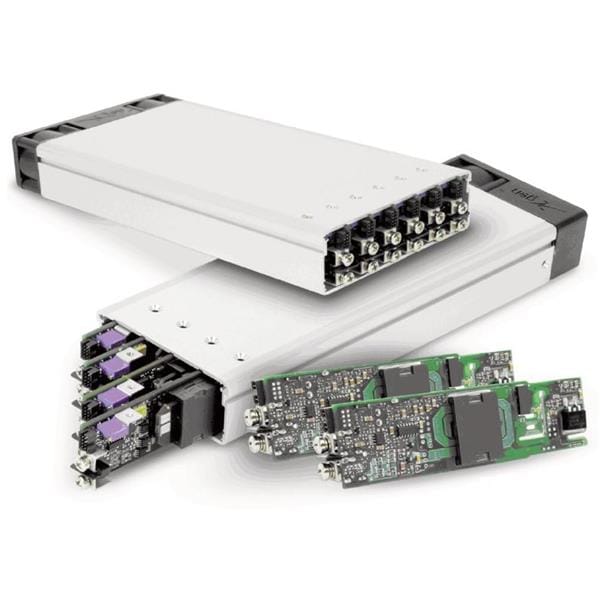
Why modular power supplies are used in industrial systems
A modular power supply is designed to provide more flexibility than a standard single-output unit. Instead of forcing the system around a fixed power configuration, a modular platform allows designers to build a power solution around the actual load profile, output mix, and installation constraints of the application.
This approach is particularly relevant in industrial automation, test equipment, commercial electronics, and embedded control systems where one device may need several DC outputs at different current levels. It can also help simplify future revisions when the same machine platform is adapted for different customers or regional requirements.
Where this category fits in a broader power ecosystem
In many projects, modular units are selected when a conventional enclosed supply or board-level unit is no longer the most practical option. They are often considered in systems that need multiple output channels, higher total power, or a cleaner path for customization without redesigning the full power stage from scratch.
Depending on the cabinet layout and installation method, some applications may instead be better served by DIN rail power supplies for control panels, or by DIN rail mount isolated DC/DC converters when voltage conversion and isolation are the primary requirements. For systems that also need backup continuity during mains disturbances, it may be worth reviewing UPS solutions as part of the overall power design.
Typical selection criteria for modular power supplies
The first step is usually to define the input environment and the required output structure. Engineers commonly review whether the application needs one high-current output, several regulated rails, or room for expansion later. Thermal behavior, enclosure style, mounting method, and service access also matter because these factors directly affect reliability in real operating conditions.
It is also important to look at efficiency, isolation, operating temperature range, and the intended end-use environment. In practical terms, a supply used in industrial control, commercial electronics, or embedded systems should be chosen not just for headline wattage, but for how well it supports the full load profile over time. This is especially relevant when the equipment includes sensitive controllers, communication hardware, or distributed I/O.
Examples from the current product range
The products in this category illustrate different ways modular and configurable power can be applied. Several MEAN WELL NMP1K2 series models, such as the NMP1K2-ECKKKH-03, NMP1K2-H#HHHC-04, and NMP1K2-CCKECK-00, are representative of high-power modular platforms intended for applications that may require a tailored output arrangement rather than a one-size-fits-all supply.
There are also more conventional enclosed and open-frame examples that help frame the broader buying context. The MEAN WELL SE-350-27 With Cover highlights an enclosed chassis-mount format, while Emerson Network Power models such as the LPS24, LPS175, and LPS173 show how single-output AC/DC supplies are often specified when the application is straightforward and does not require a modular architecture.
When modular design makes more sense than a fixed-output supply
A fixed-output power supply can be the right choice for many machines, especially when the voltage rail is simple and stable across all builds. However, modular platforms are often favored when product variants share a common base system but differ in peripheral loads, controller options, HMI configurations, or communication modules. In these cases, configuration flexibility can reduce redesign effort and support a more standardized mechanical platform.
Modular designs can also be helpful for serviceability and lifecycle management. Instead of replacing an entire power architecture whenever requirements change, engineering teams may be able to adapt the output configuration more efficiently. For OEM environments, that can support better consistency across model families and reduce unnecessary part proliferation.
Application contexts to consider
Modular power supplies are commonly evaluated for industrial control cabinets, automation subsystems, test and measurement setups, embedded computing assemblies, and commercial electronic platforms that need more than one regulated output. They are also relevant when available space must be used carefully and the power design needs to remain organized as additional functions are added later.
In some installations, a modular supply is only one part of the power chain. The upstream side may still involve mains distribution, filtering, or industrial control transformers, while downstream circuits may require point-of-load conversion, redundancy, or battery-backed support. Looking at the full system architecture usually leads to a better selection than comparing output wattage alone.
Manufacturer landscape and sourcing considerations
This category sits within a broader industrial power market that includes established names such as MEAN WELL and Emerson Network Power, alongside other recognized manufacturers in power conversion and automation. Even when comparing products from different suppliers, buyers should focus on fit for application, power topology, expected operating conditions, and long-term maintainability rather than brand alone.
For B2B purchasing teams, it is often useful to shortlist by system requirement first: input range, output combination, installation style, and environmental conditions. From there, the product decision becomes much clearer, especially when balancing engineering needs with procurement consistency and future service planning.
Choosing the right option for your project
The best choice in this category depends on how configurable the power system needs to be and how much future expansion is likely. If the equipment requires several outputs, scalable architecture, or a cleaner route to product variation, a modular platform may be the more practical direction. If the load is simple and fixed, a standard enclosed or open-frame supply may be easier to implement.
By reviewing the application as a complete power system rather than an isolated component, buyers can narrow the selection faster and avoid over- or under-specifying the design. This category is most valuable when flexibility, integration logic, and maintainability matter just as much as nominal output power.
Get exclusive volume discounts, bulk pricing updates, and new product alerts delivered directly to your inbox.
By subscribing, you agree to our Terms of Service and Privacy Policy.
Direct access to our certified experts