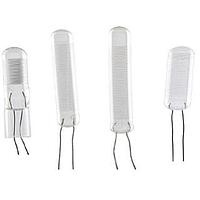
Industrial Temperature Sensors
Accurate thermal data is essential in industrial automation, HVAC control, environmental monitoring, and process stability. When temperature-related variables affect safety, energy use, product quality, or equipment reliability, choosing the right Industrial Temperature Sensors becomes more than a basic component decision—it becomes part of system performance.
This category brings together sensing solutions used to monitor not only direct temperature conditions, but also derived psychrometric values such as dew point, wet bulb temperature, and enthalpy. These measurements are especially relevant in air handling systems, ducts, controlled environments, and applications where humidity and thermal behavior must be interpreted together rather than as separate data points.
Where these sensors are commonly used
Industrial temperature sensing is used across building automation, manufacturing support systems, ventilation control, and environmental conditioning. In many installations, the goal is not simply to read air temperature, but to understand whether condensation risk, moisture load, or heat content may affect equipment, stored materials, or occupant comfort.
That is why this category is relevant for duct monitoring, outside air measurement, and wall-mounted indoor sensing points. In broader control architectures, these devices are often used alongside products such as air quality sensors or flow sensors & pitot tubes to give control systems a more complete picture of air conditions.
More than simple temperature measurement
Many industrial environments require values that go beyond dry-bulb temperature. Dew point transmitters help identify when moisture in the air may condense on surfaces, piping, coils, or enclosures. This is important in ventilation systems, clean spaces, storage areas, and process environments where excess moisture can lead to corrosion, microbial growth, or instability.
Wet bulb and enthalpy measurements are also valuable in applications involving air mixing, economizer logic, and HVAC efficiency control. Wet bulb temperature supports evaporative and comfort-related calculations, while enthalpy is useful when comparing total heat content in different airstreams. In these use cases, a sensor is part of a control strategy rather than just a display point.
Typical product formats in this category
The product selection shown here includes wall-mount, duct-mount, and outside-air duct configurations. That distinction matters because installation method directly affects measurement quality, response to airflow, maintenance accessibility, and long-term reliability in the field.
For example, wall-mounted options may suit indoor monitoring points where space conditions are relatively stable and easy to access. Duct-mount designs are better aligned with moving air streams inside ventilation or process air channels, while outside-air duct models are intended for locations exposed to broader ambient changes. Choosing the right housing and mounting style can be just as important as selecting the measured variable itself.
Examples from the current range
Several listed products from Amphenol illustrate how this category supports different psychrometric measurements and installation needs. The Amphenol HUMI-DP-XR-D and HUMI-DP-XR-D-N are duct-mount dew point transmitter modules intended for applications where condensation awareness inside air distribution paths is important. For wall-based monitoring, models such as the HUMI-DP-XR-S and HUMI-DP-XR-S-N provide a similar sensing function in a different installation format.
For applications focused on moisture-related thermal behavior, the HUMI-WB-XR-S, HUMI-WB-XR-S-N, HUMI-WB-XR-D-N, and HUMI-WB-XR-O-N represent wet bulb transmitter options across wall, duct, and outside-air duct mounting styles. Enthalpy-focused control can be supported by models such as HUMI-EN-XR-D-N, HUMI-EN-XR-O, and HUMI-EN-XR-O-N, which are relevant where total air energy content influences ventilation decisions.
How to choose the right sensor for your application
A practical selection process usually starts with the measured variable. If the application needs surface condensation prevention or moisture risk analysis, dew point is often the more useful parameter. If the control logic involves cooling behavior, latent effects, or air treatment performance, wet bulb or enthalpy may be the better fit.
Next, review the installation environment. Consider whether the sensor will be mounted on a wall, inside ductwork, or in an outside-air path. Airflow conditions, accessibility, weather exposure, and expected operating range all influence the right choice. Analog output requirements are also relevant, particularly when integrating with BMS, PLC, or other industrial control platforms.
It is also worth considering the broader sensing ecosystem. In some projects, temperature-related sensing is paired with ambient light sensors for building automation logic or with other environmental inputs to support more responsive control strategies. The right sensor should fit both the measurement objective and the architecture of the overall system.
Why derived air-condition measurements matter in automation
In real installations, direct temperature alone does not always explain how air will behave. Two spaces with similar temperatures may present very different risks if humidity conditions differ. This is where enthalpy, wet bulb, and dew point measurements improve decision-making by translating raw environmental data into values that are more actionable for control systems.
For example, outside-air comparison in ventilation systems often benefits from enthalpy sensing, because energy content—not just temperature—affects whether fresh air will help or hinder efficiency. Dew point sensing can support freeze protection, condensation management, and equipment preservation, while wet bulb data can be useful in air-side evaluation and comfort-oriented logic.
Working with trusted industrial sensor manufacturers
This category context includes recognized industrial brands such as Advanced Energy, Advantech, Amphenol, Analog Devices, Banner Engineering, Dwyer, ebm-papst, Endress+Hauser, EPCOS, and Honeywell. Product availability may vary by sub-type, but the presence of these manufacturers helps buyers compare solutions within a familiar industrial sourcing framework.
When evaluating options, it is helpful to look beyond brand preference alone. The priority should be fit for installation, output compatibility, measured variable, and environmental suitability. A well-matched sensor supports stable readings, smoother commissioning, and more dependable control over time.
Find the right fit for monitoring and control
Whether you are specifying a duct-mounted dew point transmitter, a wall-mounted wet bulb sensor, or an enthalpy transmitter for outside-air evaluation, this category supports applications where thermal and moisture conditions need to be interpreted accurately. The available range is especially relevant for engineers, integrators, and maintenance teams building reliable environmental control systems.
Use the product filters and specifications on this page to narrow the selection by mounting style, output type, and sensing function. A careful match between the measurement point and the sensor type will usually deliver better control performance than relying on temperature alone.
Get exclusive volume discounts, bulk pricing updates, and new product alerts delivered directly to your inbox.
By subscribing, you agree to our Terms of Service and Privacy Policy.
Direct access to our certified experts