Labware
Daily laboratory work depends on containers, handling tools, and consumable accessories that are easy to match with the process at hand. From routine sample preparation to storage, transfer, heating, and cleanup, the right Labware helps maintain workflow consistency while reducing handling errors and contamination risks.
This category brings together practical laboratory items used across research, quality control, education, and industrial testing environments. It covers both core vessels such as bottles and beakers, and supporting items that play an important role in sealing, tubing control, surface protection, and safe material handling.
Built for everyday laboratory handling
Labware is not limited to one material or one application. In practice, laboratories often combine glass vessels, polymer accessories, stoppers, films, and transfer components to support different chemical, thermal, and storage requirements. Selecting suitable items starts with understanding how each piece fits into the broader workflow.
For example, larger-volume containers are often used for reagent storage, media preparation, or bulk liquid handling, while open vessels are preferred for mixing, heating, and visual monitoring. Supporting accessories such as clamps and stoppers may seem secondary, but they are often essential for controlling flow paths, securing containers, and maintaining cleaner process conditions.
Examples of products commonly used in this category
Among the representative items in this range, DURAN stands out for widely used laboratory glassware and related accessories. A product such as the DURAN 218017353 laboratory bottle illustrates the role of high-capacity bottles in liquid storage and preparation. With a 5000 mL size, GL 45 thread, and autoclavable design, it suits applications where repeatable handling and sterilization compatibility matter.
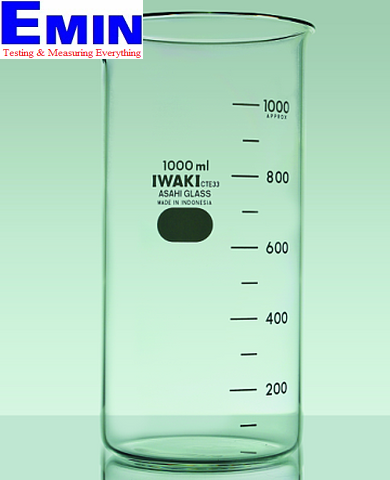
Open-format vessels are equally important. The DURAN 211066807 low form glass beaker, with its 3000 mL capacity, pouring spout, graduation marking, and temperature resistance up to 121 °C, reflects the kind of beaker used for mixing, heating, and transferring liquids in day-to-day lab operations. For users specifically comparing vessel types, related sections such as laboratory bottles or beakers can help narrow the selection.
Accessories matter in a complete labware setup
A functional lab environment relies on more than primary containers. Small components like the DURAN SM.28633840 clamp for tubing 14 and DURAN SM.28633820 clamp for tubing 6 support controlled liquid routing in setups that use flexible tubing. These parts are especially relevant when laboratories need simple line organization, temporary flow control, or clear identification by size or color.
Sealing and closure accessories also play an important role. Items such as the DURAN DU.2920628 stopper for GL45 bottles and the DURAN DU.2920613 stopper for GL25 demonstrate how closure compatibility affects storage integrity, sampling convenience, and process cleanliness. If the application depends heavily on closures and compatibility, it may also be useful to review related options in stoppers.
Material choice and application fit
When choosing laboratory vessels and accessories, material compatibility is one of the first considerations. Glass is often preferred where visibility, chemical resistance, and dimensional stability are important, especially in analytical, preparation, and storage tasks. Polymer parts, on the other hand, may be used for closures, external handling components, or applications where impact resistance and lighter weight are useful.
Surface protection and wrapping materials can also be part of the labware ecosystem. Products from LOTTE, such as disposable aluminum foil and ceramic-coated foil, may be relevant for covering containers, isolating surfaces, or supporting general laboratory preparation and handling tasks. These products are not substitutes for primary vessels, but they can be practical supporting items in routine operations.
How to choose the right labware for your process
The best way to evaluate this category is to begin with the actual task: storage, heating, mixing, transfer, measurement support, or sample protection. Capacity is one of the most obvious factors, but it should be considered together with vessel shape, opening type, closure format, and whether the item needs to be cleaned, sterilized, or frequently reused.
Thread type, stopper compatibility, and accessory matching can be just as important as volume. A bottle with a GL 45 thread, for instance, should be paired with the right closure or stopper to avoid mismatch. Similarly, tubing accessories should be selected according to the tubing size and intended handling method, especially in workflows where liquids are moved between vessels or controlled manually.
Users also benefit from considering the wider lab setup. If transfer, separation, or sample preparation is part of the workflow, adjacent product groups such as filtration and separation may be relevant alongside general labware.
Suitable for research, QC, and industrial laboratories
This category serves a broad range of users, including academic laboratories, pharmaceutical and chemical facilities, food and beverage testing environments, and industrial quality control teams. In each case, the common requirement is reliable handling of liquids, samples, and supporting consumables in a way that fits both the process and the working environment.
Routine laboratory operations often involve repetitive tasks where consistency matters more than complexity. A well-chosen combination of bottles, beakers, stoppers, clamps, and protective foil can make setup and handling more efficient while helping staff maintain cleaner, more organized bench work.
Why category-level selection is useful
Because labware includes many complementary item types, browsing at the category level is often more practical than searching for a single part number from the start. It allows buyers to compare vessel formats, identify matching accessories, and build a more complete purchasing list for a project, lab expansion, or replenishment cycle.
This is especially useful for B2B procurement teams that need to standardize everyday items across multiple users or departments. Instead of evaluating each item in isolation, they can review compatible options within one category and create a more consistent setup for handling, storage, and preparation tasks.
Final considerations
Choosing labware is ultimately about matching the item to the way the laboratory actually works. Container type, closure compatibility, handling accessories, and supporting consumables all contribute to safer and more efficient day-to-day operation.
Whether you are sourcing large-capacity bottles, heat-tolerant beakers, tubing clamps, bottle stoppers, or practical foil products for bench use, this category provides a starting point for selecting essential laboratory support items that align with real workflow needs.
Get exclusive volume discounts, bulk pricing updates, and new product alerts delivered directly to your inbox.
By subscribing, you agree to our Terms of Service and Privacy Policy.
Direct access to our certified experts