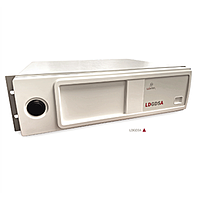
Gas Mixer
Precise gas concentration control is a basic requirement in many laboratory and industrial workflows, especially when calibration, process verification, or analytical consistency depends on stable dilution. A Gas Mixer helps create defined gas mixtures from source gases under controlled conditions, making it easier to prepare repeatable concentrations for testing and instrument setup.
On this page, you can explore gas mixing solutions used in measurement, gas analysis, and laboratory environments where accuracy, repeatability, and connection compatibility matter. The range shown here is especially relevant for users who need controlled nitrogen-based dilution for calibration and related gas handling tasks.
Where gas mixers are typically used
Gas mixing equipment is commonly selected for applications that require a known concentration of target gas before it reaches an analyzer, detector, or test setup. This may include laboratory calibration work, gas analysis preparation, validation procedures, and process environments where a fixed dilution ratio is needed to support reliable measurements.
Compared with manual blending methods, an automated system can improve consistency and reduce operator variation. That is particularly useful when users need to reproduce the same dilution conditions over time, whether for routine checks, comparative testing, or instrument performance evaluation.
What to look for when selecting a gas mixer
Choosing the right unit usually starts with the required dilution ratio. In this category, representative configurations include 10:1, 100:1, and 1000:1 options, which helps cover different concentration adjustment needs. A lower ratio may be suitable for straightforward blending tasks, while higher ratios are often more relevant when finer dilution control is required.
It is also important to review connection type, pressure range, and installation compatibility. In practical terms, buyers often compare whether the system uses VCR or Swagelok connections, and whether 1/8'' or 1/4'' fittings better match the existing gas line design. These details can have a direct impact on integration time, leak control, and service convenience.
Representative solutions in this category
A key example in this range is the LDetek automatic gas dilution platform, available in several nitrogen-to-nitrogen configurations. Models such as the LDGDSA-N₂-N₂-10 series, LDGDSA-N₂-N₂-100 series, and LDGDSA-N₂-N₂-1000 series illustrate how the same product family can be adapted to different dilution requirements without changing the overall operating concept.
For instance, the LDetek LDGDSA-N₂-N₂-10-4VCR-220 and LDGDSA-N₂-N₂-10-4SWG-220 address similar ratio needs while offering different connection standards. At higher dilution levels, models such as LDGDSA-N₂-N₂-100-2VCR-220 or LDGDSA-N₂-N₂-1000-4SWG-220 can be relevant when the application demands broader concentration reduction while maintaining repeatable control.
Across these examples, the common theme is automatic gas dilution with electronic pressure regulation, nitrogen zero gas, nitrogen span gas, and operating conditions intended for controlled laboratory use. Rather than treating each model as completely separate equipment, it is often more useful to view them as variants selected by ratio and connection format.
Key technical considerations for integration
When comparing systems, users typically focus on repeatability, accuracy, drift behavior, operating pressure, and temperature range. In the products listed here, the available examples indicate repeatability below 1%, accuracy better than ±1%, and drift below ±1% over 24 hours. These are meaningful indicators for applications where concentration stability must remain dependable during routine operation.
Pressure and power requirements should also be checked early in the purchasing process. The listed units are shown with recommended operating pressures and 220 V operation, which can help buyers align equipment selection with existing gas supply and electrical infrastructure. This step is often overlooked, but it can prevent unnecessary installation changes later.
How connection type affects system selection
Connection format is not just a mechanical detail. In gas handling systems, fitting style can influence sealing performance, maintenance practices, and compatibility with existing tubing or manifold layouts. That is why the available products include both VCR and Swagelok versions, as well as 1/8'' and 1/4'' connection sizes.
If your setup is built around compact tubing and space-efficient routing, a 1/8'' configuration may be the better fit. If the priority is alignment with larger gas lines or existing connection standards in the lab, a 1/4'' option may simplify installation. Reviewing this point alongside dilution ratio is often the fastest way to narrow the shortlist.
Related equipment and workflow context
Although gas mixers serve a very specific role, they are often part of a broader lab handling and preparation environment. Depending on the overall workflow, some users may also work with other laboratory motion devices such as a vortex mixer, roller mixer, or digital rotator for sample preparation steps outside the gas line itself.
These products do not replace a gas dilution system, but they can belong to the same purchasing workflow in laboratories that manage calibration gases, liquid samples, and test preparation in parallel. Keeping the wider equipment ecosystem in mind can make specification and procurement more efficient.
Who this category is suited for
This category is relevant for laboratories, analytical service providers, instrument users, and technical buyers who need repeatable gas blending rather than ad hoc manual mixing. It is especially suitable when process control, analyzer calibration, or concentration verification requires a more structured and stable approach.
Buyers comparing options should begin with three practical questions: what dilution ratio is required, which connection standard matches the current gas line, and what operating conditions must the unit support. Once those points are clear, selecting between the listed configurations becomes much more straightforward.
Final considerations
A well-chosen gas mixer supports more consistent gas preparation, simpler integration, and better control over calibration or testing routines. In this category, the available LDetek automatic dilution models provide a useful range of ratio and connection options for nitrogen-based applications, helping users match the equipment to the real demands of their setup.
If you are evaluating systems for laboratory or analytical use, focus on dilution ratio, fitting type, operating requirements, and long-term stability instead of comparing model names alone. That approach will usually lead to a more practical and reliable selection.
Get exclusive volume discounts, bulk pricing updates, and new product alerts delivered directly to your inbox.
By subscribing, you agree to our Terms of Service and Privacy Policy.
Direct access to our certified experts