Soil permeability meter
Understanding how water or air moves through soil is essential in agriculture, drainage design, geotechnical assessment, and environmental research. When a project depends on reliable data about infiltration behavior, pore structure, or saturated flow, choosing the right soil permeability meter helps turn undisturbed samples into useful decision-making information.
This category brings together laboratory instruments used to evaluate soil permeability under controlled conditions. These systems are especially relevant for teams working with ring samples and looking for repeatable measurements that support soil characterization, irrigation planning, groundwater studies, and broader land management analysis.
Why permeability testing matters in soil analysis
Permeability testing helps determine how easily fluids move through soil, which directly affects drainage performance, root-zone behavior, water retention, and pollutant transport. In practice, this information is often used to identify restrictive layers, compare soil structure between sites, and better understand the relationship between permeability, porosity, and grain composition.
For laboratories and field support teams, permeability data also contributes to practical engineering and land-use decisions. It can support evaluations related to irrigation and drainage systems, well pumping behavior, subsidence risk, and predictions about how contaminated liquids may spread after accidental releases.
What you can find in this category
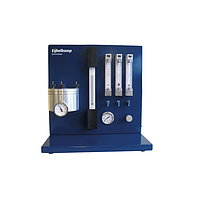
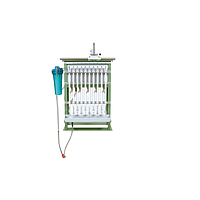
The range shown here focuses on Eijkelkamp systems designed for permeability testing on undisturbed soil samples stored in rings. The available configurations include both soil water permeameters and an air permeameter, giving users options depending on whether the goal is to assess saturated water flow or air movement through the soil matrix.
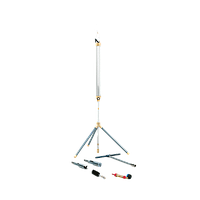
Representative models include the Eijkelkamp 09.02.01.05 open-system unit for smaller sample throughput, the Eijkelkamp 09.02.02.10 closed-system version for more controlled water testing, and the Eijkelkamp 08.65 air permeameter for applications linked to erosion, drainage, and geo-hydrologic research. Across the water permeameter range, ring holder capacities vary from 5 to 25 samples, which can be important when balancing workflow efficiency with lab space and test volume.
Open-system and closed-system soil water permeameters
A practical starting point when selecting a system is the distinction between open system and closed system designs. Both are intended for measuring saturated permeability of undisturbed samples in rings, but the preferred setup may depend on internal lab procedures, the required control over testing conditions, and how the team manages sample handling and fluid measurement.
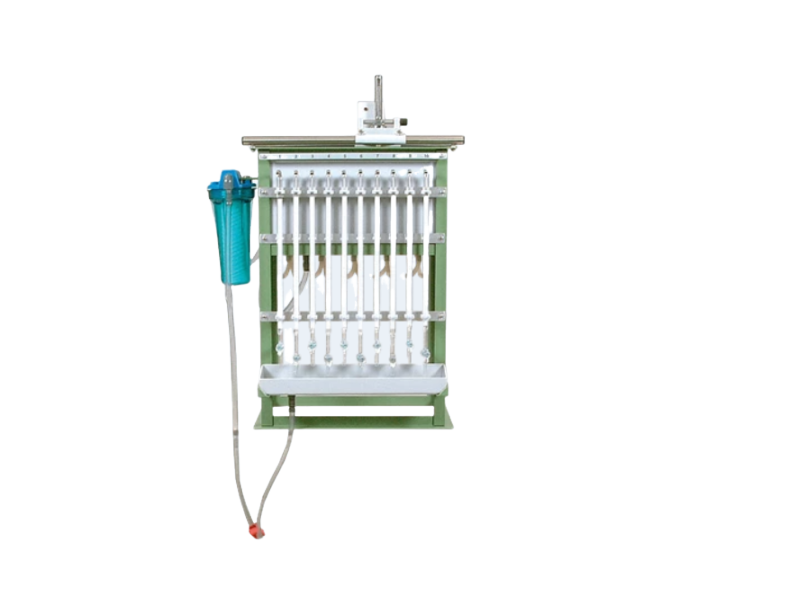
Open-system models in this category include the Eijkelkamp 09.02.01.05, 09.02.01.10, and 09.02.01.25, while closed-system alternatives include the 09.02.02.05, 09.02.02.10, and 09.02.02.25. These variants share a laboratory-oriented format, manual registration, and compatibility with Ø 53 mm and 66 mm ring holders, but they differ in system layout and sample capacity. If your workflow starts earlier in the preparation chain, it may also be useful to review suitable soil sampling tools for obtaining representative undisturbed specimens.
Choosing the right capacity for your lab workflow
Capacity is not just a convenience feature; it affects turnaround time, batch consistency, and day-to-day resource planning. A 5-holder instrument may suit low-volume research, teaching laboratories, or specialized investigations, while 10-holder and 25-holder versions are more attractive for routine testing, comparative studies, or projects with a larger number of parallel samples.
For example, the Eijkelkamp 09.02.01.25 and 09.02.02.25 are aligned with higher-throughput testing needs, whereas the 5-sample versions provide a more compact path for focused analyses. Since the listed water permeameters are intended for ring-stored undisturbed samples and offer manual reading with 1 ml accuracy, the main selection criteria often become system type, sample volume, and how the instrument fits into the broader laboratory process.
Where air permeameters fit into soil research
Water permeability is only part of the picture in many soil investigations. In some applications, an air permeameter can provide complementary insight into pore continuity, structure, and transport behavior, especially in studies tied to erosion, drainage, irrigation, environmental research, or basic material research.
The Eijkelkamp 08.65 is the featured air permeameter in this category and is positioned for research-oriented work where pressure-based assessment of air movement is relevant. Used alongside water permeability testing, this type of instrument can help laboratories build a more complete understanding of soil physical behavior rather than relying on one test method alone.
Typical applications across industries and research
These instruments are relevant to a wide range of technical users, from agricultural laboratories and environmental consultants to universities and geotechnical teams. In agricultural and land improvement contexts, permeability measurements help evaluate infiltration constraints, drainage performance, and irrigation response. In environmental and hydrogeological work, the same data supports interpretation of vertical and horizontal flow behavior and possible contaminant migration pathways.
Permeability testing is also valuable when correlating hydraulic behavior with other soil properties. That makes this category a natural fit for users who already work with related soil testing equipment and want to expand their laboratory capability in a structured way.
Why Eijkelkamp is a relevant choice in this category
Eijkelkamp is the main manufacturer represented here, with a focused range of soil water permeameters and an air permeameter for laboratory use. Rather than presenting unrelated products, the category concentrates on instruments that serve a clear technical purpose within soil physical testing and sample-based permeability assessment.
This makes selection more straightforward for B2B buyers who need practical comparison points: open versus closed systems, 5 to 25 ring holder capacities, and the choice between water- and air-based permeability analysis. For teams standardizing laboratory methods, that consistency can be more useful than a broad but fragmented product range.
Selection tips before ordering
Before choosing a model, it is worth confirming a few basic points: the sample format used in your lab, expected testing volume, whether saturated water permeability or air permeability is the primary objective, and how the instrument will integrate with existing procedures. Ring compatibility, available bench space, power supply requirements, and operator workflow can all influence the most suitable option.
If your evaluation is focused specifically on comparable instruments in the same area, you can also browse the broader soil permeability meter range on this page and compare model formats based on throughput and system design. A well-matched setup supports more consistent testing and more useful interpretation of soil behavior over time.
Choosing permeability testing equipment is ultimately about matching the instrument to the sample type, test objective, and laboratory routine. Whether you need an open or closed water permeameter for undisturbed ring samples, or an air permeameter for complementary soil structure analysis, this category provides focused options for building a dependable soil testing workflow.
Get exclusive volume discounts, bulk pricing updates, and new product alerts delivered directly to your inbox.
By subscribing, you agree to our Terms of Service and Privacy Policy.
Direct access to our certified experts