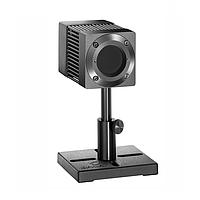
Laser Power Meter
Accurate optical power measurement is essential when setting up, validating, or maintaining laser-based systems. In laboratories, production lines, medical device environments, and industrial processing, a reliable Laser Power Meter helps users confirm output stability, protect sensitive components, and document performance with confidence.
This category brings together handheld meters, power and energy displays, and compatible sensor-based solutions for different laser measurement tasks. The selection covers compact photodiode instruments for lower power ranges as well as modular platforms designed to work with thermal, photodiode, and energy sensors across a much broader operating window.
Where laser power meters are used
Laser output cannot be judged reliably by visual observation alone. Even when a beam appears stable, the actual delivered power may drift because of source aging, alignment changes, contamination on optics, or environmental conditions. A dedicated meter gives a measurable reference for commissioning, routine inspection, and quality control.
Typical use cases include benchtop optical experiments, laser assembly and service, beam source verification in manufacturing, and OEM integration. In broader optical workflows, these instruments are often used alongside tools such as light meter equipment or UV meter devices when multiple parts of the spectrum or different light sources need to be evaluated.
Different measurement approaches in this category
Not every laser application requires the same sensing method. A practical way to evaluate this category is to separate solutions by sensor principle and by the type of quantity being measured, such as continuous power, pulse energy, or both.
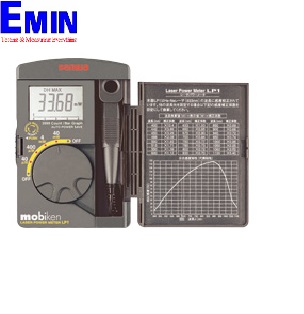
Photodiode-based instruments are well suited to lower power measurements and wavelength-specific applications. A compact example is the SANWA LP10 Laser Power Meter, which uses a Si photodiode and supports a measurable wavelength range from 400 nm to 1100 nm. This kind of instrument is a good fit for users who need portable checking of CW laser output in relatively modest power ranges.
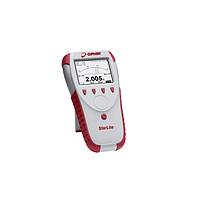
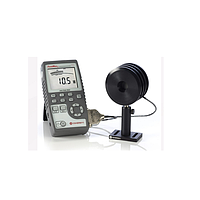
For broader compatibility, meter platforms that work with interchangeable sensors provide more flexibility. The Ophir 7Z01569 Laser Power & Energy Meter supports power, single-shot energy, and high repetition rate energy measurements depending on the connected sensor, while the Coherent FieldMaxII-TO with PM30 sensor illustrates the other end of the spectrum, where users may need to measure from very low levels up to high-power industrial laser conditions.
Choosing between photodiode, thermal, and energy-capable systems
A photodiode sensor is generally selected when sensitivity, fast response, and lower power operation are the priority. It is commonly used in alignment, source verification, and optical research environments where wavelength correction and spectral response are important considerations. However, photodiode solutions are not the right choice for every beam condition, especially when power density increases significantly.
Thermal sensors are often preferred for higher power applications and for measuring a wider range of wavelengths with less dependence on wavelength-specific detector behavior. They are commonly used in material processing, laser manufacturing, and other applications where beam power can rise from milliwatts to tens of watts or much more, depending on the sensor design.
When pulse behavior matters, users may also need a system that supports energy measurement rather than only average power measurement. That distinction is important for pulsed lasers, burst operation, and applications where repetition rate affects interpretation of the result. If your process includes imaging or beam alignment tasks in parallel, related optical tools such as a camera tester or collimator may also be part of the same setup.
Examples of representative products
The product mix in this category reflects different user needs rather than a single fixed format. SANWA offers portable entry-level style laser power measurement with the LP10, suitable for direct reading at 633 nm and practical use with correction factors for other wavelengths. This type of instrument can be useful where fast on-site verification is more important than a large, expandable sensor ecosystem.
Ophir and Coherent are often associated with more advanced meter-and-sensor workflows. The Ophir 7Z01569 meter emphasizes display readability, multiple measurement functions, and compatibility with several sensor families, while the Coherent 411204-031 FieldMaxII-TO with PM30 sensor is designed for applications requiring a wide measurable span and dependable power and energy readout.
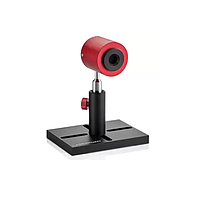
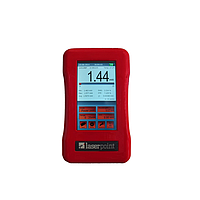
LaserPoint adds another important layer to the category through flexible meter platforms and specialized sensors. The LaserPoint PLUS2 Laser Power Meter can be supplied as a meter alone or in a bundle with a sensor such as the A-40/200-D40-HPB, helping users build a solution around actual power range, aperture, spectral range, and cooling requirements.
Why sensor compatibility matters
In many real-world environments, the display unit is only part of the solution. The sensor determines how the beam is absorbed, what power range is supported, how quickly readings respond, and whether convection, forced air, or water cooling is required. For this reason, selecting a laser meter should begin with the beam characteristics rather than the screen or enclosure alone.
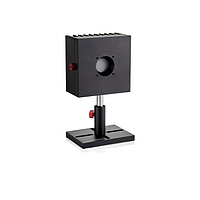
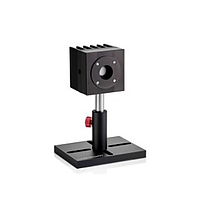
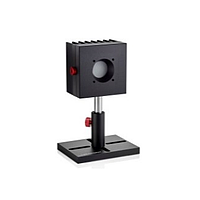
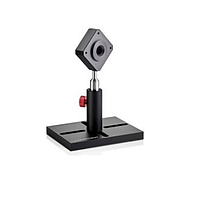
Several LaserPoint OEM high-speed thermal sensors listed in this category illustrate that point clearly. Models such as BOM-A-5W-14-T, BOM-A-8W-14-T, BOM-A-15W-14-T, BOM-W-20W-14-T, BOM-A-25W-10-B, and BOM-W-50W-10-B are tailored for different power levels, apertures, spectral ranges, and cooling methods. These are especially relevant for machine builders, integrators, and users who need measurement hardware embedded into a larger system rather than a simple standalone handheld instrument.
Key factors to compare before buying
For a practical selection process, start with the beam itself. Wavelength, expected power or energy range, CW versus pulsed operation, beam size, and measurement frequency all influence the appropriate meter and sensor combination. If the application needs traceable process checks over time, display resolution and system accuracy also become more important.
- Choose the sensor type based on laser power level and operating mode.
- Check whether the meter supports wavelength selection or correction where needed.
- Confirm aperture size is suitable for the beam diameter and alignment tolerance.
- Review cooling requirements for continuous or higher power measurements.
- Consider whether USB or analog output is needed for logging, automation, or OEM integration.
It is also worth thinking about future expansion. A modular meter that accepts multiple sensor types can reduce replacement cost when measurement needs change, especially in R&D or multi-line production environments.
Brands commonly considered in this range
This category includes solutions from established names in optical measurement, including Coherent, Ophir, SANWA, and LaserPoint. Each brand is represented here by products that fit different levels of complexity, from portable direct-reading instruments to configurable meter-and-sensor systems.
Users comparing across brands should focus less on name recognition alone and more on measurement method, supported sensor families, integration requirements, and the type of laser process being controlled. That approach leads to a more reliable purchase decision than simply comparing headline ranges without considering beam conditions and operating workflow.
Finding the right fit for your application
The best laser measurement setup depends on how and where the instrument will be used. A compact photodiode meter may be enough for routine benchtop checks, while production, service, or OEM use often calls for a scalable platform with interchangeable thermal or energy sensors.
By comparing laser type, power range, wavelength, sensor compatibility, and data output needs, buyers can narrow the selection to a solution that matches both current measurement tasks and future expansion. This category is intended to support that process with practical options across portable, modular, and sensor-based laser power measurement requirements.
Get exclusive volume discounts, bulk pricing updates, and new product alerts delivered directly to your inbox.
By subscribing, you agree to our Terms of Service and Privacy Policy.
Direct access to our certified experts