Dial Indicators
Precision inspection often depends on detecting very small movement, runout, flatness error, or positional variation that is difficult to verify by eye alone. In those situations, dial indicators remain one of the most practical tools in machining, maintenance, tool setup, and quality control because they provide a clear, repeatable way to compare displacement over a short measuring range.
On this page, you can explore indicator solutions used for bench inspection, fixture setup, machine alignment, and dimensional verification. The range includes conventional analog models, digital versions, test indicators for fine comparative checks, and supporting accessories such as magnetic stands and contact probes, making the category useful for both workshop users and inspection teams.
Where dial indicators are used in industrial measurement
These instruments are commonly selected when the task is not simply measuring a size, but checking deviation, alignment, and repeatability. Typical applications include verifying flatness on machined surfaces, checking runout on rotating parts, comparing height differences, aligning fixtures, and inspecting straightness or parallelism during setup.
In many workshops, an indicator is mounted on a stand or fixture and used as a comparator rather than as a standalone measuring tool. That is why this category often works alongside products such as callipers for general dimensional checks or other precision instruments used deeper in the inspection process.
Analog, digital, and test indicators
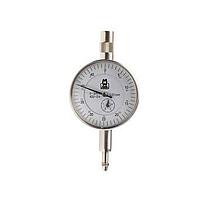
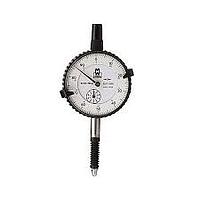
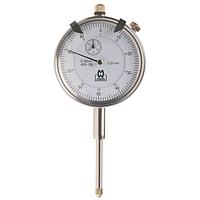
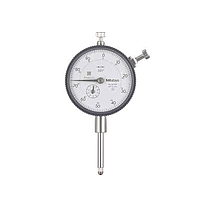
Although they are often grouped together, there are several forms within this category. Standard analog dial indicators are widely used for general comparative measurement and machine setup. Their pointer movement makes it easy to see direction and amount of displacement at a glance, which is especially useful when checking runout or surface variation.
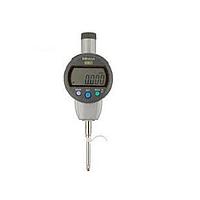
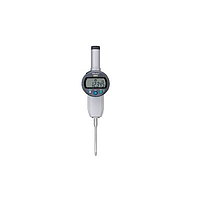
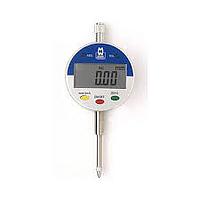
Digital indicators are preferred when operators want a direct numeric readout and faster value interpretation. A model such as the MOORE & WRIGHT MW405-06DB Digitronic Indicator illustrates this type of option, while the MITUTOYO 543-700B Digimatic Indicator represents digital measurement for users who want selectable resolution and a clear electronic display.
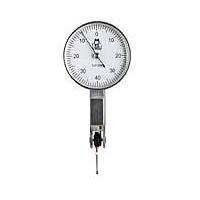
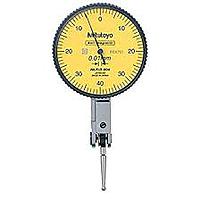
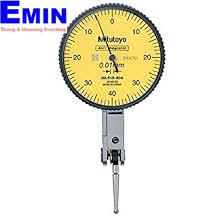
For lighter contact force and more sensitive point checking, dial test indicators are often used. Examples in this range include the Mahr 4305200 Test Indicator and the MITUTOYO 513-403-10E Dial Test Indicator, both suited to comparative tasks where contact geometry and fine stylus movement matter.
How a dial indicator works
The operating principle is straightforward: contact at the measuring tip creates a small linear or lever-based movement, and that movement is transferred into a visible reading on the dial or display. In analog instruments, the transmission mechanism converts the motion into pointer rotation. In digital types, internal sensing converts movement into a numerical value.
What makes these tools so useful is not only the reading itself, but the ability to observe change from a zeroed reference point. Once the instrument is set against a datum, any movement of the workpiece or measuring surface appears immediately as positive or negative deviation. This is why indicators are widely used for setup verification, not just for final inspection.
Important selection points
Choosing the right model depends on the job, the available mounting arrangement, and the level of sensitivity required. Key considerations usually include measuring range, resolution or graduation, contact force, dial size, readability, and whether the user needs metric, inch, or dual-format measurement.
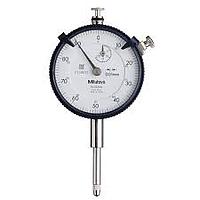
For example, a general-purpose analog option such as the MOORE & WRIGHT MW400-06 Dial Indicators or MOORE & WRIGHT MW415-01 Dial Indicators may fit routine bench inspection and setup work. When a larger travel is needed, a model such as the MITUTOYO 3058A-19 Dial Indicator offers a broader measuring range. If the setup requires fine-point comparative inspection around edges, bores, or difficult contact angles, a dial test indicator can be more suitable than a standard plunger type.
- Choose analog when visual movement tracking is more important than electronic readout.
- Choose digital when fast numeric reading and selectable resolution are priorities.
- Choose a test indicator when low measuring force and stylus-style contact are better suited to the feature being checked.
- Check mounting compatibility if the instrument will be used with existing holders or fixtures.
The role of stands, probes, and accessories
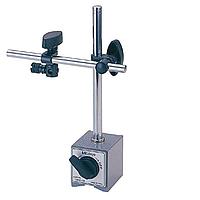
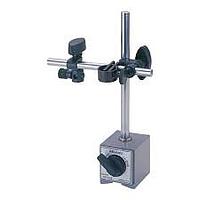
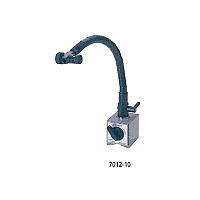
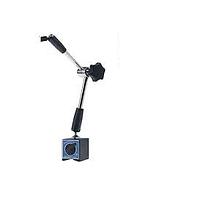
An indicator performs best when the mounting is stable. In many applications, the quality of the stand has a direct effect on repeatability because vibration or flex in the setup can influence the reading. The MOORE & WRIGHT MW470-01 Magnetic Indicator Stand is a good example of a support accessory designed to hold different indicator types securely during inspection and machine setup.
Accessories also matter when the measuring point is difficult to reach or when the contact geometry needs to change. The MITUTOYO 900391 angled probe is a useful example of an accessory that supports the broader indicator ecosystem rather than replacing the indicator itself. For users building a complete setup, it can also be helpful to review related categories such as thickness meter solutions for other comparison-based inspection tasks.
Representative brands in this category
This category includes products from established metrology manufacturers used across machining and inspection environments. MITUTOYO offers a broad mix of analog and digital indicators, from standard dial gauges to Digimatic models and dial test indicators for fine comparative work.
MOORE & WRIGHT is well represented with standard dial indicators, digitronic variants, dial test indicators, and magnetic stands, making it relevant for users who want both measuring heads and mounting accessories from the same brand family. Mahr is another important name in this space, especially for test indicators intended for precision comparative measurement.
Using dial indicators effectively
Good results depend as much on setup discipline as on instrument quality. The indicator should be mounted rigidly, aligned correctly to the direction of movement, and zeroed against a known reference before measurement begins. The contact point should move smoothly without side loading, and the workpiece or fixture should be clean and stable.
When reading analog models, operators often benefit from watching pointer direction as much as the number itself. That visual response helps when centering parts, reducing runout, or finding the high and low points on a surface. For broader inspection workflows, users may also combine indicators with systems from categories such as roundness measuring machine equipment when form evaluation goes beyond comparative contact measurement.
Finding the right indicator for your application
The most suitable choice depends on whether your priority is general setup, fine deviation checking, digital readout convenience, or compatibility with existing stands and fixtures. A compact test indicator may be ideal for delicate contact and small displacement, while a standard plunger-style dial indicator is often better for everyday machine shop inspection.
Within this category, you can compare different indicator styles, measuring ranges, and support accessories based on practical use cases rather than only headline specifications. A well-matched indicator setup helps improve consistency in inspection, speeds up adjustment work, and gives operators clearer feedback during machining, assembly, and maintenance.
For teams working with precision parts, fixtures, and machine setup, dial indicators remain a dependable part of the measuring toolkit. Reviewing the available models by measuring method, mounting need, and reading style is usually the best way to identify the right fit for routine production checks or more sensitive comparative inspection.
Get exclusive volume discounts, bulk pricing updates, and new product alerts delivered directly to your inbox.
By subscribing, you agree to our Terms of Service and Privacy Policy.
Direct access to our certified experts